



News
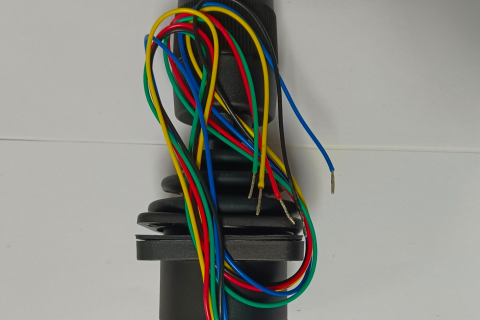
In summary, the high-speed response of HC's joystick controllers is not an isolated feature but the result of a holistic engineering philosophy. It is achieved through the synergistic integration of non-contact sensing technology, intelligent signal processing, ergonomic mechanical design, and robust system integration capabilities. This meticulous attention to detail at every stage—from the initial sensor signal to the final machine action—ensures that these controllers provide unparalleled control, durability, and adaptability. By perfecting the interface between human operators and complex machinery, HC's engineering empowers industries to achieve new levels of productivity, precision, and safety.

In conclusion, Hall Effect joysticks are not merely an incremental improvement but a fundamental technological upgrade for harsh industrial environments. By replacing failure-prone physical contacts with robust, non-contact magnetic sensing and sealed construction, they deliver unparalleled durability and reliability. This makes them a strategic investment for any business seeking to maximize uptime, ensure consistent control accuracy, and reduce the total cost of ownership in their automation and control systems.
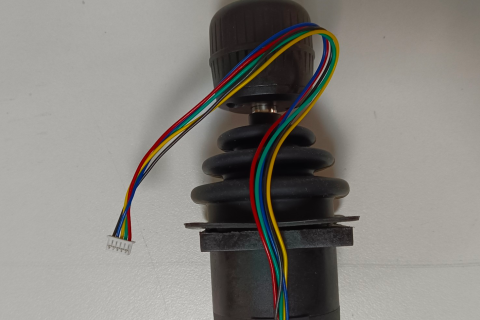
In conclusion, modern industrial joystick controllers are far more than simple levers; they are sophisticated, ergonomic, and intelligent interfaces that form a critical link between human operators and automated machinery. By enhancing precision, ensuring reliability in harsh conditions, and enabling deep system integration and customization, they play a vital role in boosting productivity, operational safety, and the overall efficiency of industrial automation processes. As automation continues to evolve, the joystick remains an indispensable tool for perfecting motion control.
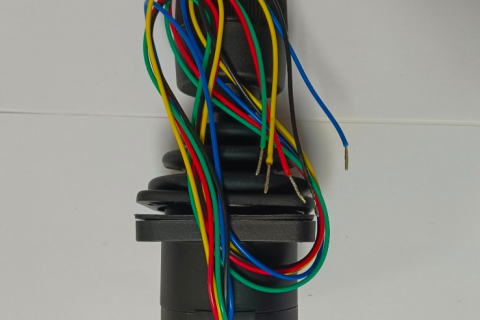
The humble joystick, once synonymous with arcade cabinets and flight simulators, has undergone a remarkable transformation into a critical productivity tool in industrial settings. This crossover is not merely about repurposing entertainment hardware;
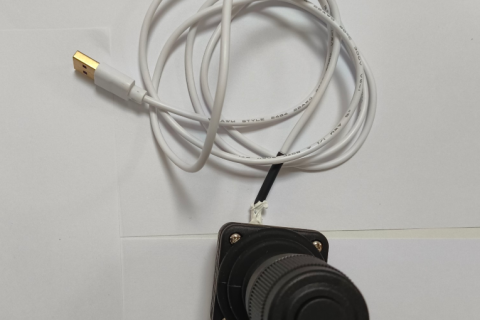
In the realm of minimally invasive and robotic-assisted surgery, precision is paramount, but traditional systems present a significant limitation: the loss of tactile sensation. Surgeons operating through a console view a high-definition screen but cannot physically feel the tissue they are manipulating.
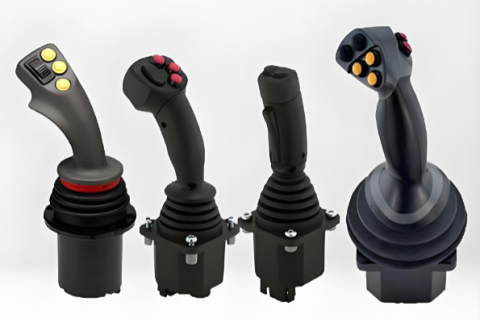
Stepping onto the floor of a fully automated chassis welding line is like witnessing a perfectly choreographed ballet of industrial robotics. As highlighted in the background material, this specific system is composed of "24 Yaskawa welding robots and 5 material handling robots," all working in concert.
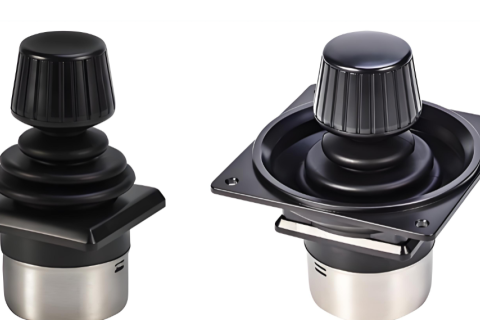
The core limitation of traditional potentiometer-based joysticks lies in their fundamental working principle: physical contact. A potentiometer relies on a wiper moving across a resistive track. Over time, this mechanical contact leads to inevitable wear and tear, causing the resistive material to degrade. This results in a phenomenon known as "potentiometer drift," where the output signal becomes erratic even when the joystick is in its neutral position, leading to inaccurate control commands and a shortened operational lifespan. In contrast, Hall Effect joysticks operate on a completely contactless principle
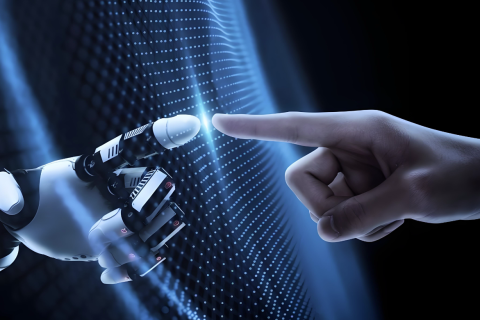
the development of a left-handed joystick is a powerful case study in true human-centered design. It moves beyond mere accommodation to actively champion ergonomic excellence, operational safety, and intuitive control for a specific demographic. The resulting innovations create a positive ripple effect, driving universal improvements in product quality and safety. This approach demonstrates that by thoughtfully addressing the needs of the few, manufacturers can ultimately deliver superior experiences for all, proving that inclusive design is, in fact, superior design.
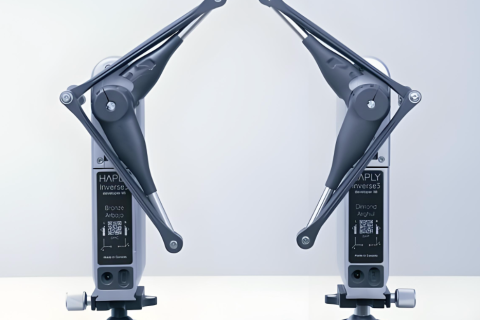
force feedback joysticks are far more than simple controllers; they are the vital conduit for the surgeon's "sense of touch" in the digital age of surgery. By translating intraoperative forces into intuitive tactile feedback, this technology dramatically enhances surgical precision, minimizes risks, and elevates patient safety.

Industrial joystick controllers are essential HMI devices widely used in construction machinery (excavators/cranes), industrial robots (welding/handling), medical equipment (surgical robots), and special applications (drones). Featuring waterproof design, precise force feedback (±0.1N) and multi-axis control (up to 6DOF), they enable accurate operation in harsh environments. With Industry 4.0 integration, modern controllers now incorporate IoT connectivity and data analytics for predictive maintenance. Future trends include haptic feedback (0.5ms latency) and AI-powered gesture recognition, expanding their role in smart manufacturing and automation systems.

Industrial joysticks convert operator movements into precise machine control through advanced sensors (potentiometers, Hall effect, encoders), signal processing (24-bit ADC, PID algorithms), and industrial comms (CAN, Ethernet). Featuring IP65+ protection, 2M-cycle durability, and -40°C-85°C operation, they enable real-time (<5ms) control in construction, automation, and hazardous environments. Next-gen models integrate AI and haptic feedback for smarter human-machine interaction.

Industrial handles are evolving as critical HMI devices in smart manufacturing, featuring precision control (0.01° resolution), rugged design (IP65/67), and force feedback (0-10N). Key applications include robotics, CNC, and medical equipment. Emerging trends integrate AI, 5G (<5ms latency), and VR. The market is projected to reach $5B by 2026 (12.3% CAGR). Selection varies by environment: force-feedback metal for machining, antimicrobial for cleanrooms. Future innovations include brain-control interfaces and digital twin synchronization. Proper handle selection enhances operational efficiency and safety in Industry 4.0.