

A Look Inside a Fully Automated Chassis Arc Welding Production Line
2025-12-29 17:07A Look Inside a Fully Automated Chassis Arc Welding Production Line
Precision and Synchronization on a Grand Scale
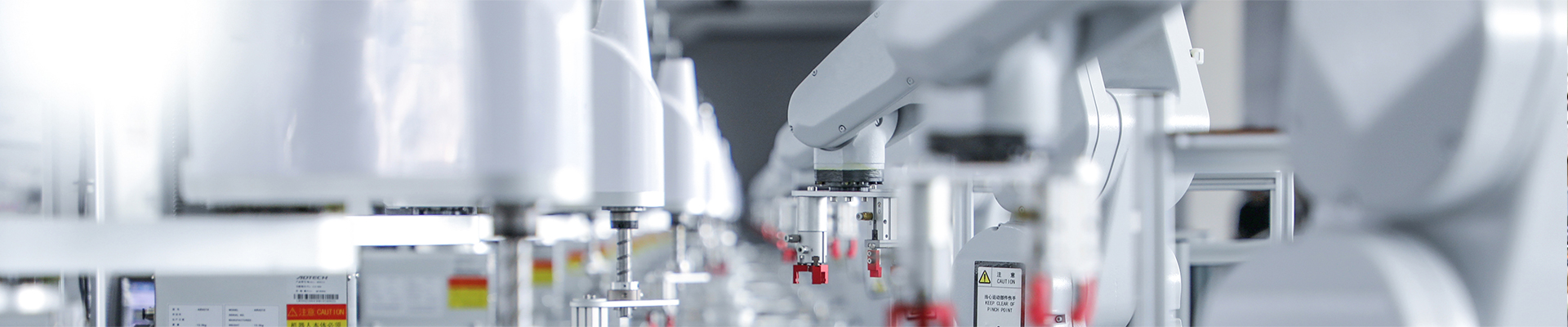
Stepping onto the floor of a fully automated chassis welding line is like witnessing a perfectly choreographed ballet of industrial robotics. As highlighted in the background material, this specific system is composed of "24 Yaskawa welding robots and 5 material handling robots," all working in concert. This is not a mere collection of machines; it is a single, integrated organism dedicated to manufacturing. The sheer number of robots allows for simultaneous welding operations on multiple sections of a vehicle's left and right sub-frames, dramatically reducing cycle times compared to manual or semi-automated stations. The robots' arms move with a precision and repeatability that is simply unattainable by human welders, ensuring that every weld is executed at the exact programmed angle, speed, and distance. This robotic workforce operates tirelessly 24/7, maintaining a consistent, high-quality output that is immune to fatigue, variation, or human error. The scale and synchronization of this robotic cell are the foundational elements that make high-volume, premium-quality chassis manufacturing possible.

Control and Network Integration
The seamless operation of two dozen robots would be chaos without a sophisticated central nervous system to coordinate them. This is the role of the advanced control system, which in this case utilizes "Siemens control systems with PROFINET configurability." PROFINET is a high-speed industrial Ethernet protocol that acts as the production line's digital bloodstream, carrying real-time data and commands between the central programmable logic controller (PLC), the robot controllers, and all other peripherals. This network ensures pinpoint running and seamless integration, allowing for millisecond-level synchronization of the robots' movements. It enables real-time monitoring of every welding parameter—voltage, current, wire feed speed—and can instantly flag any deviation from the standard. Furthermore, this digital backbone allows for the entire production process to be managed from a central hub. Operators can track production metrics, program new welding paths for a new chassis model, and diagnose issues without needing to physically intervene on the line. This level of connectivity transforms a group of individual machines into a truly intelligent and responsive manufacturing system.
The Critical Role of Material Handling and Quality Assurance
A fully automated line's efficiency is not defined by its welding speed alone, but by the smooth, uninterrupted flow of materials. The five dedicated material handling robots are the unsung heroes that ensure this flow. They are responsible for the precise positioning of the large, often bulky sub-frame components into custom welding jigs and fixtures. This precise positioning is critical; even a millimeter of misalignment can lead to a defective weld and a compromised chassis. Once the robots complete the welding sequence, the handling robots then deftly remove the finished assembly, place it on an outgoing conveyor, and prepare the station for the next component. Integrated within this process is an implicit layer of quality assurance. The consistency of the robotic arms ensures that every weld is identical. For critical inspection points, automated vision systems or sensors can be integrated into the line to perform post-weld checks, verifying weld penetration and integrity without slowing down the production pace. This holistic approach, where material handling, welding, and quality checks are fully integrated, is what delivers the legendary structural integrity and safety of modern vehicle chassis.