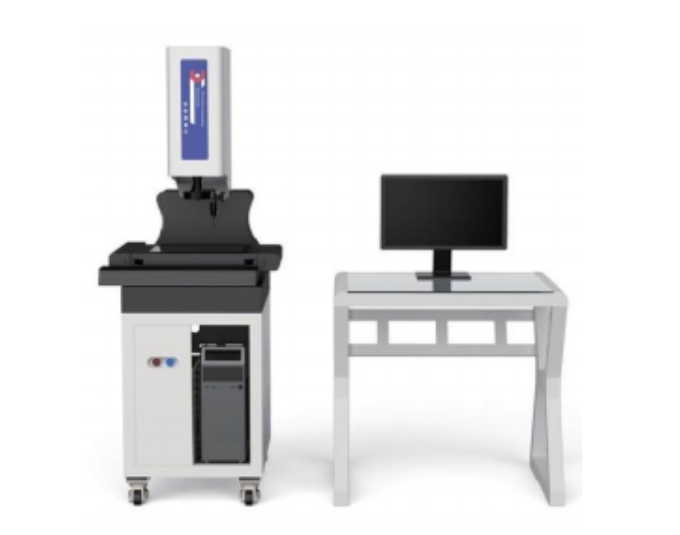



How Joystick Tech "Crosses Over" to Boost Productivity
2026-01-02 17:25How Joystick Tech "Crosses Over" to Boost Productivity
The Evolution of Control Interfaces
The humble joystick, once synonymous with arcade cabinets and flight simulators, has undergone a remarkable transformation into a critical productivity tool in industrial settings. This crossover is not merely about repurposing entertainment hardware; it represents a fundamental shift in human-machine interaction (HMI) philosophy. The core principle—using an intuitive, ergonomic lever to control complex movements—has proven to be exceptionally effective for operating heavy machinery, robotics, and precision equipment. Industrial joysticks, like those developed by InnovaMeld, have evolved to meet rigorous demands, featuring robust housings, high-resolution sensors, and sealed components resistant to dust, moisture, and extreme temperatures. By leveraging an interface that many operators already find instinctive, companies can drastically reduce training time and lower the barrier to operating sophisticated machinery. This seamless transition from a familiar gaming concept to an industrial workhorse demonstrates how user-centered design can directly translate into enhanced operational efficiency and productivity from day one.
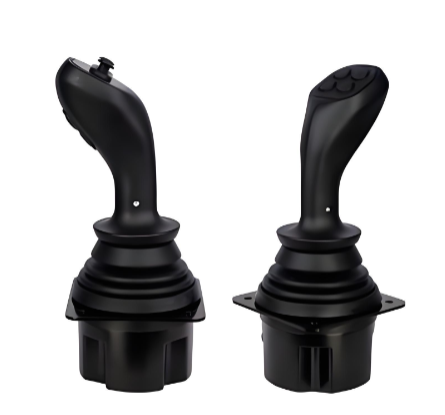
The Hallmark of Modern Industrial Joysticks
The true "crossover" value lies in the advanced technologies borrowed from high-end gaming and simulation and refined for industrial use. Modern industrial joysticks, particularly those utilizing Hall Effect sensor arrays, offer unparalleled precision and reliability compared to traditional potentiometer-based controls. As highlighted in InnovaMeld's materials, this technology enables "±0.005mm repeatable positioning accuracy," a 300% improvement over older solutions. This micron-level precision is crucial for tasks like guiding a crane hook, positioning a welding robot, or controlling the fine movements of an automated microscope. Furthermore, the integration of force feedback technology transforms the joystick from a simple command transmitter into a communication channel. Operators can "feel" resistance when a machine encounters an obstacle or experiences strain, providing vital tactile cues that prevent damage and enhance situational awareness. This combination of pinpoint accuracy and real-time haptic feedback minimizes errors, reduces material waste, and allows operators to work with greater confidence and speed, directly boosting productivity and safeguarding valuable equipment.
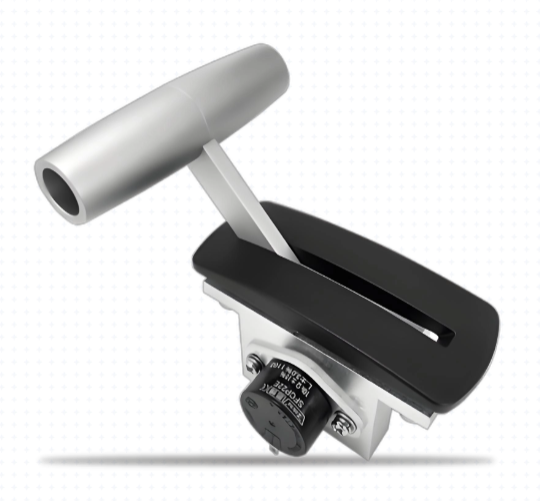
Seamless Integration and Customization for Optimized Workflows
The ultimate productivity boost is achieved when joystick technology is seamlessly integrated into a broader automated ecosystem. Industrial joysticks are no longer standalone input devices; they are intelligent nodes within an interconnected system. They can be customized with programmable buttons, dual-axis control, and interfaces like CAN bus or PROFINET to communicate directly with PLCs (Programmable Logic Controllers) and other machinery. This allows for the creation of highly tailored control schemes that streamline complex workflows. For example, a single, customized joystick can control multiple functions of an excavator or a material handling system, eliminating the need for operators to switch between different levers and panels. This ergonomic and logical consolidation of controls reduces operator fatigue, minimizes the potential for input errors, and accelerates task completion. By offering custom hardware and software solutions, companies like InnovaMeld ensure that joystick technology doesn't just "cross over" but fully adapts to the unique productivity challenges of each industrial application, creating a smoother, faster, and more intuitive human-machine interface.