

How Hall Effect Joysticks Outperform Potentiometer Solutions
2025-12-27 16:59How Hall Effect Joysticks Outperform Potentiometer Solutions
A Fundamental Leap in Sensing
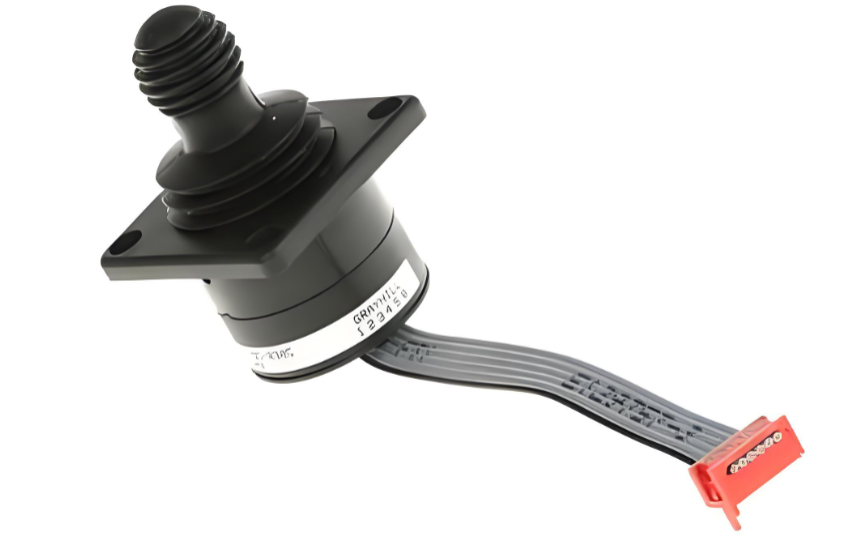
The core limitation of traditional potentiometer-based joysticks lies in their fundamental working principle: physical contact. A potentiometer relies on a wiper moving across a resistive track. Over time, this mechanical contact leads to inevitable wear and tear, causing the resistive material to degrade. This results in a phenomenon known as "potentiometer drift," where the output signal becomes erratic even when the joystick is in its neutral position, leading to inaccurate control commands and a shortened operational lifespan. In contrast, Hall Effect joysticks operate on a completely contactless principle. They use a fixed array of Hall Effect sensors to measure the strength and direction of the magnetic field from a magnet housed in the joystick's handle. Since there is no physical contact between the sensing element and the moving part, there is no mechanical wear. This fundamental difference eliminates the primary failure mode of potentiometers, granting Hall Effect joysticks a significantly longer service life and inherent stability that potentiometers simply cannot match, especially in applications requiring millions of operational cycles.
Unrivaled Precision and Resilience in Harsh Environments
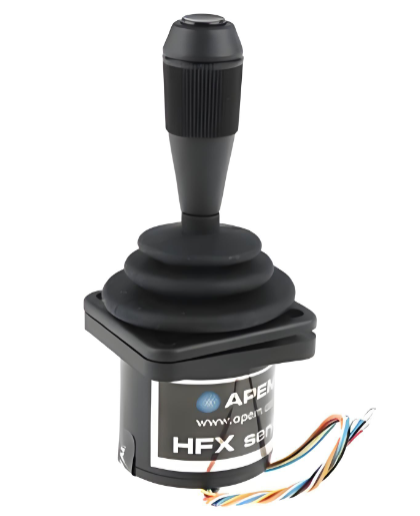
Beyond longevity, Hall Effect joysticks deliver a dramatic improvement in precision and environmental resilience. Potentiometer outputs can be affected by dust, moisture, and vibrations, which interfere with the delicate contact between the wiper and the resistive track. Furthermore, the analog signal from a potentiometer can be susceptible to electrical noise. Hall Effect technology excels in these challenging conditions. The sealed magnetic sensing mechanism is largely immune to contamination from dust or moisture. Moreover, advanced Hall Effect joysticks, like the HC40 series mentioned in the background material, incorporate multi-channel linear Hall sensors and optimized algorithms to achieve remarkable repeatability positioning accuracy of ±0.005 mm. A critical advantage is their built-in temperature compensation algorithms. These algorithms dynamically calibrate the sensor readings to counteract thermal drift, ensuring consistent performance across a wide temperature range, typically from -20°C to 85°C. This makes them ideal for industrial environments where temperature fluctuations are common, guaranteeing that a machine behaves the same way on a cold morning as it does on a hot afternoon.
Enabling Smarter, More Integrated Control Systems
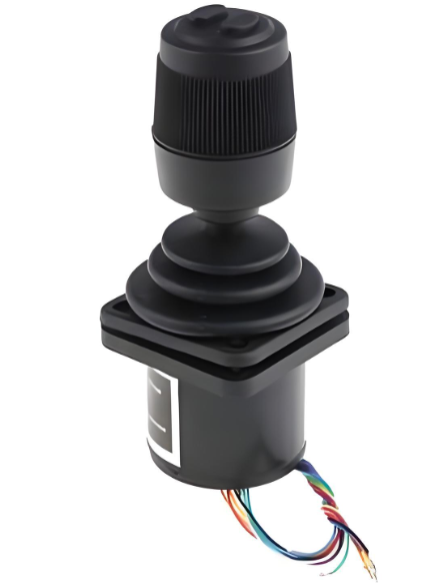
The superiority of Hall Effect joysticks extends into the realm of system integration and intelligence. The digital nature of the signal from a Hall Effect sensor is more compatible with modern digital control systems (e.g., PLCs) and microcontroller-based architectures, simplifying interface design and reducing the need for analog-to-digital conversion. This seamless integration facilitates more advanced features, such as programmable response curves, dead zones, and diagnostics. For example, the system can monitor the joystick's output characteristics to predict potential maintenance needs or detect faults, enabling a proactive approach to system upkeep rather than a reactive one after a potentiometer fails. This shift from a simple analog component to an intelligent digital control node aligns perfectly with the trends in Industry 4.0 and advanced robotics, where reliability, data, and predictive analytics are paramount. While the initial cost of a Hall Effect joystick may be higher than a basic potentiometer model, the Total Cost of Ownership (TCO) is significantly lower due to reduced downtime, elimination of periodic replacement, and enhanced system capabilities.