


Coordinate Measuring Machine For Automotive Aluminum Housing Inspection
2026-06-01 13:25Coordinate Measuring Machine For Automotive Aluminum Housing Inspection
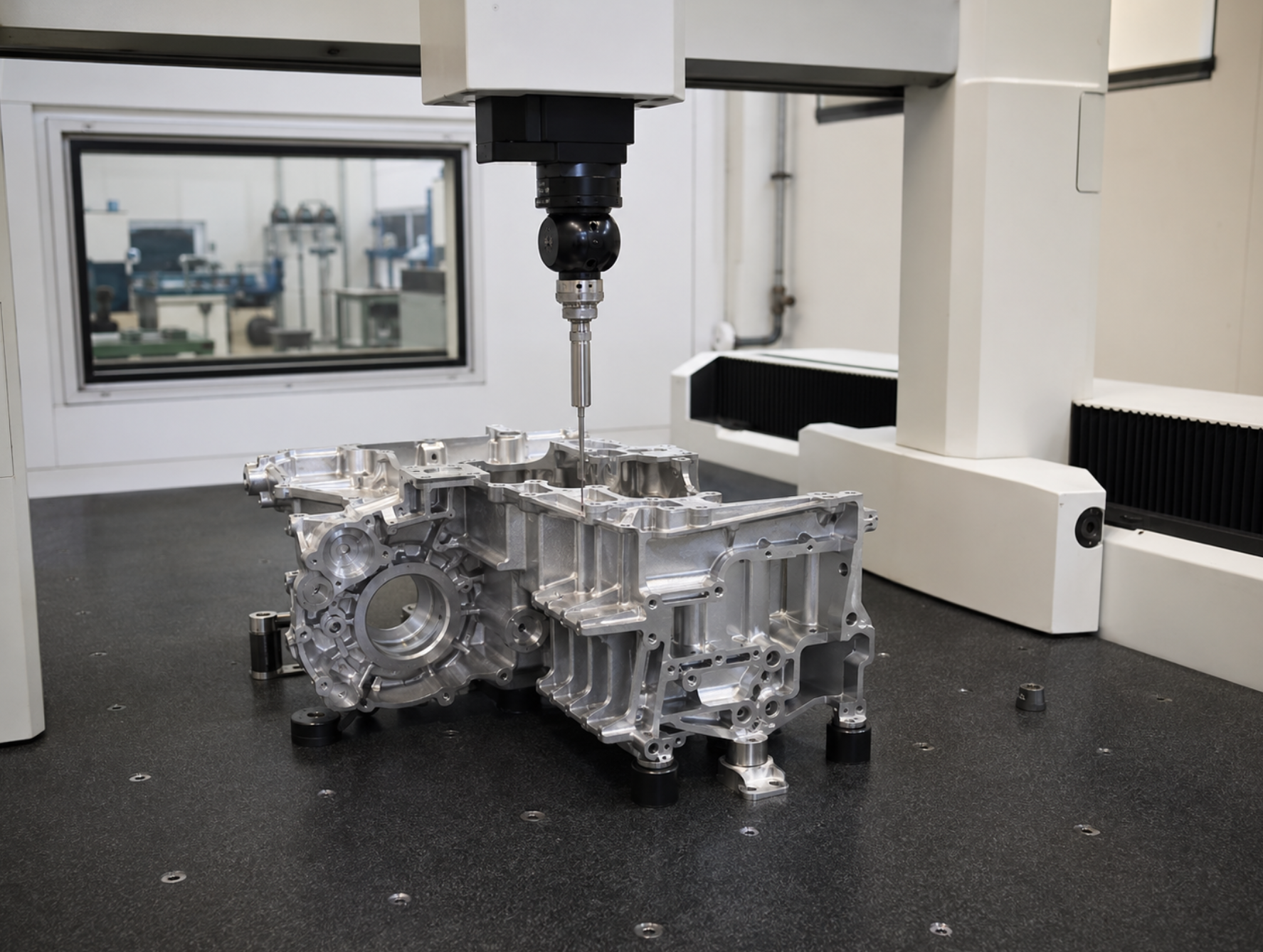
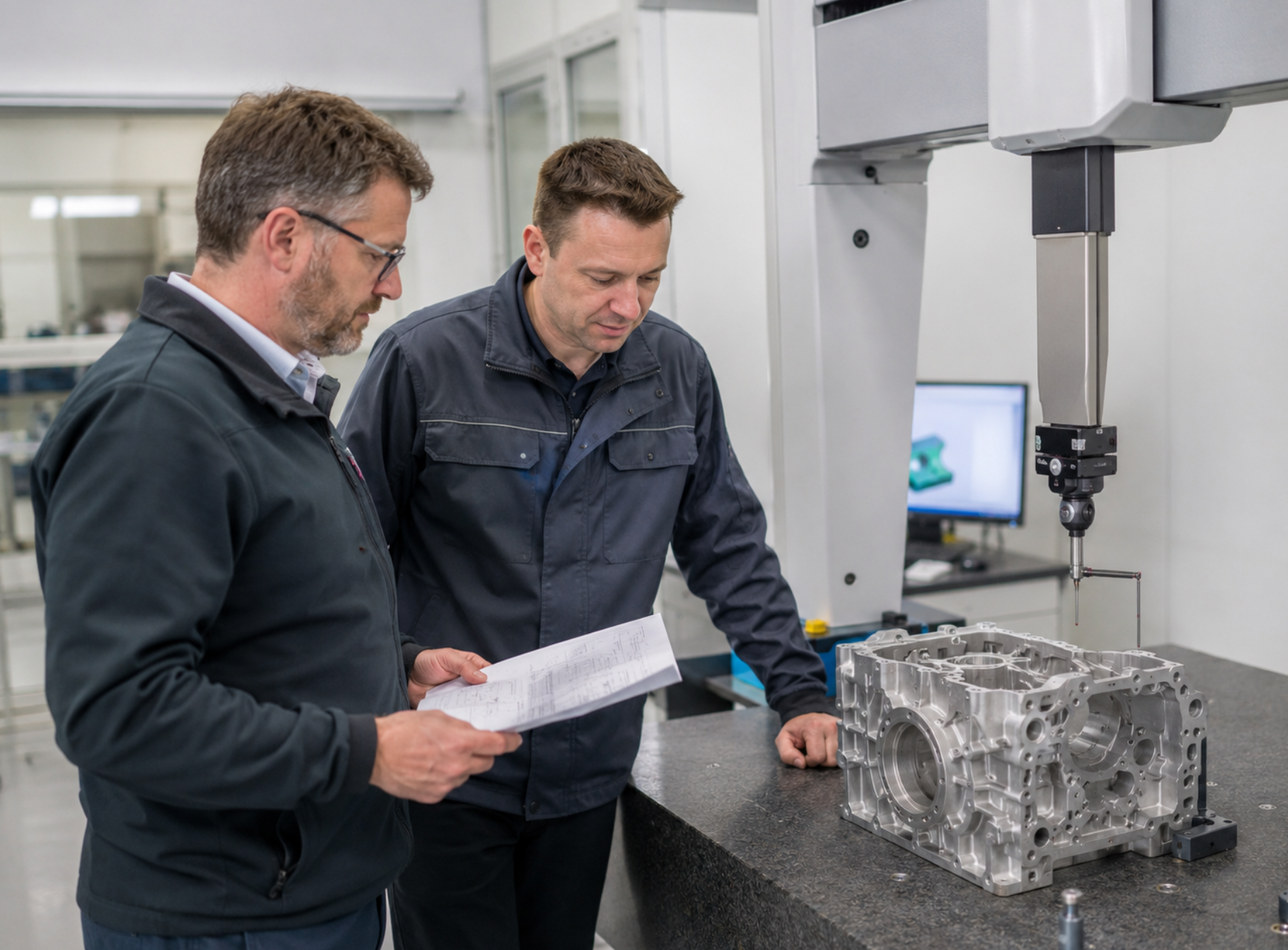
Automotive aluminum housings are widely used in engine systems, transmission systems, electric drive units, battery systems, motor assemblies, pump systems, and electronic control modules. These parts usually include complex cast shapes, machined bores, threaded holes, mounting surfaces, sealing faces, datum planes, ribs, bosses, and thin-wall structures. Because aluminum housings must fit precisely with other automotive components, dimensional inspection is critical before sample approval, PPAP submission, batch production, and final delivery. A coordinate measuring machine helps automotive suppliers verify key dimensions, GD&T requirements, assembly interfaces, and production consistency with traceable inspection data.
Quick Answer
For automotive aluminum housing inspection, buyers should choose a CMM according to housing size, bore accuracy, hole position tolerance, sealing face flatness, datum structure, fixture support, probe access, GD&T reporting, and batch inspection volume. A suitable CMM solution should combine stable measuring range, proper probe configuration, repeatable fixture design, CAD-based software, and automatic inspection reports for supplier quality control.
1. Why Automotive Aluminum Housings Need CMM Inspection
Automotive aluminum housings are often produced by die casting, machining, trimming, drilling, tapping, and surface finishing. Even when the casting process is stable, dimensional variation can still appear due to shrinkage, deformation, machining allowance, clamping stress, tool wear, and temperature changes. If these dimensional issues are not detected early, they may cause assembly mismatch, leakage, vibration, noise, bearing misalignment, or customer rejection.
A coordinate measuring machine can measure complex 3D features and datum relationships that are difficult to verify with simple manual gauges. For automotive suppliers, CMM inspection is especially useful for first article inspection, PPAP documentation, incoming inspection, final inspection, process capability analysis, and customer audit preparation.
For aluminum housing projects, the value of CMM inspection is not only finding defective parts. It helps suppliers understand process drift, confirm machining stability, improve fixture design, and provide reliable data to customers.
2. Common Automotive Aluminum Housing Types
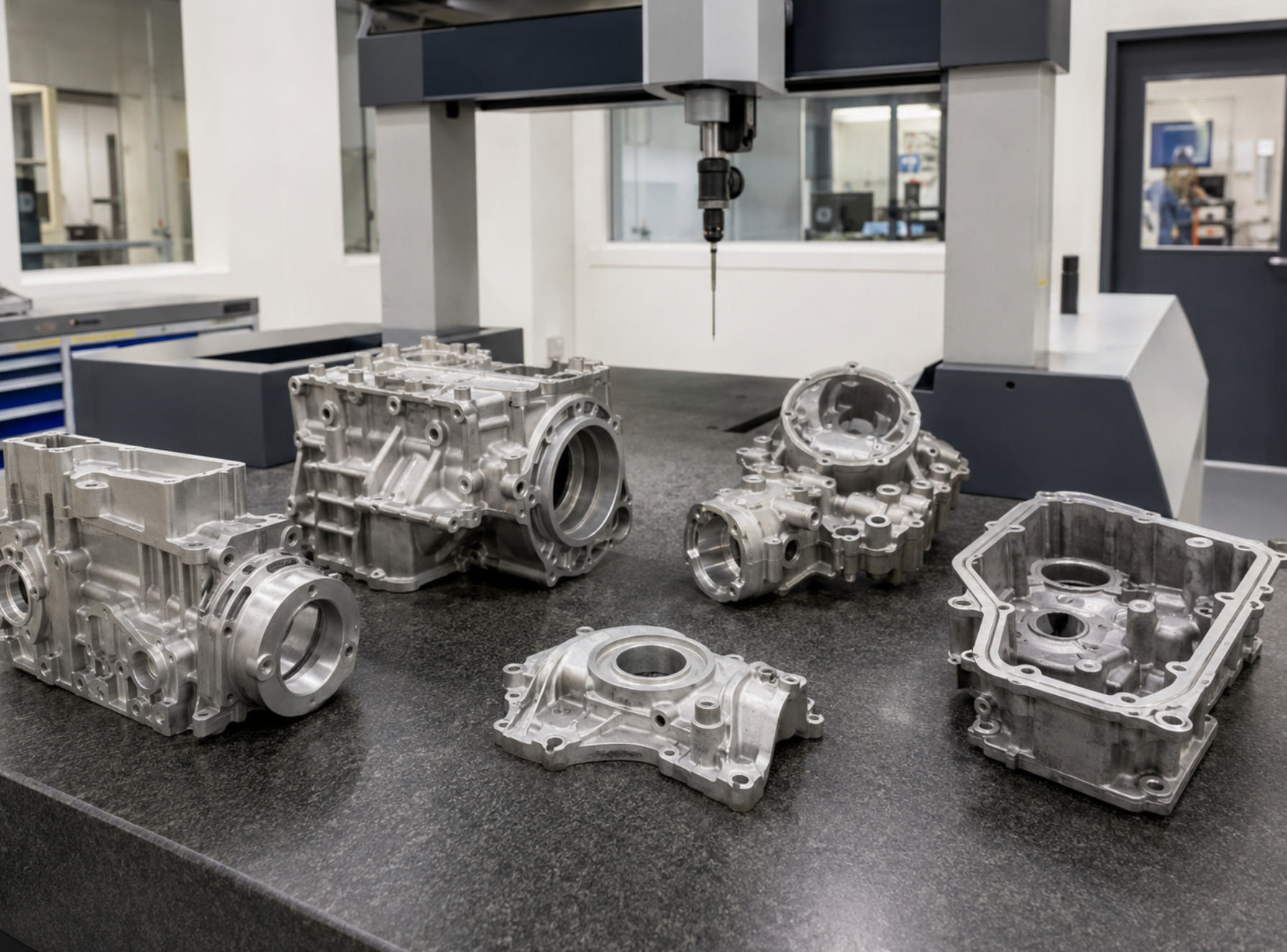
Different housing parts require different CMM configurations. Buyers should define the part type, inspection features, tolerance level, and reporting requirements before requesting a quotation.
| Housing Type | Typical Inspection Focus | CMM Selection Priority |
|---|---|---|
| Engine Aluminum Housing | Bores, mounting faces, sealing surfaces, datum planes | Accuracy, bore measurement, GD&T reporting |
| Transmission Housing | Shaft centers, coaxiality, bore alignment, hole patterns | Probe access, repeatability, datum strategy |
| EV Motor Housing | Roundness, coaxiality, end face flatness, mounting interface | Stable fixture, accurate bore and face measurement |
| Battery System Housing | Large size, hole position, flatness, assembly interface | Larger measuring range and fixture support |
| Electronic Control Housing | Thin wall, cover fit, screw holes, sealing face | Controlled clamping and deformation prevention |
3. Key Features That Must Be Checked
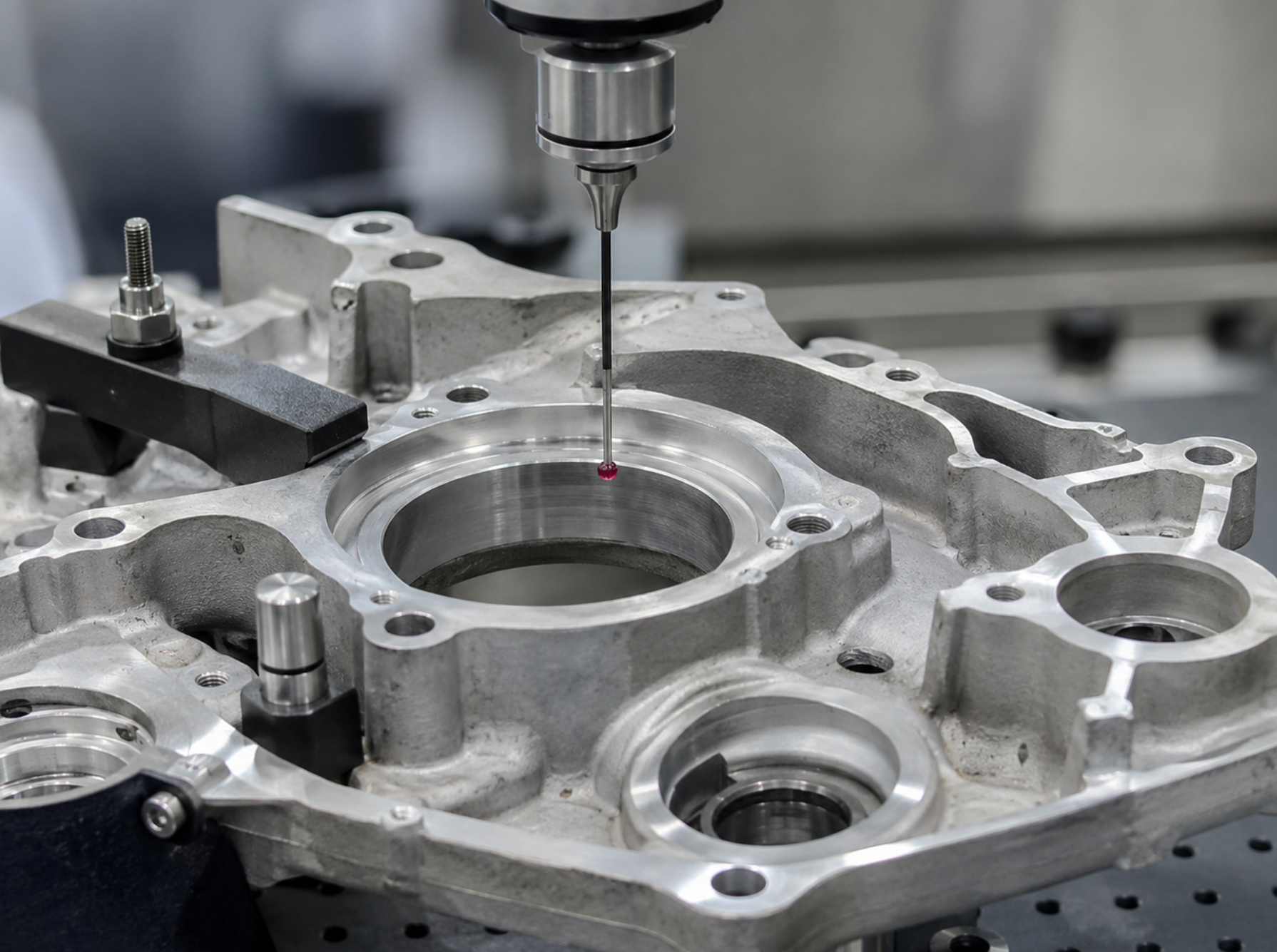
Automotive aluminum housings often combine cast geometry and precision machined features. Cast surfaces may need profile and deformation checks, while machined holes, bores, and sealing faces usually require tighter tolerance verification. The CMM inspection plan should be built according to the functional datum structure, not only random dimensions.
For high-value automotive projects, the most important features are usually those that affect assembly, sealing, rotation, positioning, or customer approval. These features should be clearly marked before building the measurement program.
| Inspection Feature | Why It Matters | Recommended CMM Focus |
|---|---|---|
| Hole Position | Affects bolt assembly and customer mounting accuracy | Touch probe and GD&T position tolerance |
| Bore Diameter And Alignment | Important for bearings, shafts, gears, and rotating systems | Stable stylus, bore strategy, coaxiality evaluation |
| Sealing Face Flatness | Helps prevent leakage and assembly failure | Plane measurement and datum alignment |
| Profile Of Cast Surface | Checks casting deformation and surface deviation | Scanning probe or CAD comparison software if required |
| Datum Relationship | Controls functional assembly reference | Correct fixture and GD&T software strategy |
4. Recommended CMM Configuration For Automotive Aluminum Housing
Most automotive aluminum housings can be inspected with a bridge CMM when the part size is within the machine measuring range. For larger EV battery-related housings or long structural components, buyers may need a larger measuring range or a customized inspection solution. The correct configuration should be selected according to part drawing, tolerance, fixture height, probe clearance, and inspection volume.
Recommended Configuration
Machine Type: Bridge CMM for stable 3D dimensional inspection.
Measuring Range: Selected according to maximum housing size, fixture height, and probe movement space.
Probe System: Touch trigger probe for holes, bores, planes, and standard dimensions; scanning probe if profile data is required.
Fixture: Custom fixture or modular fixture designed around datum location and controlled support.
Software: CAD import, GD&T evaluation, automatic report, and SPC output for production control.
Service: Installation, calibration, training, and acceptance testing support.
Buyers should compare complete CMM solutions, not only machine price. A quotation should clearly include machine model, measuring range, accuracy, probe package, software functions, fixture options, calibration, training, and after-sales service.
5. Fixture Design Must Prevent Housing Deformation
Fixture design is especially important for aluminum housings because many parts have thin walls, ribs, irregular casting surfaces, and areas that can deform under excessive clamping force. If the fixture does not support the housing correctly, the CMM may measure fixture-induced deformation instead of the real part condition.
The fixture should locate the housing according to the drawing datum, support the part at stable points, avoid over-clamping, and leave enough access for the probe. For repeated batch inspection, a dedicated fixture can reduce loading time and improve consistency across operators and shifts.
Fixture Checklist
Does the fixture match the housing datum structure?
Can the housing be loaded in the same position every time?
Is the clamping force controlled to avoid deformation?
Can the probe access bores, holes, sealing faces, and side features?
Is the fixture suitable for first article inspection or batch inspection?
Can the fixture support similar future housing parts?
6. GD&T Report And PPAP Documentation
Automotive aluminum housing drawings often include GD&T requirements such as position, flatness, profile, parallelism, perpendicularity, coaxiality, concentricity, and runout. A suitable CMM software package should evaluate these tolerances clearly and generate reports that can support PPAP files, customer approval, quality audits, and supplier performance reviews.
A useful inspection report should include nominal values, measured values, deviation, tolerance, pass/fail result, datum references, part ID, drawing number, operator, inspection date, and program version when required.
| Report Function | Value For Automotive Suppliers |
|---|---|
| CAD Import | Supports comparison between housing geometry and CAD model |
| GD&T Evaluation | Verifies position, flatness, profile, coaxiality, and datum-based tolerances |
| Automatic Report | Reduces manual reporting time and supports traceability |
| SPC Data Output | Helps monitor machining drift and batch stability |
| Pass / Fail Result | Helps quality teams make faster approval decisions |
7. What Buyers Should Provide Before Requesting A Quote
To recommend a suitable CMM for automotive aluminum housing inspection, the supplier needs complete application information. A simple request for “CMM price” is not enough because different housings may require different measuring ranges, probes, fixtures, software modules, and service support.
Quotation Information Checklist
Automotive aluminum housing drawings and CAD files
Maximum part length, width, height, and weight
Material, wall thickness, surface condition, and machining process
Critical dimensions and tolerance requirements
GD&T items and datum references
Measured features: holes, bores, sealing faces, mounting planes, profiles, and side features
Inspection purpose: FAI, PPAP, batch inspection, final inspection, or process control
Required probe type, fixture type, software report, and SPC output
Installation environment, calibration needs, and service expectations
8. Common Mistakes To Avoid
Choosing a CMM only by price without checking housing tolerance requirements.
Selecting measuring range without considering fixture height and probe clearance.
Ignoring thin-wall deformation caused by poor fixture support.
Using simple dimension checks when GD&T reporting is required by automotive customers.
Not checking whether the probe can reach side holes, deep bores, and sealing faces.
Comparing quotations without confirming probe, software, calibration, and service details.
Requesting a quote without drawings, CAD files, tolerance data, or inspection purpose.
Skipping real part testing before final machine acceptance.
Conclusion
Automotive aluminum housing inspection requires more than basic dimensional checking. These parts often include bores, mounting holes, sealing faces, datum planes, thin-wall areas, and complex cast geometry. A suitable coordinate measuring machine solution should combine the right measuring range, stable machine structure, proper probe configuration, repeatable fixture design, GD&T software, calibration support, and reporting workflow. By providing drawings, CAD files, tolerance data, measured features, and production requirements before quotation, buyers can receive a more accurate CMM recommendation for automotive aluminum housing inspection.
Need A CMM For Automotive Aluminum Housing Inspection?
Related product and article resources
For procurement comparison and technical evaluation, readers can continue with these related product pages and supporting articles.
- Products
- Product catalog
- Contact the sales team
- Contact us
- 100% Inline Automatic Inspection for Automotive Body-in-White: Technology Breakdown
- 5-Axis Machining Centers: Capabilities for Complex Geometry Manufacturing
- 5 Key Features of High-End CMMs
- A Look Inside a Fully Automated Chassis Arc Welding Production Line
Send us your automotive aluminum housing drawing, CAD file, tolerance requirement, measured features, and production volume. We can help evaluate a suitable CMM configuration for your inspection project.