


100% Inline Automatic Inspection for Automotive Body-in-White: Technology Breakdown
2026-04-11 13:48The Evolution from Offline Sampling to 100% Inline Measurement
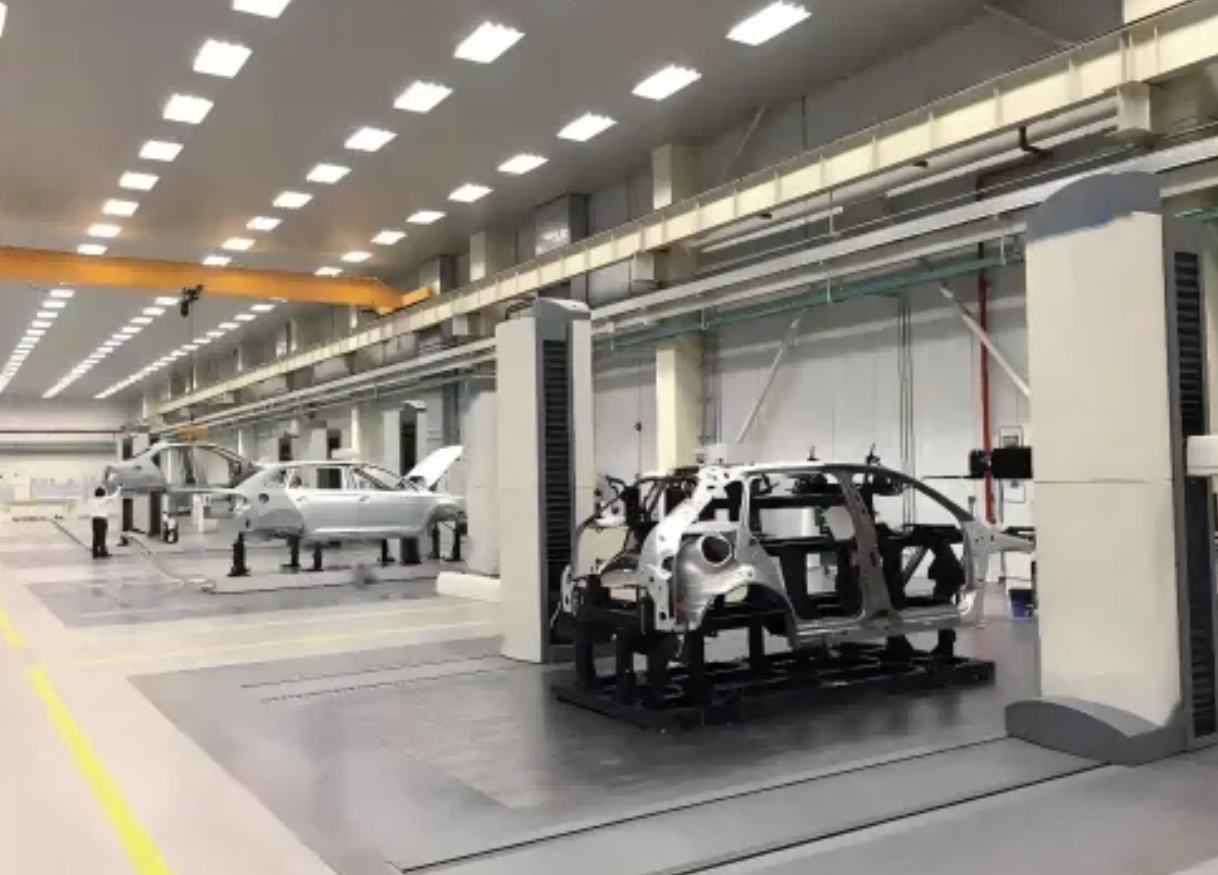
The automotive Body-in-White (BIW) represents the foundational skeletal structure of a vehicle, and its dimensional accuracy is paramount for subsequent assembly, fit-and-finish, and overall quality. Traditionally, BIW inspection relied on offline Coordinate Measuring Machines (CMMs) performing statistical sampling, a method that is time-consuming, disrupts production flow, and risks allowing defective bodies to proceed down the line. The paradigm shift to 100% inline automatic inspection addresses these critical flaws by integrating measurement systems directly into the production line. This approach enables the measurement of every single BIW—or every critical sub-assembly like a door or underbody—without removing it from the production sequence. The core motivation is real-time quality control. By capturing comprehensive 3D data on every unit, manufacturers gain a complete, rather than statistical, understanding of their process stability. This allows for instantaneous feedback and process correction, moving quality assurance from a reactive, post-production audit to a predictive and proactive function integrated within manufacturing. The technological enabler for this revolution is the fusion of high-speed, non-contact 3D sensors with robotics and automation, creating a seamless flow of data that is synchronized with the production cycle itself. The result is a closed-loop manufacturing system where quality is continuously verified and controlled.
The Evolution from Offline Sampling to 100% Inline Measurement
The automotive Body-in-White (BIW) represents the foundational skeletal structure of a vehicle, and its dimensional accuracy is paramount for subsequent assembly, fit-and-finish, and overall quality. Traditionally, BIW inspection relied on offline Coordinate Measuring Machines (CMMs) performing statistical sampling, a method that is time-consuming, disrupts production flow, and risks allowing defective bodies to proceed down the line. The paradigm shift to 100% inline automatic inspection addresses these critical flaws by integrating measurement systems directly into the production line. This approach enables the measurement of every single BIW—or every critical sub-assembly like a door or underbody—without removing it from the production sequence. The core motivation is real-time quality control. By capturing comprehensive 3D data on every unit, manufacturers gain a complete, rather than statistical, understanding of their process stability. This allows for instantaneous feedback and process correction, moving quality assurance from a reactive, post-production audit to a predictive and proactive function integrated within manufacturing. The technological enabler for this revolution is the fusion of high-speed, non-contact 3D sensors with robotics and automation, creating a seamless flow of data that is synchronized with the production cycle itself. The result is a closed-loop manufacturing system where quality is continuously verified and controlled.
Impact and ROI: From Data to Decision and Closed-Loop Manufacturing
Implementing a 100% inline BIW inspection system delivers a transformative return on investment that extends far beyond simple defect detection. The most immediate benefit is the complete elimination of escaped defects. No defective body proceeds to the costly paint shop or final assembly, preventing massive rework costs and line stoppages. Secondly, the system generates a continuous stream of real-time SPC data, providing an unprecedented, holistic view of production health. Engineers can monitor dimensional trends, identify process variations as they begin, and perform root cause analysis with pinpoint accuracy, shifting from detection to predictive quality control. This data can be integrated into the factory's Manufacturing Execution System (MES) or digital twin, creating a live, virtual representation of the production line's quality state. Furthermore, the system provides automated reporting and traceability, linking every measurement to a specific Vehicle Identification Number (VIN), which is crucial for recalls and continuous improvement. The ultimate goal is closed-loop control: measurement data is automatically fed back to adjust upstream processes, such as robot welding paths or fixture clamping forces, creating a self-correcting manufacturing system. This level of automation and intelligence, as delivered by integrated solutions from companies like HUACELIANGYI, dramatically improves first-time quality, reduces scrap and rework, accelerates time-to-market for new models, and provides the empirical data backbone for smart, data-driven manufacturing.
Related product and article resources
For procurement comparison and technical evaluation, readers can continue with these related product pages and supporting articles.
- Products
- Product catalog
- Contact the sales team
- Contact us
- 5-Axis Machining Centers: Capabilities for Complex Geometry Manufacturing
- 5 Key Features of High-End CMMs
- A Look Inside a Fully Automated Chassis Arc Welding Production Line
- A Tour of HUACELIANGYI's State-of-the-Art Production Facility and Testing Center
The implementation of 100% inline automatic inspection for Body-in-White represents a fundamental leap from quality auditing to quality manufacturing. It is a strategic, data-centric technology that transforms inspection from a bottleneck into a powerful, integrated process control tool. By leveraging high-speed robotic 3D scanning, real-time data processing, and seamless MES integration, this technology provides complete visibility and control over the BIW manufacturing process. The result is a dramatic reduction in cost of quality, a robust foundation for zero-defect strategies, and the agility to respond instantly to process variations. For automotive manufacturers, investing in this level of inline inspection technology is no longer a luxury but a necessity for achieving the levels of efficiency, quality, and traceability demanded by modern, competitive production. It is the technological cornerstone for building the intelligent, responsive, and highly efficient factories of the future.