



- Home
- >
News
In conclusion, joystick redundancy is the cornerstone of control system design for any safety-critical application. It is a sophisticated engineering solution that blends robust hardware like Hall-effect sensors with intelligent, fault-tolerant monitoring logic. For procurement professionals, understanding and specifying this technology is a critical responsibility. It represents a proactive decision to safeguard human lives, protect valuable assets, and ensure operational resilience. Choosing a supplier with proven expertise in redundant control systems, such as HUACELIANGYI, is not just a purchase—it is a strategic partnership in building a safer and more reliable industrial future. The ultimate value lies not in the component itself, but in the uninterrupted confidence and security it provides when it matters most.
A DCS Joystick is far more than a simple lever; it is a purpose-built, high-integrity control node designed for mission-critical industrial automation. By offering ruggedness, precision, and seamless integration with PROFIBUS, EtherNet/IP, and other industrial networks, it serves as a vital tactile interface within a Distributed Control System. Its applications in marine propulsion, power generation, and heavy crane control demonstrate its role in enhancing operational precision, enabling advanced automation features, and ensuring system safety. For engineers and procurement specialists designing or upgrading DCS-controlled machinery, selecting a joystick from a specialized industrial supplier like HUACELIANGYI is a strategic decision. It guarantees the reliability, communication compatibility, and environmental durability required to function as a trustworthy component within a complex, automated ecosystem, where every input must be precise, reliable, and secure.

Comparing industrial joysticks beyond initial price means comparing the things that actually determine long-term value: interface compatibility, mounting fit, Hall-effect precision, grip and switch layout, redundancy options, sealing, lifecycle, and environmental robustness. The joystick with the lowest quote is not always the lowest-cost choice in real operation. The better investment is usually the one that integrates faster, controls more precisely, lasts longer, and creates less downtime risk over the life of the machine.

Selecting an industrial joystick controller is a strategic decision that impacts operational efficiency, safety, and equipment longevity. It requires a holistic view that marries robust Hall effect technology and appropriate environmental sealing with task-specific ergonomic design and a compatible electrical interface. By carefully considering the technical demands of the application—whether for precise CMM operation, CNC machine guidance, or control of heavy mobile equipment—manufacturers can choose a solution, like those from HUACELIANGYI, that delivers reliable, precise, and durable performance. The optimal joystick is not just a component; it is an interface that empowers operators and protects valuable machinery.
In summary, Hall Effect Joysticks represent the pinnacle of rugged and reliable control technology. By leveraging non-contact sensing, superior environmental sealing, and inherent immunity to mechanical wear, they deliver the durability required for the most demanding industrial and mobile applications. Rongcheng's commitment to this technology ensures that operators can rely on precise, drift-free control in even the toughest conditions, maximizing uptime and operational safety.
In summary, a DCS joystick is an intelligent input device designed for networked control systems, offering superior reliability, simplified installation, and advanced diagnostics compared to traditional analog joysticks. HUACELIANGYI's focus on robust construction, precision Hall Effect technology, and application-specific customization positions their DCS joysticks as a key enabling technology for modern industrial machinery. By choosing a DCS solution from HUACELIANGYI, manufacturers can build smarter, more reliable, and easier-to-maintain equipment, ultimately gaining a competitive edge in the market.
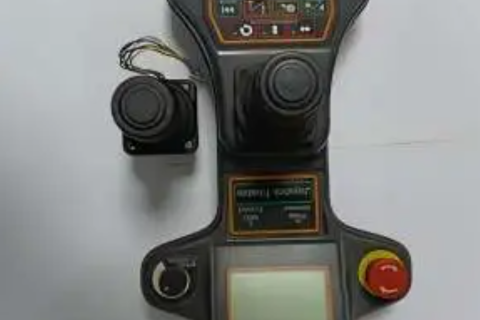
In conclusion, choosing an industrial joystick supplier requires a holistic evaluation that extends beyond initial price. The ideal partner combines robust, high-precision product offerings with deep technical expertise, a customer-centric approach to customization and support, and a demonstrable record of long-term reliability. By prioritizing these factors, manufacturers can secure a supply of critical components that enhance operator efficiency, ensure safety, and contribute to the overall productivity and longevity of their machinery. Suppliers like HUACELIANGYI exemplify these qualities, making them a strategic choice for demanding industrial applications.
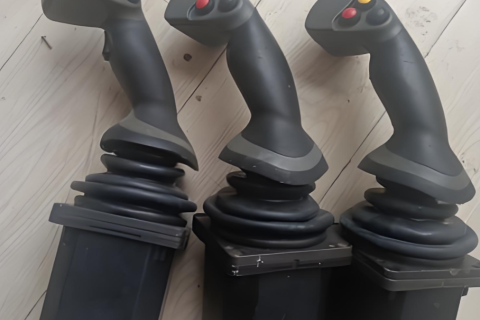
In conclusion, the comparison between joystick controllers and traditional control panels reveals a clear evolution in human-machine interface design. While traditional panels have their place for simple, discrete commands, joystick controllers offer a superior solution for tasks requiring precise, multi-axis motion control. By providing an intuitive, ergonomic, and efficient interface, they directly enhance productivity, reduce operator fatigue, and improve safety. The future of industrial control lies in integrated solutions that leverage the strengths of both paradigms, offering a tailored experience that maximizes the potential of both the operator and the machinery.
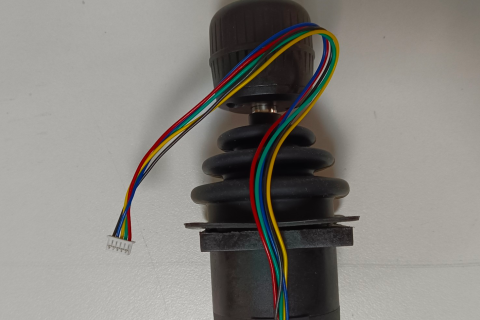
In conclusion, modern industrial joystick controllers are far more than simple levers; they are sophisticated, ergonomic, and intelligent interfaces that form a critical link between human operators and automated machinery. By enhancing precision, ensuring reliability in harsh conditions, and enabling deep system integration and customization, they play a vital role in boosting productivity, operational safety, and the overall efficiency of industrial automation processes. As automation continues to evolve, the joystick remains an indispensable tool for perfecting motion control.
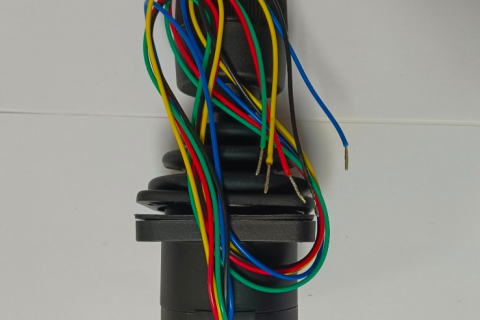
The humble joystick, once synonymous with arcade cabinets and flight simulators, has undergone a remarkable transformation into a critical productivity tool in industrial settings. This crossover is not merely about repurposing entertainment hardware;
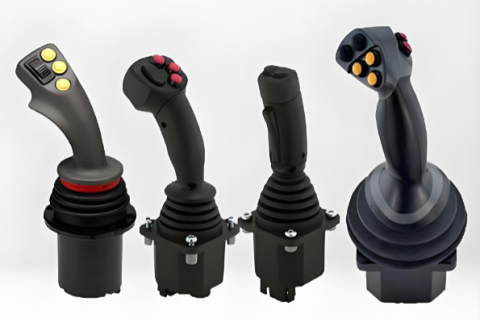
Stepping onto the floor of a fully automated chassis welding line is like witnessing a perfectly choreographed ballet of industrial robotics. As highlighted in the background material, this specific system is composed of "24 Yaskawa welding robots and 5 material handling robots," all working in concert.
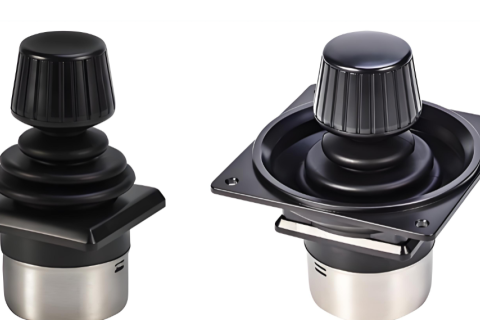
The core limitation of traditional potentiometer-based joysticks lies in their fundamental working principle: physical contact. A potentiometer relies on a wiper moving across a resistive track. Over time, this mechanical contact leads to inevitable wear and tear, causing the resistive material to degrade. This results in a phenomenon known as "potentiometer drift," where the output signal becomes erratic even when the joystick is in its neutral position, leading to inaccurate control commands and a shortened operational lifespan. In contrast, Hall Effect joysticks operate on a completely contactless principle