


What is a DCS Joystick and Its Applications in Distributed Control Systems?
2026-04-14 14:00Defining the DCS Joystick: A Ruggedized Control Interface for Critical Systems
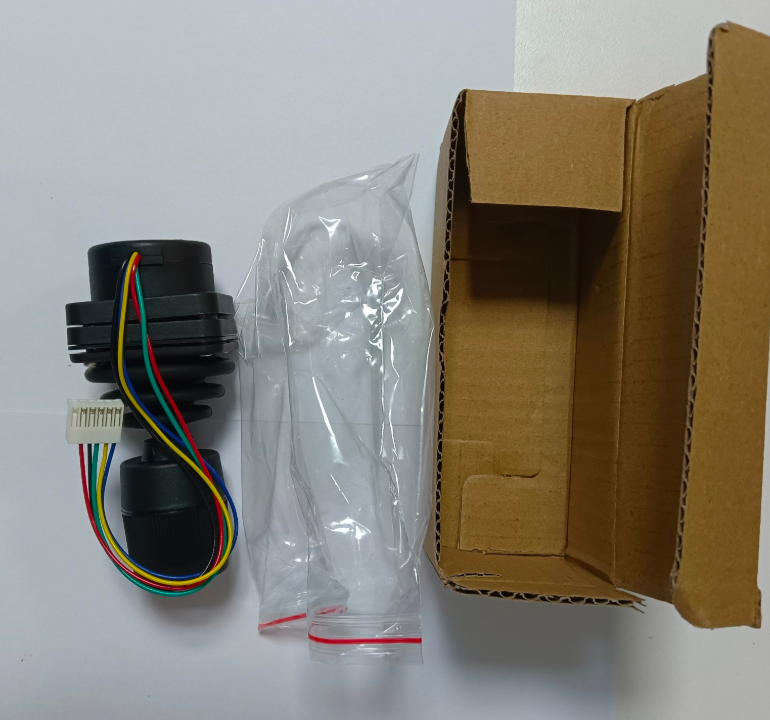
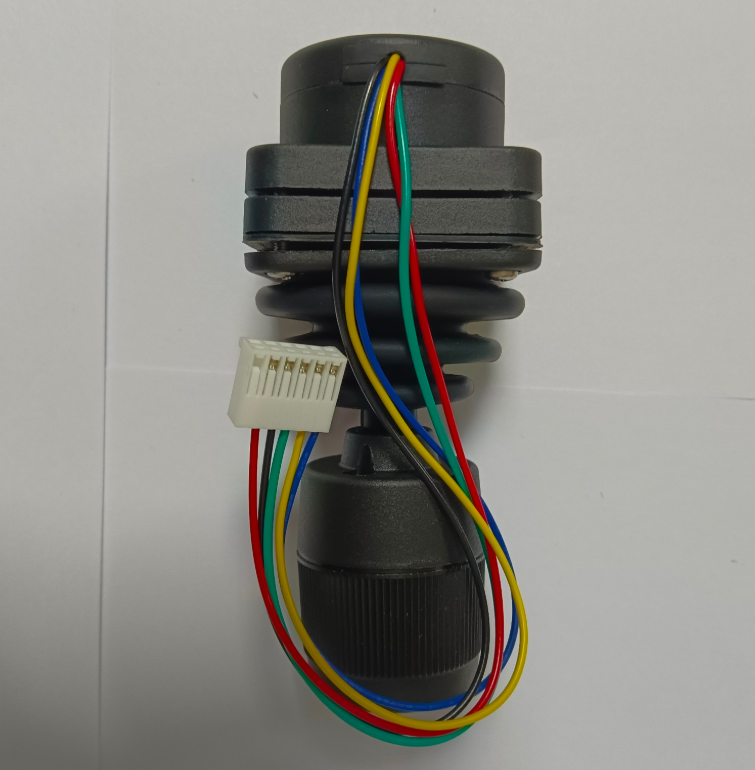
A DCS Joystick is a specialized industrial-grade manual control device engineered for integration into Distributed Control Systems. While a standard joystick provides basic directional input, a DCS Joystick is fundamentally designed for critical process control, high reliability, and seamless communication within a complex industrial network. Its core function is to translate precise operator movements into high-integrity digital or analog signals that a DCS can interpret to control a physical process, such as valve positioning, crane movement, or actuator speed. Key differentiators from commercial-grade joysticks include ruggedized construction to withstand harsh environments (featuring high IP ratings for dust and water ingress protection), industrial-grade connectors, and components rated for extreme temperatures and shock/vibration. Internally, they often employ non-contact Hall-effect sensor technology, which eliminates wear from physical contact points, ensuring long-term accuracy and reliability. Furthermore, a true DCS Joystick is designed with system-level considerations like redundancy options, fail-safe modes, and diagnostic feedback. This makes it not just an input device, but a certified control component suitable for applications in oil & gas, power generation, chemical processing, and marine systems where safety and uptime are paramount. Suppliers like HUACELIANGYI design these joysticks to meet the rigorous electrical and mechanical specifications required for such integration.
Integration in the DCS Architecture: Communication, Control, and Safety
Within a Distributed Control System, the DCS Joystick acts as a critical Human-Machine Interface (HMI) node, bridging the operator's intent with the automated process. The joystick is connected to a local I/O module or a dedicated control box, which handles signal conditioning, scaling, and communication with the DCS controller via fieldbus networks like PROFIBUS DP, PROFINET, EtherNet/IP, or Modbus TCP/IP. This networked integration allows for remote configuration, real-time status monitoring, and centralized diagnostics. The control logic for the joystick's input is programmed within the DCS's engineering software. For example, a slight movement of the joystick might linearly control the opening of a main steam valve from 0% to 100%, with the DCS managing the rate of change to ensure process stability. Advanced features are crucial: dual-channel redundant outputs allow two independent sensors to send signals, enabling the control system to perform cross-comparison for fault detection. Fail-safe spring return-to-center or latching functions can be specified. A key application is in critical maneuvering systems, such as positioning a ship's azimuth thruster or controlling a gantry crane in a steel mill. Here, the DCS integrates the joystick's input with data from other sensors (e.g., wind speed, load weight) to assist the operator with augmented control or automatic limit prevention, enhancing both precision and safety. The DCS Joystick, therefore, becomes an intelligent, data-aware point of control within a larger, automated ecosystem.
Key Applications: From Marine Propulsion to Industrial Crane Control
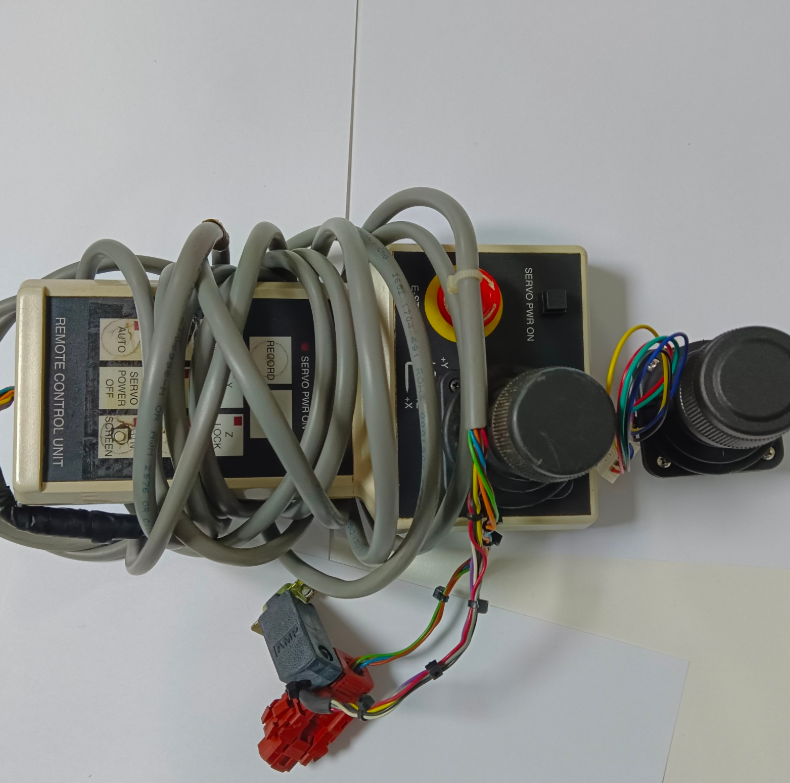
The application of DCS Joysticks spans industries where centralized, networked control of heavy machinery is essential. In the marine and offshore sector, they are the primary control interface for Dynamic Positioning (DP) systems and azimuth thruster control. Here, an operator uses a single joystick to command a vessel's surge, sway, and yaw movements by vectoring multiple thrusters, with the DCS performing complex power management and anti-collision calculations. In power plants, especially in bulk material handling for coal or biomass, DCS Joysticks remotely control stacker-reclaimers and ship loaders, integrating with the plant's DCS for automated stockpile management. For heavy industrial cranes in steel mills, ports, and manufacturing, these joysticks provide precise control of hoist, trolley, and bridge movements. Integration with the plant DCS allows for features like anti-sway control, collision avoidance, and automated positioning to pre-set waypoints, significantly improving safety and efficiency. The rugged reliability of a DCS-grade joystick from a manufacturer like HUACELIANGYI is vital in these environments, resisting constant mechanical vibration, moisture, and corrosive atmospheres. In each case, the joystick is not a standalone device but a networked component enabling centralized monitoring, data logging for operational analysis, and the implementation of sophisticated safety interlocks within the DCS's programmable logic, transforming manual control into a seamless part of an intelligent, automated process.
A DCS Joystick is far more than a simple lever; it is a purpose-built, high-integrity control node designed for mission-critical industrial automation. By offering ruggedness, precision, and seamless integration with PROFIBUS, EtherNet/IP, and other industrial networks, it serves as a vital tactile interface within a Distributed Control System. Its applications in marine propulsion, power generation, and heavy crane control demonstrate its role in enhancing operational precision, enabling advanced automation features, and ensuring system safety. For engineers and procurement specialists designing or upgrading DCS-controlled machinery, selecting a joystick from a specialized industrial supplier like HUACELIANGYI is a strategic decision. It guarantees the reliability, communication compatibility, and environmental durability required to function as a trustworthy component within a complex, automated ecosystem, where every input must be precise, reliable, and secure.