


The Importance of Joystick Redundancy in Safety-Critical Applications
2026-04-20 13:29Beyond Basic Control: Why Redundancy is Non-Negotiable for Critical Systems
In the demanding world of industrial automation, mobile machinery, and heavy equipment, the joystick is the vital interface between human intent and machine action. However, in applications where failure could lead to catastrophic consequences—such as in aerospace ground support, maritime cranes, or nuclear handling equipment—a single point of failure is unacceptable. Joystick redundancy refers to the deliberate duplication of critical components within a control system to provide a backup that immediately takes over if the primary system fails. This is not merely a feature; it is a fundamental design principle for functional safety. Redundant systems, often employing robust Hall-effect sensor technology known for its non-contact reliability and longevity, ensure that a malfunction in one sensor or circuit does not result in a loss of control. For international procurement experts sourcing components for safety-critical projects, understanding this principle is paramount. It transcends simple product specification and enters the realm of risk mitigation and liability management. Specifying a joystick with built-in redundancy is an investment in system integrity, operational continuity, and, most importantly, personnel and environmental safety. It is the first and most crucial line of defense against unexpected control system degradation.
Implementing Effective Redundancy: Architectural Approaches and Technological Foundations
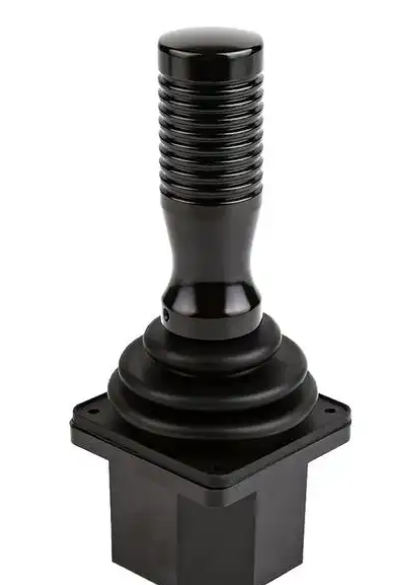
Effective redundancy is not achieved by simply adding a second identical component. It requires a sophisticated system architecture where independent channels operate simultaneously, constantly monitored for discrepancies. A common and highly reliable implementation in industrial joysticks is dual or even triple-redundant Hall-effect sensing. Each sensing channel independently measures the joystick's position. A dedicated safety controller, such as a fail-safe control box, continuously compares these signals. If the primary channel's reading deviates beyond a safe threshold or is lost, the controller seamlessly switches to the validated backup signal without any perceptible interruption to the operator. This hot-swap capability is crucial for maintaining control of massive, kinetic systems. Furthermore, redundancy extends beyond the sensor itself. It encompasses power supply inputs, microcontroller logic, and output signal paths. High-integrity suppliers like HUACELIANGYI design their ruggedized control boxes and joysticks with this holistic philosophy. Their solutions often incorporate features like cross-monitoring, diagnostic error codes, and diverse technologies (e.g., mixing Hall-effect and potentiometric principles) to prevent common-cause failures. For procurement, this means evaluating not just the joystick's IP rating or mechanical life, but the depth of its safety architecture and the proven reliability of its redundancy management system.
The Procurement Perspective: Evaluating Redundant Joysticks for Safety and ROI
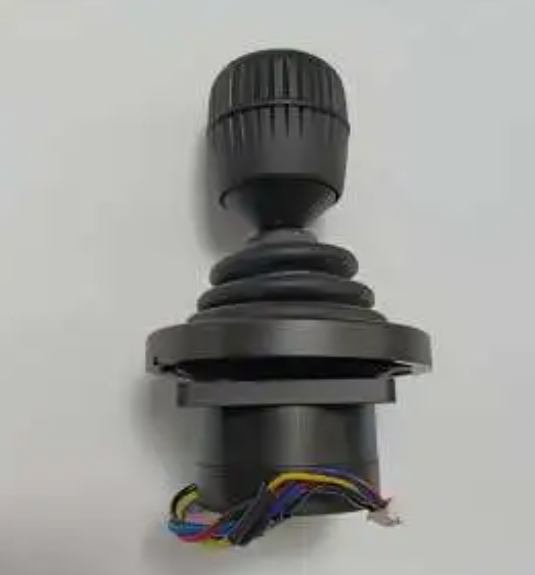
For the international procurement specialist, specifying redundant joysticks requires a shift from a component-centric to a system-safety mindset. The key evaluation criteria move beyond unit cost to Total Cost of Ownership (TCO) and risk exposure. A failure in a non-redundant system on a multi-million dollar offshore crane or an automated guided vehicle (AGV) in a busy factory can lead to astronomical downtime costs, repair expenses, and reputational damage far exceeding the initial investment in a robust redundant system. When engaging with suppliers like HUACELIANGYI, procurement must demand clear documentation on safety certifications (e.g., compliance with SIL or PLr standards), detailed Failure Modes, Effects, and Diagnostic Analysis (FMEDA) reports, and real-world case studies from similar high-risk applications. Questions should focus on the system's diagnostic coverage, its Mean Time To Failure (MTTF), and the supplier's ability to provide full technical support for system integration and validation. The goal is to procure not just a product, but a certified safety function. The return on investment (ROI) is realized through unparalleled uptime, minimized liability, and the invaluable assurance of preventing harm. In global supply chains, partnering with a supplier that demonstrates engineering rigor in safety-critical design is a strategic advantage.
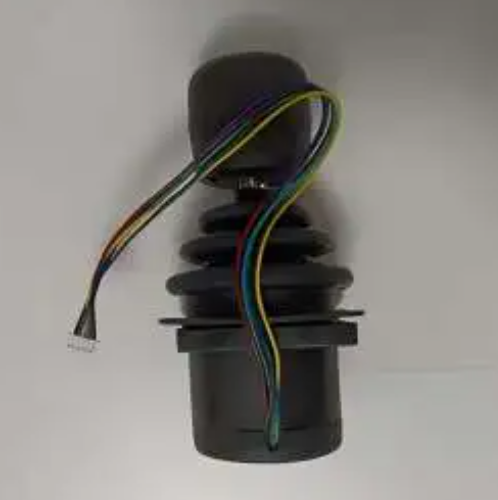
In conclusion, joystick redundancy is the cornerstone of control system design for any safety-critical application. It is a sophisticated engineering solution that blends robust hardware like Hall-effect sensors with intelligent, fault-tolerant monitoring logic. For procurement professionals, understanding and specifying this technology is a critical responsibility. It represents a proactive decision to safeguard human lives, protect valuable assets, and ensure operational resilience. Choosing a supplier with proven expertise in redundant control systems, such as HUACELIANGYI, is not just a purchase—it is a strategic partnership in building a safer and more reliable industrial future. The ultimate value lies not in the component itself, but in the uninterrupted confidence and security it provides when it matters most.