



How To Choose The Right High-Performance VMC For Precision And Heavy-Duty Cutting
2026-04-10 21:07Choosing a high-performance VMC becomes difficult when a shop needs two things at the same time: tight accuracy for precision parts and enough rigidity for aggressive metal removal. Those goals are related, but they are not identical. Official machine-tool materials show that precision-oriented VMCs are usually marketed around accuracy, rigidity, and thermal stability, while heavier-duty models are promoted around strong structures, spindle torque, chatter resistance, and cutting stability under load. The right buying decision is therefore not about chasing the highest spindle speed or the largest motor alone. It is about matching the machine’s structure, spindle package, thermal behavior, and chip-control capability to the real part mix.
Match The Machine Architecture To Your Real Cutting Priorities
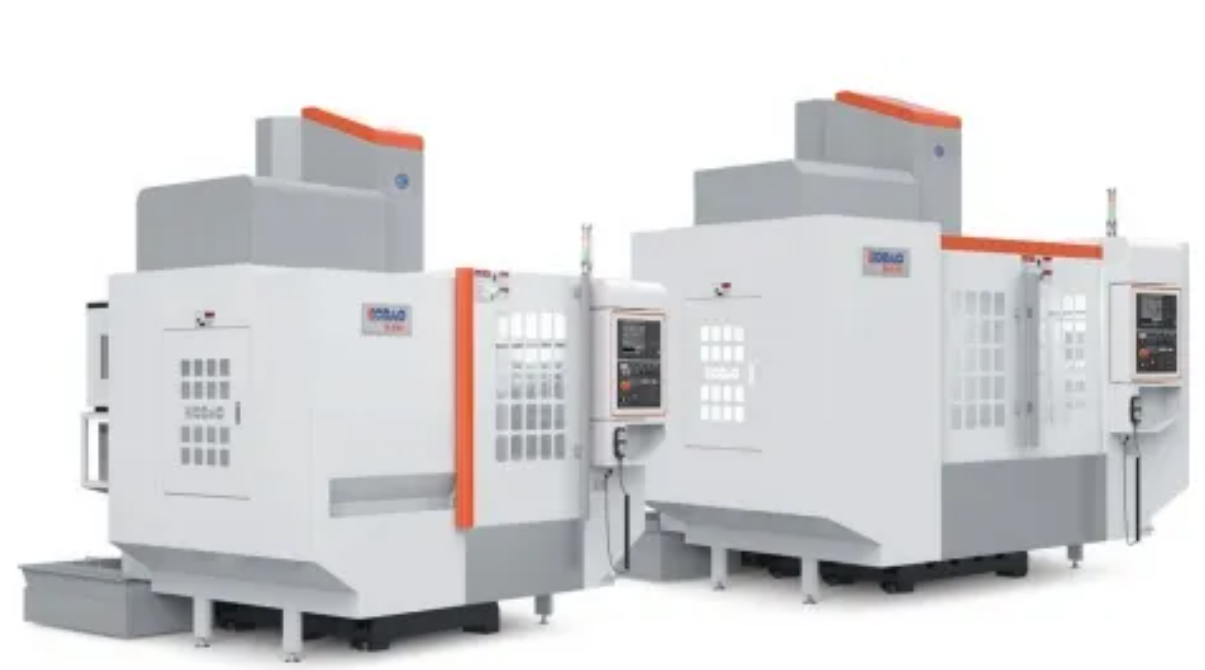
The first thing buyers should decide is whether their daily workload is primarily precision finishing, heavy roughing, or a true combination of both. Haas positions its VM Series as high-performance VMCs for mold making, tool-and-die work, and other high-precision industries, emphasizing accuracy, rigidity, and thermal stability. Makino describes the F9 as a machine designed for chatter-free heavy cutting, roughing and finishing on the same platform, while also supporting high-speed hard milling and tight-tolerance 3D geometry. That difference matters because the best machine for light, complex, high-accuracy work is not always the same machine that performs best when removing material aggressively with larger tools.
Buyers should also compare spindle and taper choices in relation to the material and cutter size they actually use. Haas’ 50-taper VM models use a high-power 10,000-rpm gearbox spindle, and Haas also describes its 50-taper VF models as providing the rigidity and stability necessary for heavy cutting, especially with tougher materials and larger-diameter tools. On the other hand, some precision-focused VMCs are built around high-speed spindle behavior, lighter moving masses, and tighter thermal control for fine surface quality and dimensional stability. This means the right question is not “Which VMC is stronger?” but “Which spindle and machine architecture fit my actual roughing-to-finishing ratio?”
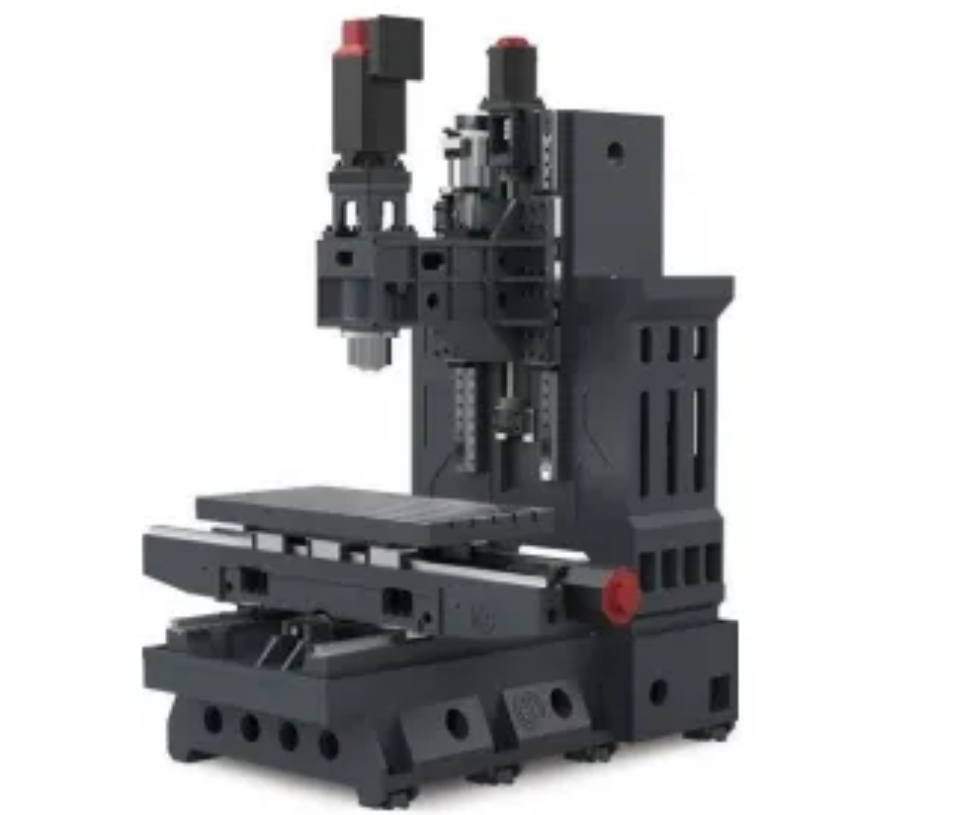
Machine structure is the third part of this first decision. Okuma’s MILLAC series emphasizes strong base-column construction, optimally placed ribs to counter chatter and twisting, and box ways for long-term accuracy and rigidity in heavy-duty cutting. DMG MORI’s NVX line emphasizes super-wide slideways, high-rigidity roller guides, and reduced thermal displacement to support rigidity and accuracy. For buyers, that means structure should be judged by the kind of work it must survive every day: long roughing passes in hard materials, tight-tolerance finishing, or a balanced mix of both.
Prioritize Thermal Stability, Spindle Behavior, And Surface Control
Once the machine category is narrowed down, buyers should focus on whether the VMC can stay accurate over time, not just during a short demo. Haas explicitly states that its VM Series provides the thermal stability required for high-precision industries. Makino’s V56i uses core-cooled ballscrews, support bearings, motor mounts, and a core-cooled saddle design to control machine thermal growth and sustain accuracy in long-cycle, complex-geometry work. Okuma’s MB-V series and related Thermo-Friendly Concept materials emphasize dimensional stability not only after warm-up, but also when room temperature changes or machining is resumed. For precision work, this is critical, because a machine that shifts with heat will eventually turn speed into scrap.
Spindle behavior matters just as much as thermal design. Makino’s V33i says its integrated spindle-and-motor design reduces vibration during high-speed operation, while the V22 is described as eliminating vibration, rotational deflection, and thermal distortion for precision work. At the same time, heavier-duty VMC examples from Haas and Okuma emphasize powerful spindles, gearbox configurations, or rigid support structures that maintain stability under larger cutting forces. This is why buyers should compare not only spindle rpm, but also vibration control, bearing support, cooling strategy, and how the spindle behaves across both high-speed finishing and lower-speed heavy cuts.
Surface quality is often the point where poor machine matching becomes visible. DMG MORI links its high-rigidity structure to reduced chatter and improved surface quality, and Haas notes that re-cutting chips leads to accelerated tool wear, poor surface finishes, and even scrap. That means surface finish is not just a tooling issue. It is the result of rigidity, thermal stability, spindle smoothness, and chip evacuation working together. Buyers who want one VMC for both precision and heavy-duty work should pay special attention to how the machine controls vibration and heat over longer cycles, not just how fast it can rapid from point to point.
Do Not Ignore Chip Removal, Coolant Strategy, And Long-Run Productivity
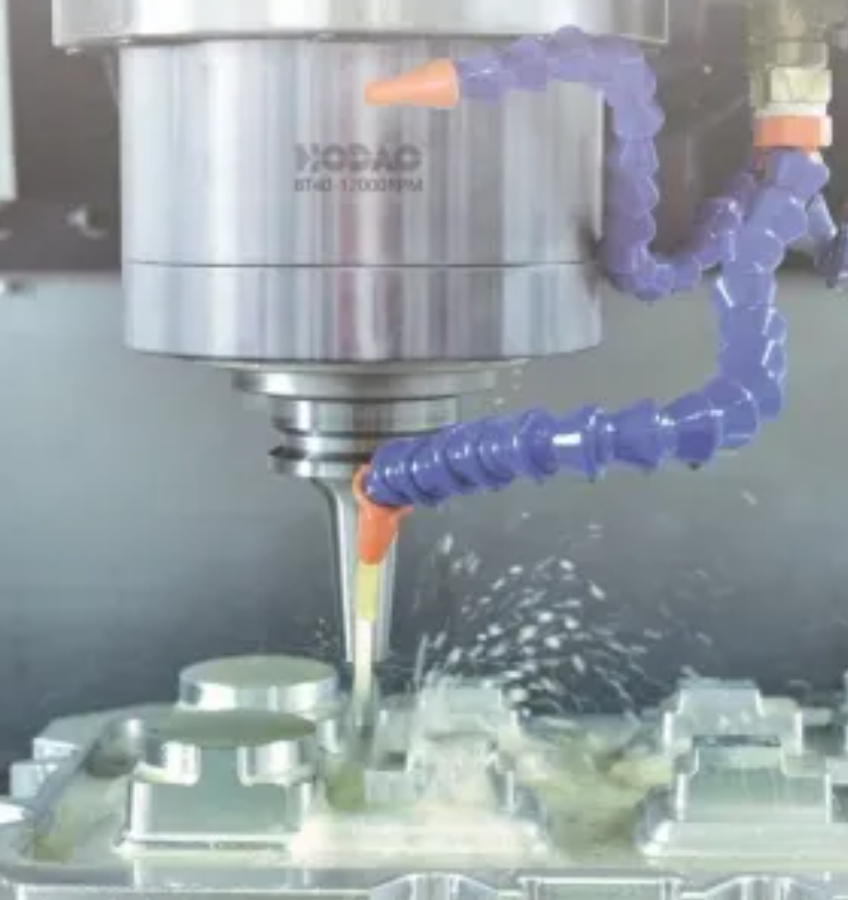
A high-performance VMC cannot stay precise or productive if chips remain in the cut. Haas explicitly warns that chip re-cutting accelerates tool wear, harms surface finish, and can create scrap. Makino’s V33i and V56i both emphasize efficient chip removal as part of their value proposition, and FANUC states that through-spindle coolant improves cycle time and tool life for holes deeper than three times tool diameter, while high pressure is especially useful with smaller tools. These are practical buying signals: when a shop wants both precision and heavy-duty cutting, chip control and coolant delivery become part of machine selection, not just optional accessories.
Coolant strategy also affects uptime and tool-to-tool stability. Okuma’s MB-66V brochure notes that through-spindle coolant can shorten tool change time by removing residual coolant from tools and spindles much faster, while Haas packages belt chip conveyors and programmable coolant nozzles specifically to improve chip evacuation and coolant targeting. Over time, those details matter because a machine that clears chips better usually holds accuracy and tool life more consistently under production load.
The smartest buyers therefore treat VMC selection as a production-system decision rather than a speed-spec decision. They ask whether the machine can rough hard enough, finish clean enough, stay thermally stable long enough, and evacuate chips well enough to support the full job mix. If most work is tight-tolerance mold, medical, or fine-detail production, a precision-biased high-speed VMC may be the better fit. If the work regularly includes tougher materials, larger cutters, and high-load roughing, a more rigid, heavier-duty configuration may be the better investment. And if the shop truly needs both, the right answer is usually a machine specifically designed to bridge roughing and finishing without giving away stability.
The right high-performance VMC for precision and heavy-duty cutting is the one that matches your real production mix, not the one with the single biggest headline number. Buyers should compare machine structure, spindle/taper configuration, thermal control, vibration behavior, chip removal, and coolant delivery as one connected system. When those elements are matched correctly, a VMC can rough aggressively, finish accurately, and stay stable over long production runs. When they are mismatched, even an expensive machine can become inefficient, unstable, or overly specialized.