



How To Evaluate Coverage Consistency In A CNC Shot Peening Process
2026-04-06 20:41In CNC shot peening, coverage consistency is one of the most important indicators of whether the process is truly under control. Coverage refers to the percentage of the part surface that has been dented by the peening media, and official references treat it as a core process variable alongside intensity and media condition. Industry guidance also notes a practical measurement limit near full coverage: some references use 98% as the practical threshold for “full coverage” because measurements above that become difficult to repeat accurately, while production specifications often still call for nominal 100% coverage or higher time multiples such as 150% or 200%. For buyers, the key point is simple: inconsistent coverage means some areas may be under-peened while others may be overexposed, and that directly affects process quality, fatigue performance, and repeatability.
Understand What “Coverage Consistency” Really Means
The first step in evaluating a CNC shot peening process is to separate coverage from intensity. Intensity measures the energy of the shot stream, commonly verified with Almen strips, while coverage measures how completely the target surface has actually been peened. Curtiss-Wright states that complete coverage is crucial in high-quality shot peening, and also notes that non-peened areas can remain vulnerable because they are not fully encased in residual compressive stress. That is why buyers should never assume that acceptable intensity automatically guarantees acceptable coverage.
Buyers should also understand that “coverage consistency” is not just about hitting a target percentage once in a lab trial. It means achieving uniform coverage across the real part geometry, across repeated cycles, and across different production shifts. Official guidance points out that coverage determination becomes harder on internal bores, tight radii, hard materials, and large surfaces. In other words, the more complex the part, the more important it becomes to evaluate whether the process can maintain uniformity in the actual production environment rather than only on easy-to-peen surfaces.
A good buyer therefore asks a more practical question: can this CNC shot peening process produce the same coverage pattern on the same critical areas every time? If the answer depends too heavily on manual adjustment, operator judgment, or frequent rework, then the process is not truly stable even if the machine looks advanced on paper.
Check The Process Factors That Actually Create Uniform Coverage
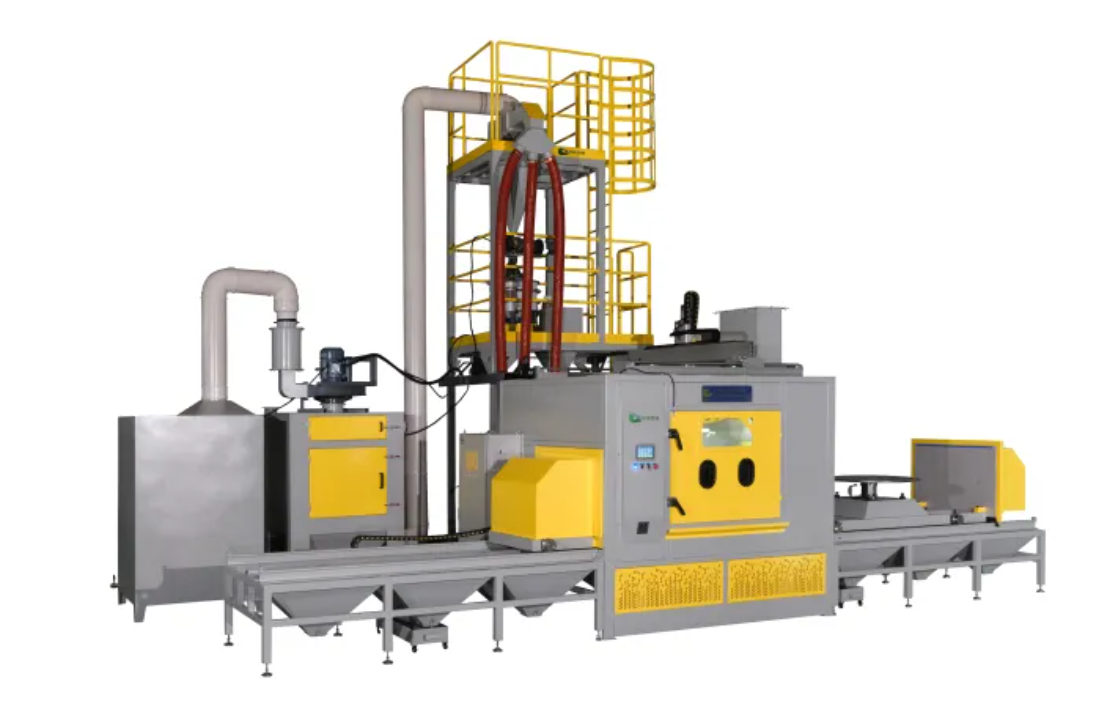
Once coverage is defined correctly, buyers should look at the machine and process variables that determine whether it can stay consistent. Public examples from automated shot peening systems show that homogeneous results depend on controlled part movement, repeatable nozzle or turbine positioning, and part-specific process programs. In a recent Rösler automotive case, the machine used preset satellite speeds plus automatic blast-pattern adjustment to the workpiece shape to achieve homogeneous peening results. Guyson likewise highlights programmable blast angle, stand-off distance, and surface speed as key reasons robotic blasting improves consistency and avoids cross-fire.
Media quality and media flow are equally important. Ervin notes that larger shot can increase intensity but can also slow coverage, while smaller shot can provide faster coverage; it also warns that wrong media size, shape, or quality can drastically affect results. Electronics Inc. adds that good shot peening requires uniform, predominantly round, unbroken media, and that mixed sizes or broken media can cause inconsistent results and surface damage. For procurement, this means coverage consistency is never just a motion-control issue. It is also a media-control issue.
The third factor is closed-loop control of critical parameters. Electronics Inc. describes closed-loop control of media mass flow and air pressure as a major contributor to high reliability and cycle-to-cycle repeatability, while its FC Controller is specifically marketed for accurate, repeatable flow regulation. Rösler also emphasizes continuous monitoring of key shot blasting parameters such as RPM, blasting time, and thrown media quantity. Buyers should treat these functions as essential, not optional, when consistent coverage is a serious requirement.
Verify How The Process Is Measured, Logged, And Proven In Production
A CNC shot peening system should not only produce good coverage; it should also prove that coverage is consistent. Curtiss-Wright notes that simple 10x magnification may be adequate on softer materials, but harder parts, tight radii, internal features, and large surfaces make coverage evaluation much more difficult. For those difficult cases, it describes fluorescent-tracer verification methods that make non-uniform coverage visible under UV light so the process can be adjusted until full obliteration is confirmed. For buyers, that means the verification method is part of the machine value, not just a laboratory detail.
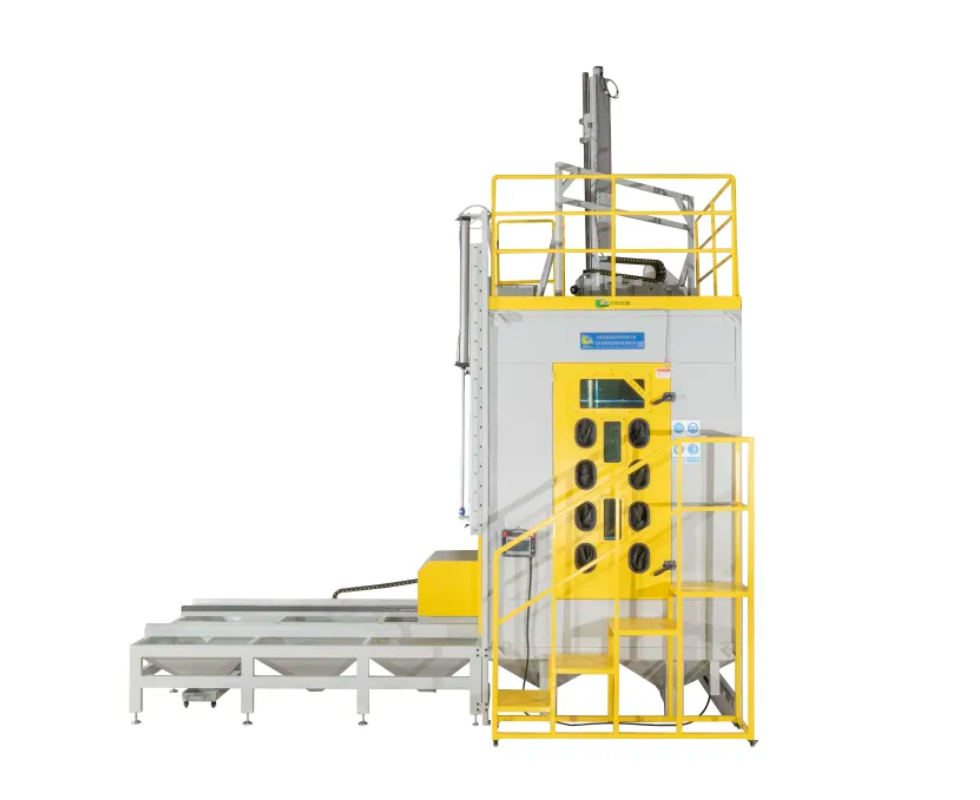
Traceability and process data matter just as much as visual verification. Electronics Inc. describes modern PLC and SCADA-based systems with real-time parameter monitoring, program recall, history recording, and parameter archiving, while Guyson describes process verification tools for intensity and coverage checks, automated catch-test components for media-flow verification, and customer-facing data collection. If a seller cannot clearly explain what data are monitored, what alarms are used, and what records are stored for each job, buyers should assume that long-term consistency may be harder to maintain than claimed.
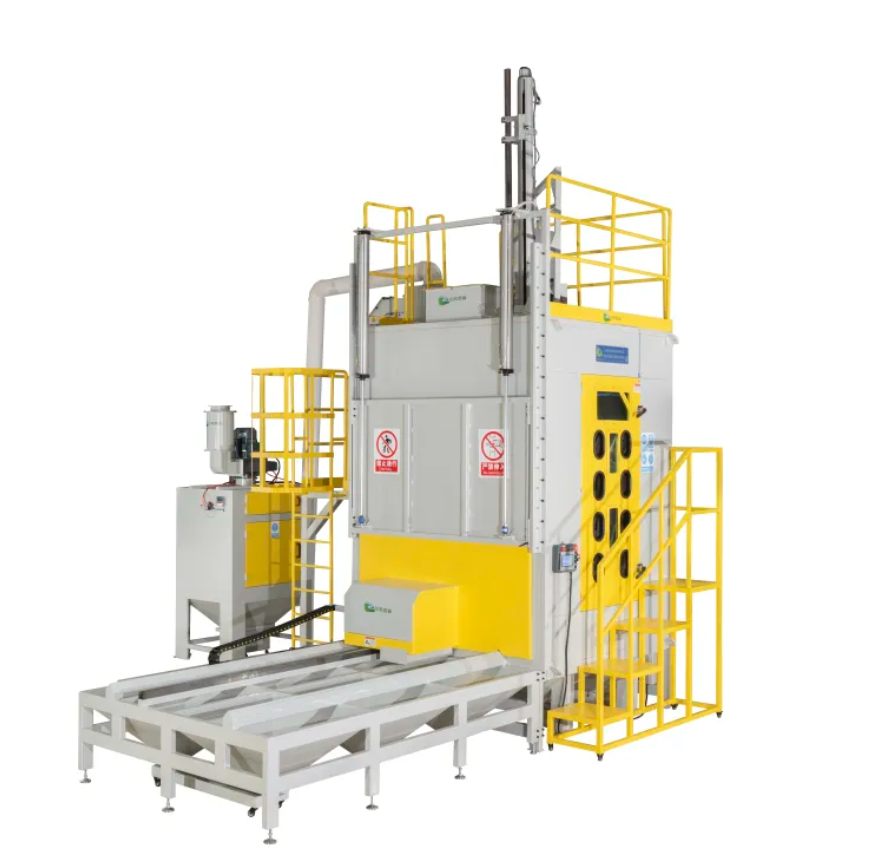
The best procurement decision therefore looks beyond headline automation and asks for proof of consistency in production terms. Buyers should request part-specific programs, explanation of blast-pattern logic, media-control method, parameter monitoring list, verification method for difficult areas, and evidence of repeatability across batches. When a CNC shot peening process combines repeatable motion, stable media flow, part-specific programming, and auditable process data, coverage consistency becomes measurable and controllable rather than operator-dependent. That is the difference between buying a machine and buying a reliable peening process.
To evaluate coverage consistency in a CNC shot peening process, buyers should focus on three things: whether coverage is defined and verified correctly, whether the machine controls the real drivers of uniformity, and whether the process is monitored and documented well enough to prove repeatability in production. A system that only promises automation is not enough. The better investment is the one that can demonstrate stable media flow, repeatable blast motion, part-specific programming, and clear verification methods for critical areas. In procurement terms, consistent coverage is not a cosmetic detail. It is one of the clearest signs that the peening process is genuinely under control.