



How To Compare Industrial Joysticks Beyond Initial Price
2026-04-07 20:46For many buyers, the first comparison point is unit price. But in real machine-control applications, an industrial joystick is not a low-value accessory. It is a core human-machine interface that affects control precision, operator comfort, installation complexity, reliability, and long-term maintenance cost. Official product pages in this category consistently emphasize Hall-effect sensing, analog and digital outputs, redundant sensors, sealing, grip configuration, and lifecycle ratings rather than price alone. That is a strong signal that serious procurement decisions should compare total application fit, not just the initial quote.
Compare Interface Fit And System Integration First
The first thing buyers should compare is whether the joystick fits the target machine architecture. Industrial joystick platforms in this market are available with multiple output options, including analog, PWM, USB, CANopen, and J1939, and some also offer PLd-oriented functional safety or redundant sensor outputs. APEM’s XD series highlights SAE J1939-71 and CANopen LSS support, while OTTO product pages list analog and digital outputs including CANopen, J1939, PWM, USB, and redundant sensor selections across several industrial joystick families.
This matters because a joystick that looks inexpensive on paper may become expensive once integration begins. If the output type does not match the control system, or if redundancy and protocol requirements are missing, engineering time increases and later modifications become more likely. In practice, the better purchase is usually the model that fits the existing electronics, connector strategy, and safety logic with the least compromise. That conclusion is an inference from the configuration breadth and safety-oriented options that manufacturers themselves emphasize.
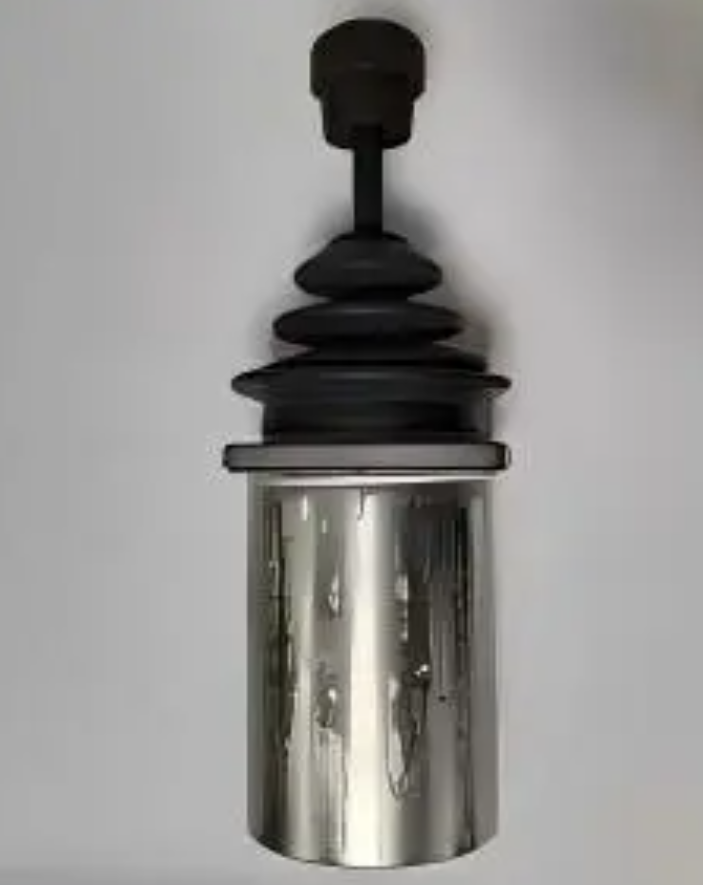
Buyers should also compare physical integration, not just electrical compatibility. OTTO’s JHM is designed for shallow behind-panel depth and armrest or panel mounting, while APEM’s XD series emphasizes less than 60 mm mounting depth and high axial load resistance. Those details directly affect whether the joystick can be installed cleanly in compact armrests, operator consoles, or heavy-duty machinery cabins without forcing a redesign.
Compare Control Precision, Grip Design, And Real Operator Usability
Once interface fit is confirmed, buyers should compare how the joystick actually performs in the operator’s hand. Contactless Hall-effect technology is repeatedly positioned by manufacturers as a major value point because it improves precision and avoids wear-prone electrical contact surfaces. PQ Controls says Hall-effect sensing eliminates wearing contacts while improving overall precision and resolution, and APEM and OTTO both center many of their industrial joystick ranges around contactless Hall-effect control.
But precision is not only about sensors. It also depends on grip design, gating feel, switch layout, and how well the joystick matches the application. OTTO highlights numerous grip styles, nearly 50 standard faceplate options on some assemblies, left- or right-handed operation, Z-axis options, and multiple gating selections. APEM’s recent customization guidance also points to configurable axes, centering behavior, ergonomics, operator presence features, and different connectivity choices as major selection factors. That means a joystick that is technically compatible may still be a poor purchase if it creates operator fatigue or slows down repetitive machine actions.
This is why buyers should compare industrial joysticks by real workflow, not by generic category. A machine used in agriculture, construction, material handling, or specialized industrial equipment may need different handgrip content, different detent or guided-feel behavior, and different switch density. OTTO explicitly positions its joystick families across agriculture, construction, material handling, and heavy equipment, while PQ Controls offers different grip styles, pushbuttons, and roller rockers to fit operating needs.
Compare Lifecycle, Sealing, And Downtime Risk
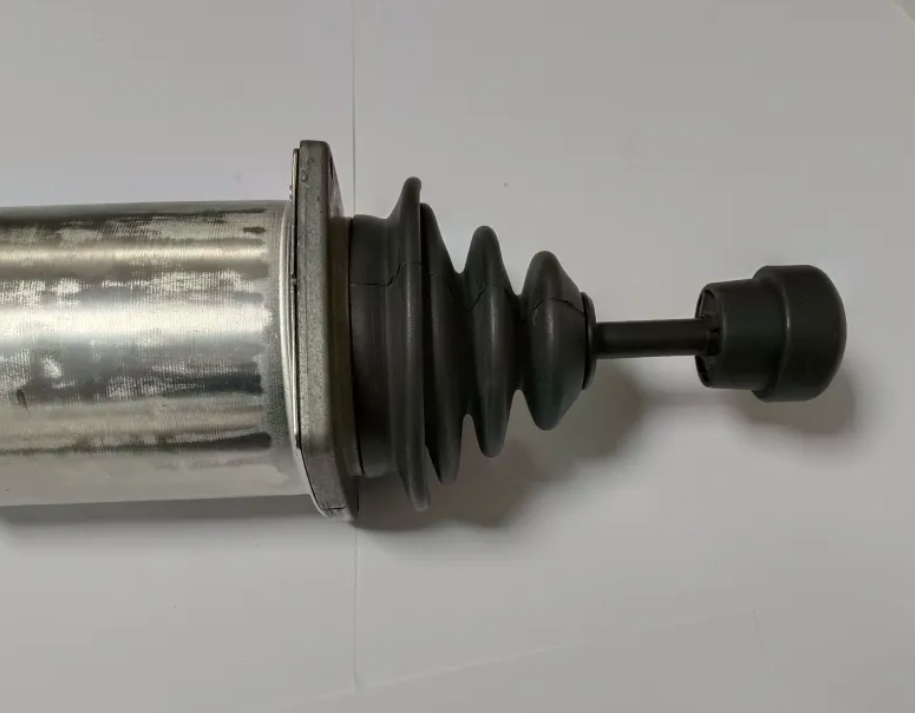
The biggest gap between a low-price joystick and a high-value joystick often shows up after installation. Official product pages show major differences in lifecycle, sealing, EMI/RFI resistance, and environmental robustness. APEM’s XD series lists joystick Hall sensors rated for 10 million lifecycles and above-panel sealing up to IP67, while PQ Controls’ Model 212 states expected life tested to 10 million cycles with weather-resistant materials and EMI/RFI resistance. OTTO’s industrial Hall-effect lines list electronics sealed to IP68S, excellent EFI/RFI immunity on some models, and mechanical life up to 6 million or, in the JHM family, up to 10 million cycles in all directions.
For procurement, these differences matter because lifecycle and sealing are closely tied to field reliability. A joystick used in construction, agriculture, off-highway equipment, or exposed operator cabins may face dust, moisture, vibration, UV, fluids, and repeated shock loading. Manufacturers explicitly position these products for harsh vehicle and machinery environments, and that suggests a reasonable comparison framework: longer tested life, stronger sealing, and better EMI/RFI immunity usually indicate lower replacement frequency and lower downtime risk over the equipment’s service life.
This is where “price” becomes misleading if viewed alone. A cheaper joystick may reduce the purchase-order total, but if it wears faster, seals poorly, or lacks the right redundancy and environmental protection, it can cost more through failures, service calls, and operator dissatisfaction. The smarter comparison is total ownership value: installation fit, control quality, durability, and maintenance exposure taken together. That is an inference, but it is strongly supported by the performance dimensions official product pages repeatedly prioritize.
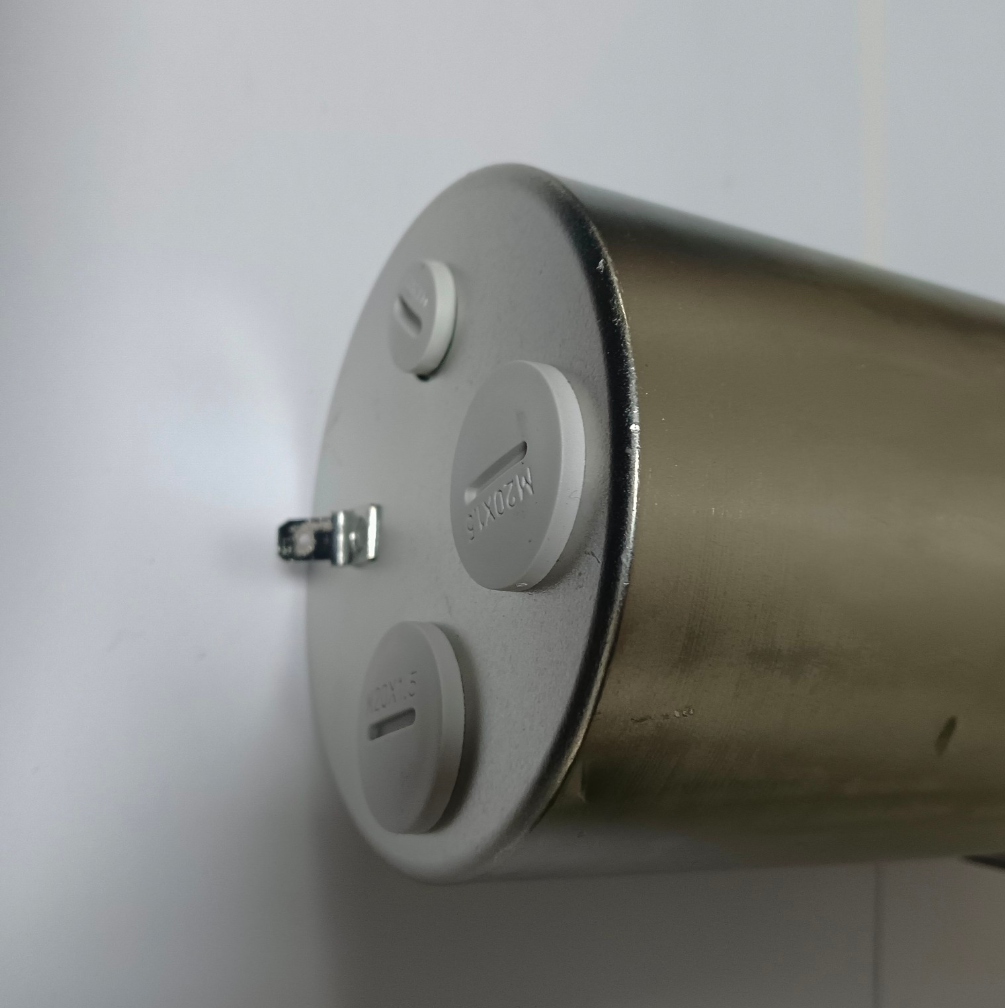
Comparing industrial joysticks beyond initial price means comparing the things that actually determine long-term value: interface compatibility, mounting fit, Hall-effect precision, grip and switch layout, redundancy options, sealing, lifecycle, and environmental robustness. The joystick with the lowest quote is not always the lowest-cost choice in real operation. The better investment is usually the one that integrates faster, controls more precisely, lasts longer, and creates less downtime risk over the life of the machine.