



How To Choose A CMM Fixture For Repeatable Part Measurement
2026-05-18 23:18How To Choose A CMM Fixture For Repeatable Part Measurement
A CMM fixture is one of the most important factors affecting repeatable part measurement. Even when a coordinate measuring machine has high accuracy, poor fixture design can cause unstable positioning, part deformation, probe access problems, and inconsistent inspection results. For batch production, automotive parts, aerospace components, precision machined parts, molds, castings, and small mechanical assemblies, the fixture should not be treated as a simple holding tool. It should be designed as part of the complete measurement system. This guide explains how buyers and quality teams should choose a CMM fixture for stable and repeatable part measurement.
Quick Answer
To choose a CMM fixture for repeatable part measurement, buyers should check datum location, part support, clamping force, fixture rigidity, probe clearance, loading speed, material stability, operator usability, and compatibility with the CMM measuring range and software program. A good fixture should locate the part consistently, avoid deformation, allow all critical features to be measured, and reduce operator variation during repeated inspection.
1. Why CMM Fixture Design Matters
A CMM fixture determines how the workpiece is positioned during measurement. If the part is placed differently each time, the measurement result may change even when the CMM machine and probe system are accurate. This is especially important in batch production, where the same part may be inspected repeatedly by different operators or across different shifts.
Poor fixture design can create several problems. The part may move during probing, the clamp may deform a thin wall, the probe may not reach deep features, or the datum setup may not match the drawing. These issues can lead to false measurement errors, unnecessary rechecking, production delays, and unstable quality decisions.
A good fixture helps the CMM process become faster, more repeatable, and easier to standardize. For high-value inspection work, fixture design should be considered before the measurement program is finalized.
2. Start From The Part Drawing And Datum Structure
The fixture should be designed according to the part drawing and datum structure. Buyers should identify the primary, secondary, and tertiary datums, as well as the features that must be measured. If the fixture holds the part in a way that does not match the functional datums, the inspection result may not represent the real assembly condition.
For example, an automotive housing may need to be located by machined datum surfaces and key holes. An aerospace bracket may require accurate support at specific reference points. A thin plastic part may need wide support to prevent bending. The fixture must support the measurement strategy, not only hold the part physically.
| Part / Measurement Requirement | Fixture Design Focus | Why It Matters |
|---|---|---|
| Datum-based GD&T inspection | Locate the part according to drawing datums | Improves functional measurement reliability |
| Batch production parts | Fast and repeatable loading | Reduces operator variation and setup time |
| Thin-walled components | Controlled support and low clamping force | Prevents measurement error from part deformation |
| Parts with deep holes or hidden features | Probe clearance and open access | Ensures all critical features can be measured |
| Large or heavy parts | Rigid support and safe loading method | Improves safety and measurement stability |
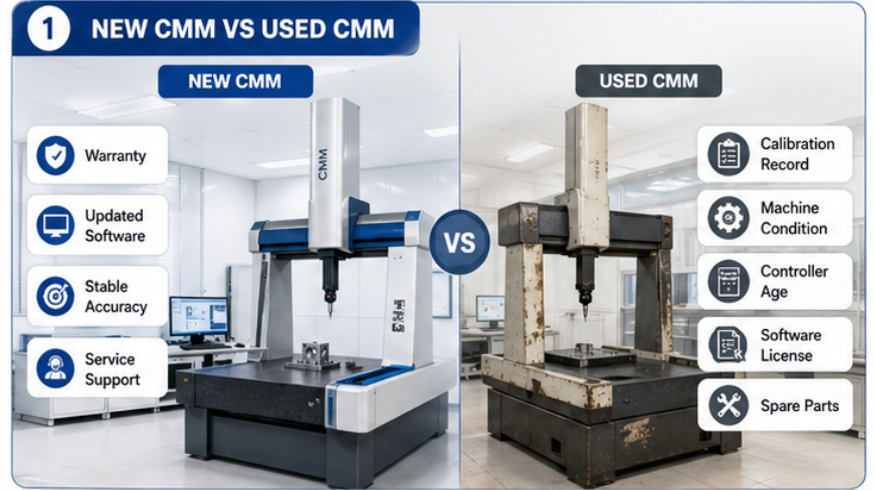
3. Choose The Right Locating And Clamping Method
A CMM fixture should locate the part firmly but not distort it. The locating points should be repeatable and easy for operators to use. Clamps should keep the part stable during probing, but the clamping force should not change the shape of the part. This balance is especially important for aluminum parts, plastic components, thin-wall castings, and lightweight aerospace parts.
The fixture should also be simple enough for daily operation. If operators must spend too much time adjusting screws, checking alignment, or interpreting fixture setup, the inspection process will become slow and inconsistent. Loading direction, clamping sequence, and stop positions should be clear.
Locating And Clamping Checklist
Does the fixture locate the part according to the correct datum references?
Can the part be loaded in the same position every time?
Is clamping force controlled to avoid deformation?
Are locating pins, support points, and stops durable enough for repeated use?
Is the loading sequence simple and clear for operators?
Can operators visually confirm that the part is correctly seated?
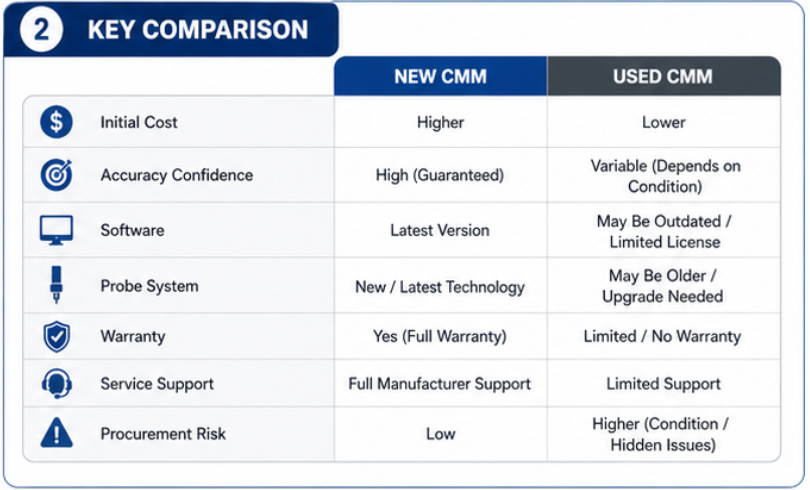
4. Ensure Probe Clearance And Measurement Accessibility
A fixture should never block the features that need to be measured. Before finalizing the fixture design, the quality team should check probe access, stylus angle, probe head movement, collision risk, and clearance around critical dimensions. This is especially important for deep holes, internal bores, narrow slots, angled faces, and complex surfaces.
If the fixture blocks the probe path, operators may need to change styli, reposition the part, or create complex programs. This increases inspection time and may reduce repeatability. Good fixture design should make the probe path simple, safe, and consistent.
For CNC CMM programs, fixture clearance should be checked together with software simulation and probe path planning. A fixture that works for manual inspection may not always be suitable for automatic measurement programs.
5. Select Fixture Material And Structure For Stability
Fixture material affects rigidity, weight, thermal stability, durability, and ease of operation. A fixture used in precision measurement should be stable enough to support repeatable positioning but not unnecessarily heavy or difficult to handle. Common choices may include aluminum, steel, modular fixture components, or custom-machined bases depending on the part and application.
Thermal behavior should also be considered. If the fixture expands or contracts differently from the workpiece or machine environment, it may influence measurement repeatability. For tight-tolerance inspection, the fixture should be used in a stable environment and allowed to reach thermal balance.
| Fixture Factor | What To Check | Impact On Measurement |
|---|---|---|
| Rigidity | Base plate, supports, clamps, and locating points | Prevents movement during probing |
| Weight | Ease of loading, handling, and storage | Affects operator workflow and safety |
| Thermal Stability | Material expansion and room temperature condition | Reduces dimensional drift in precision inspection |
| Durability | Wear resistance of pins, stops, and contact points | Maintains repeatability over long-term use |
| Cleanliness | Easy cleaning and chip removal | Reduces false readings from dirt or debris |
6. Decide Between Modular Fixture And Custom Fixture
Modular fixtures are flexible and useful when many different parts must be measured in low to medium volume. They allow the quality team to adjust fixture elements and build different setups from standard components. This can reduce initial cost and improve flexibility.
Custom fixtures are usually better for repeated batch inspection. They can be designed specifically for one part or part family, making loading faster and positioning more repeatable. For high-volume production or critical tolerance parts, a custom fixture may improve long-term inspection efficiency and consistency.
| Fixture Type | Best For | Main Advantage |
|---|---|---|
| Modular CMM Fixture | Many part types, prototypes, small batches | Flexible and adjustable |
| Custom CMM Fixture | Repeated batch inspection and stable part families | Faster loading and stronger repeatability |
| Multi-Part Fixture | High-volume inspection of small or medium parts | Improves inspection throughput |
| Adjustable Family Fixture | Similar parts with small dimensional variations | Balances flexibility and repeatability |
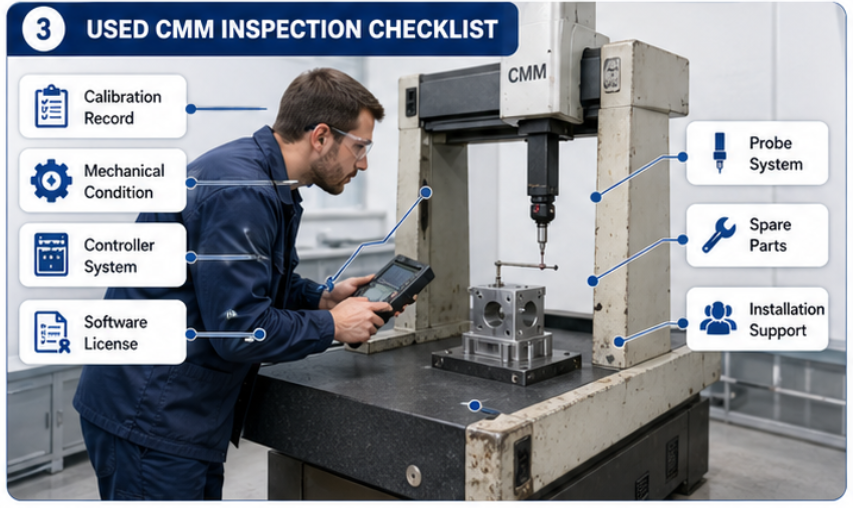
7. Check Compatibility With CMM, Probe And Software
The fixture must fit within the CMM measuring range and leave enough space for the probe head, stylus, and movement path. Buyers should check fixture height, base size, part orientation, probe clearance, and Z-axis travel before approving the design. A fixture that is too tall or too wide may limit usable measuring range.
The fixture should also match the software program. Datum alignment, feature measurement order, probe path, and report output should be planned together. If the fixture and program are designed separately, the inspection process may become inefficient or unstable.
For CNC inspection, it is useful to test the fixture with a real or simulated program before production use. This helps confirm collision clearance, repeatability, and measurement cycle time.
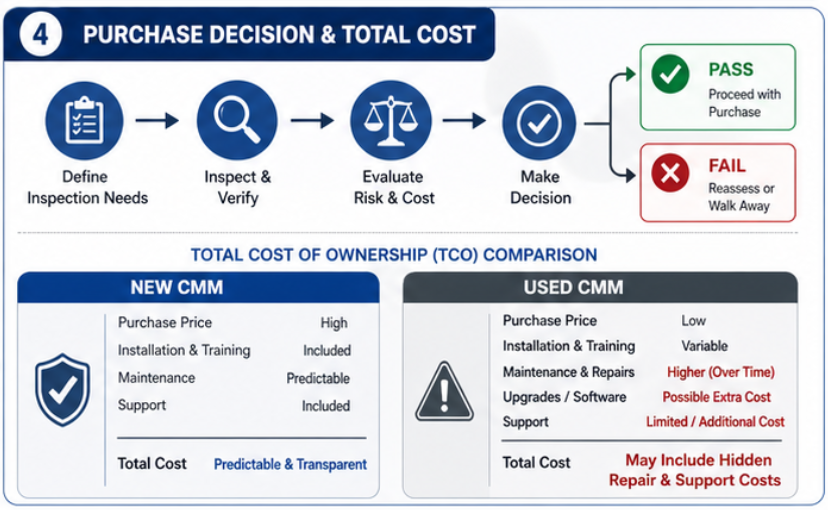
8. What Information Should Buyers Prepare Before Fixture Design?
To design a suitable CMM fixture, the supplier needs to understand the part, inspection requirement, measurement method, and production workflow. A fixture cannot be properly selected only from a part photo. Drawings, CAD files, tolerance data, and inspection details are highly valuable.
Recommended Information Checklist
Part drawings and CAD files
Part size, weight, material, and surface condition
Datum structure and GD&T requirements
Critical features to be measured
Part areas that cannot be clamped or touched
Inspection frequency and batch volume
Required loading speed and operator workflow
CMM measuring range, probe system, and stylus configuration
Need for modular, custom, multi-part, or adjustable fixture
9. Common Mistakes To Avoid
Designing the fixture without checking the drawing datum structure.
Using excessive clamping force that deforms the part.
Blocking probe access to holes, slots, bores, or critical surfaces.
Making the fixture too large for the CMM measuring range.
Using locating pins or supports that wear quickly during batch inspection.
Creating a fixture that is difficult for operators to load consistently.
Choosing a modular fixture when a custom fixture is needed for high-volume repeatability.
Failing to verify the fixture with the actual CMM program before production use.
Avoiding these mistakes helps manufacturers reduce repeated measurement, improve inspection efficiency, and obtain more stable quality data.
Conclusion
Choosing a CMM fixture for repeatable part measurement requires careful evaluation of datum location, clamping force, part support, fixture rigidity, probe clearance, material stability, loading speed, and compatibility with the CMM program. A suitable fixture should hold the part in a consistent position without deformation and allow all critical features to be measured safely. For batch production and precision inspection, the fixture should be designed together with the probe system, measurement software, and inspection workflow. A well-designed fixture can improve repeatability, reduce operator variation, shorten inspection time, and support more reliable dimensional quality control.
Need Help Choosing A CMM Fixture For Repeatable Measurement?
Contact us to discuss your part drawings, datum requirements, fixture needs, probe access, inspection volume, and measurement workflow. We can help you evaluate a suitable CMM fixture and inspection configuration for stable and repeatable measurement.