



Hall-Effect vs. Potentiometer Joysticks: Which is More Reliable for Harsh Environments?
2026-04-15 14:03The Fundamental Operating Principle: Contact vs. Non-Contact Sensing
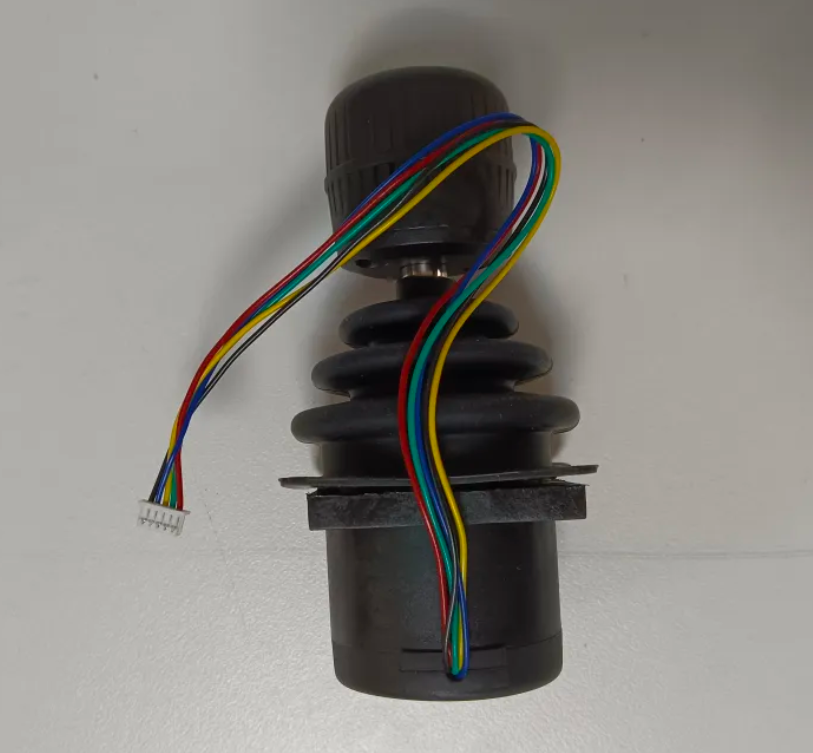
At the heart of the reliability debate lies the core technology used for position sensing. A potentiometer-based joystick, the traditional choice, operates on a simple contact-based principle. It uses a resistive track (the wiper) and a sliding contact. As the joystick handle moves, the contact slides along the track, changing the electrical resistance, which is translated into a position signal. This design inherently suffers from physical wear and tear. Over time, the sliding contact and the resistive track degrade due to friction, leading to increased electrical noise ("crackling"), dead zones, and eventually, complete signal failure. The ingress of contaminants like dust, moisture, or oil accelerates this wear dramatically. In contrast, a Hall-effect joystick employs a non-contact sensing technology. It uses a stationary semiconductor chip (the Hall sensor) and a moving magnet attached to the joystick's mechanism. As the magnet moves, it changes the magnetic field intensity at the sensor, which outputs a proportional voltage. Since there is no physical contact between the sensing elements, there is no mechanical wear in the sensing process. This fundamental difference makes the Hall-effect design intrinsically more robust against the primary failure modes associated with repetitive use and contamination, forming the bedrock of its suitability for harsh, long-lifecycle applications.
Resilience Under Harsh Conditions: Contamination, Vibration, and Temperature Extremes
Harsh industrial environments present a triad of challenges: contamination, mechanical stress, and thermal extremes. The Hall-effect joystick demonstrably outperforms its potentiometer counterpart in all three domains. First, regarding contamination resistance, the non-contact design allows for a much more effective seal. Since there is no need for a sliding contact to breach the seal, the housing can be fully encapsulated, achieving high IP ratings (e.g., IP67, IP69K) that reliably keep out dust, water, and oils. Potentiometer joysticks, with their necessary physical aperture for the wiper, are inherently more vulnerable to ingress and corrosion, which quickly degrade the resistive element. Second, regarding vibration and shock, the solid-state nature of the Hall sensor is highly resistant to mechanical disturbance. Potentiometers, with their delicate wiper contact, can suffer from contact bounce and intermittent signals under vibration, leading to erratic control. Third, concerning temperature stability, high-quality Hall-effect sensors offer a wide operational temperature range with minimal signal drift. Potentiometers can experience significant changes in resistance with temperature, and the grease used in their mechanical bearings can degrade or solidify at extremes. For a supplier like HUACELIANGYI, which engineers joysticks for heavy machinery and mobile equipment, the choice is clear. The inherent environmental robustness of the Hall-effect principle translates directly to higher mean time between failures (MTBF) and consistent performance in applications from construction excavators and maritime winches to food processing lines.
The Trade-Off: Cost, Linearity, and the Modern Industrial Verdict
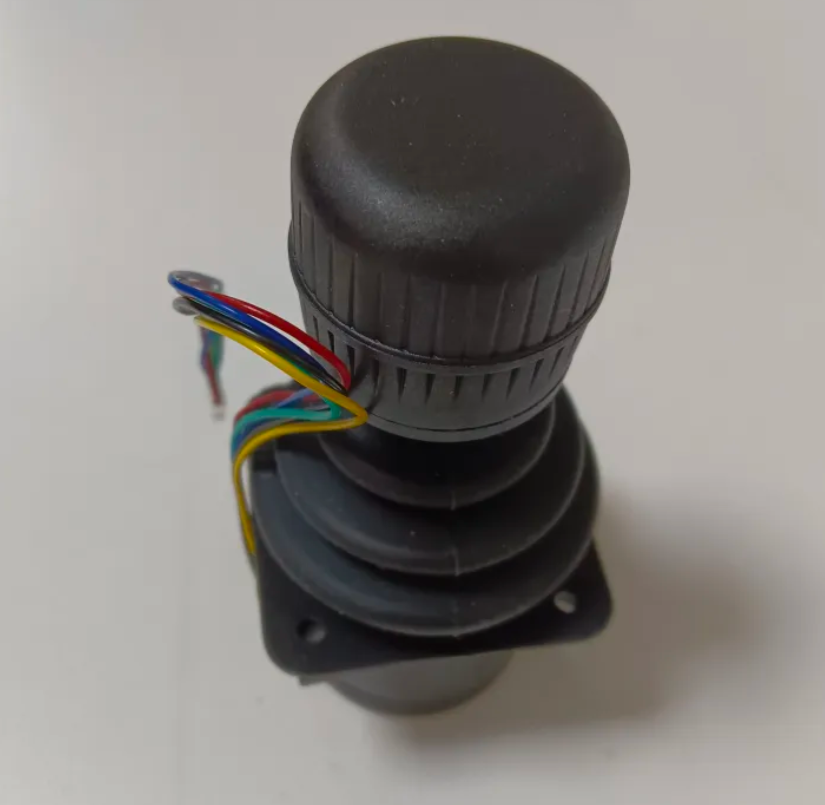
While the performance advantages of Hall-effect technology are clear, the traditional argument in favor of potentiometers has been lower initial cost. Potentiometer joysticks are simpler to manufacture. However, a total cost of ownership (TCO) analysis for harsh environments overwhelmingly favors Hall-effect joysticks. The higher upfront cost is offset by dramatically reduced downtime, elimination of frequent replacement, and lower maintenance costs over the equipment's lifespan. A single failure on a critical machine can cost far more than the price difference between the two technologies. Furthermore, modern Hall-effect joysticks have largely overcome early criticisms regarding linearity and resolution. Advanced signal conditioning electronics and calibration algorithms now deliver exceptional linearity, high resolution, and excellent repeatability that meet or exceed the requirements of most precision control applications. Features like programmable output curves and dual redundant outputs for safety-critical systems are also more readily implemented with digital-friendly Hall-effect sensors. The industrial verdict, especially for applications demanding high reliability and long service life, is definitive. Manufacturers like HUACELIANGYI focus their engineering on Hall-effect designs because they provide the deterministic performance and durability that modern automated systems require. When specifying a joystick for a harsh environment—be it in agriculture, mining, marine, or factory automation—the choice of a sealed, non-contact Hall-effect industrial joystick is the most reliable and ultimately cost-effective decision to ensure continuous, trouble-free operation.
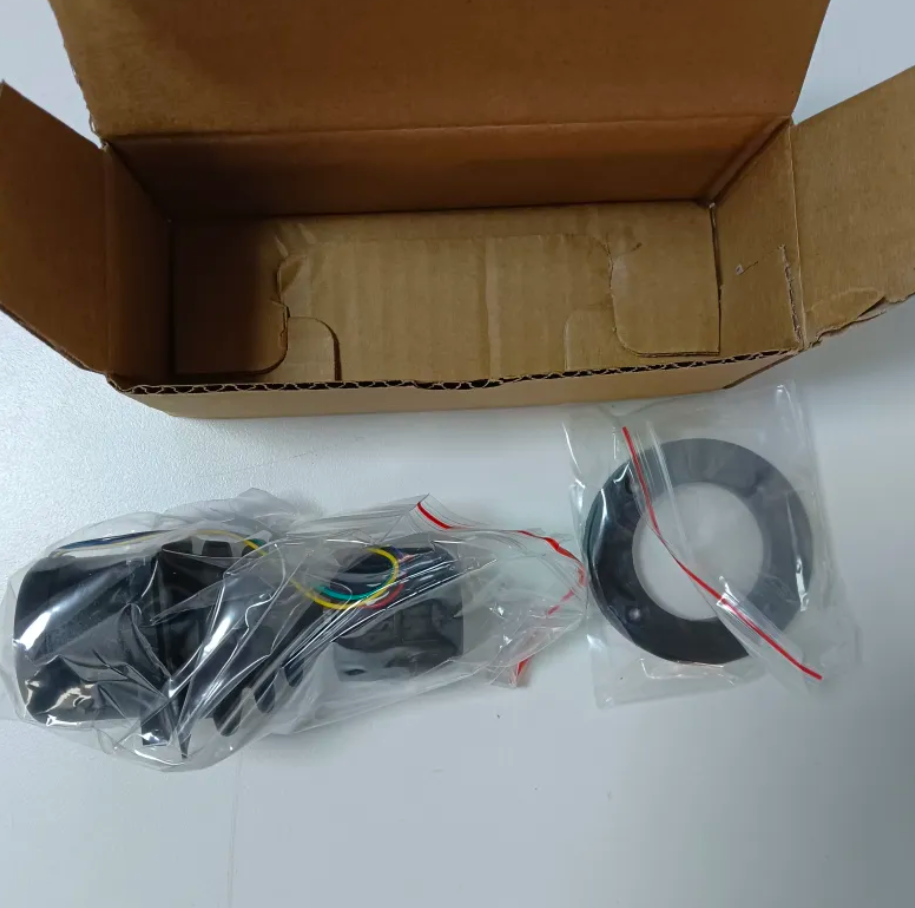
In the demanding arena of harsh industrial environments, the reliability contest between Hall-effect and potentiometer joysticks has a clear winner. The non-contact, solid-state principle of Hall-effect technology grants it superior resistance to wear, contamination, vibration, and temperature extremes. While the initial purchase price may be higher, the dramatically extended service life, minimal maintenance, and prevention of costly downtime result in a lower total cost of ownership and greater operational reliability. For system integrators and procurement specialists in industries like construction, agriculture, and marine, specifying a high-quality Hall-effect joystick from a trusted manufacturer like HUACELIANGYI is a strategic investment in system integrity. It ensures precise, drift-free control for the long haul, making it the unequivocally more reliable choice for any application where failure is not an option.