


Coordinate Measuring Machine RFQ Guide For Industrial Buyers
2026-06-08 13:57Coordinate Measuring Machine RFQ Guide For Industrial Buyers
Sending a clear RFQ is one of the most important steps when buying a coordinate measuring machine. Many industrial buyers only ask for “CMM price” or “CMM machine quotation”, but this is usually not enough for a reliable recommendation. A coordinate measuring machine must be selected according to part size, tolerance, measured features, inspection purpose, probe configuration, software requirements, fixture method, installation environment, and after-sales support. This RFQ guide helps industrial buyers prepare complete information before requesting a CMM quotation, so suppliers can recommend a more suitable machine and avoid missing important costs.
Quick Answer
A good CMM RFQ should include part drawings, CAD files, maximum part size, part weight, material, tolerance requirements, GD&T items, measured features, inspection purpose, production volume, required measuring range, probe needs, fixture expectations, software report requirements, installation environment, calibration needs, destination country, delivery terms, training requirements, and after-sales service expectations.
1. Why A Detailed CMM RFQ Matters
A coordinate measuring machine is not a standard machine that can be selected only by size and price. The same machine model may work well for one factory but may not be suitable for another factory if the measured parts, tolerances, probe access, fixture method, and software reports are different.
A vague RFQ often leads to an incomplete quotation. The supplier may recommend a standard bridge CMM, but the quotation may miss important items such as special probes, stylus kits, scanning capability, GD&T software, custom fixtures, calibration service, export packaging, installation guidance, or training. These missing items can become hidden costs after the order is placed.
A detailed RFQ helps both sides. Buyers receive a more accurate quotation, and suppliers can recommend a CMM configuration that matches real inspection tasks.

2. Start With Part Drawings And CAD Files
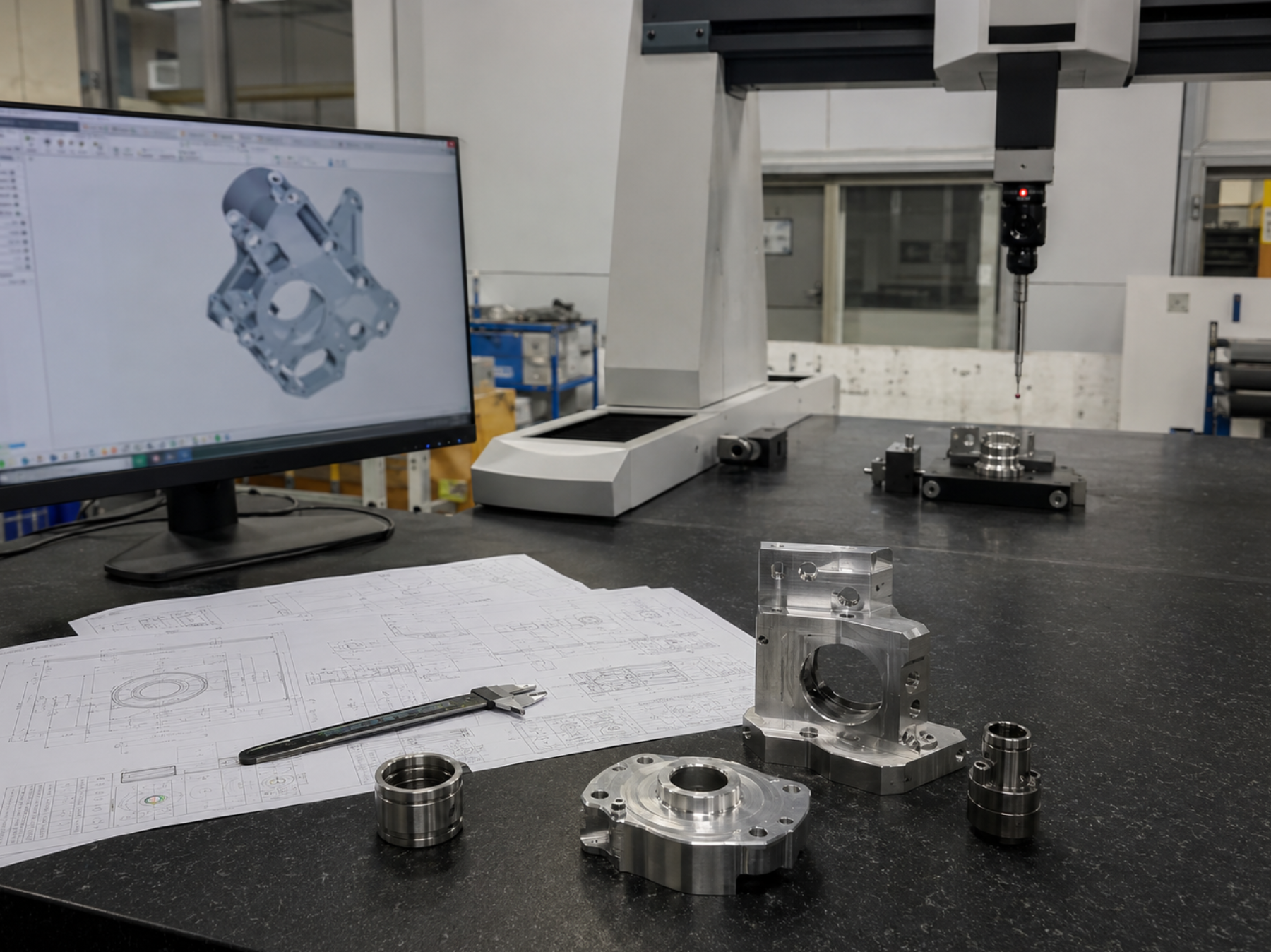
The most useful RFQ information is the part drawing and CAD file. These files help the supplier understand the real geometry, tolerance, datum structure, and measured features. Without drawings, the supplier can only make a rough recommendation based on machine size.
| RFQ Information | Why It Is Needed | Buyer Tip |
|---|---|---|
| 2D Drawing | Shows dimensions, tolerance, GD&T and datum references | Mark critical dimensions if possible |
| 3D CAD File | Supports CAD-based inspection and probe path planning | Send STEP, IGES or native CAD format if available |
| Part Photo | Helps supplier understand real part shape and access difficulty | Include photos from different angles |
| Sample Part Information | Useful for fixture and probe access evaluation | Mention whether sample testing is required |
3. Provide Part Size, Weight And Material
Part size directly affects CMM measuring range. Buyers should provide the maximum length, width, height, and weight of the largest part. If the factory needs to inspect multiple part families, buyers should provide the largest and most complex parts, not only the smallest sample.
Material also matters. Aluminum, steel, stainless steel, plastic, die casting, welded structures, ceramic parts, and composite parts may have different fixture, temperature, and handling requirements. Heavy parts may require higher table load capacity, crane loading, or special protection around the CMM.
Part Information Checklist
Maximum part length, width and height
Maximum part weight
Part material and surface condition
Machining, casting, welding or molding process
Whether the part is thin-walled, flexible or easy to deform
Loading method: manual, trolley, hoist, crane or robot
4. Define Tolerance And Accuracy Requirements
CMM accuracy should match the buyer’s part tolerance. If the tolerance is tight, the CMM must provide reliable accuracy and repeatability. If the part is large but tolerance is moderate, the supplier may recommend a different machine configuration than for small high-precision components.
Buyers should clearly identify the smallest tolerance, critical dimensions, and GD&T requirements. This prevents over-buying a machine with unnecessary accuracy or under-buying a machine that cannot support real inspection needs.
| Tolerance Information | What To Provide |
|---|---|
| Smallest Tolerance | The tightest dimension or GD&T tolerance to be inspected |
| Critical Dimensions | Features that affect assembly, sealing, rotation or product function |
| GD&T Requirements | Position, flatness, profile, runout, perpendicularity, coaxiality and datums |
| Customer Requirements | FAI, PPAP, customer audit, supplier quality or final inspection requirements |
5. List The Features That Need To Be Measured
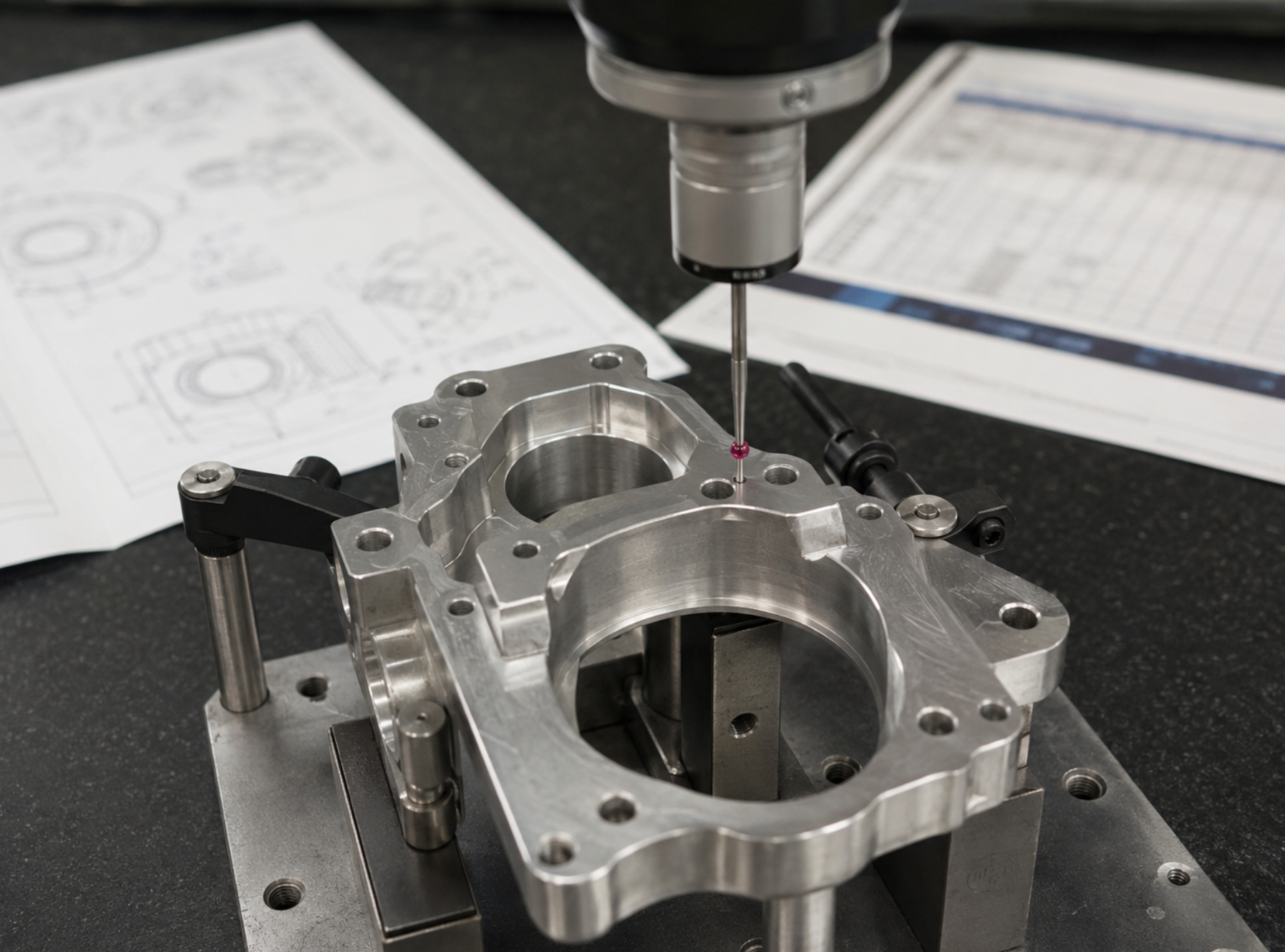
Measured features directly affect probe selection and software configuration. A part with simple planes and holes may need only a basic touch trigger probe. A part with curved profiles, deep bores, side holes or complex surfaces may require special styli, motorized probe head, scanning probe, or CAD comparison software.
Measured Feature Checklist
Hole position and bolt patterns
Bores, cylinders, roundness and coaxiality
Flatness, parallelism and perpendicularity
Datum surfaces and assembly references
Slots, grooves, steps and side features
Profiles, curves, cast surfaces and freeform surfaces
Sealing faces, mounting interfaces and functional surfaces
6. Clarify Probe, Fixture And Software Expectations
In a CMM RFQ, buyers should clearly ask what probe system is recommended and what is included in the quotation. Probe head, probe body, stylus kit, calibration sphere, extension bars, angled styli, star styli, scanning probe and probe changer should be listed if needed.
Fixture requirements should also be discussed early. A custom fixture may be needed for repeatable measurement, thin-wall parts, die casting parts, EV battery tray components, automotive housings or batch production. Software should support the buyer’s reporting needs, such as CAD import, GD&T evaluation, automatic reports, SPC data output and scanning data processing.
| Configuration Area | RFQ Questions Buyers Should Ask |
|---|---|
| Probe System | Which probe package is included? Is scanning required? Are styli and calibration tools included? |
| Fixture | Is fixture included, optional or excluded? Is custom fixture design available? |
| Software | Does the software support CAD import, GD&T, automatic reports, SPC and scanning data? |
| Training | Is operator training included? Is software training included? |

7. Include Installation Environment And Export Requirements
Installation conditions affect measurement stability. Buyers should describe whether the CMM will be installed in a controlled metrology room, quality lab or shop-floor environment. Temperature, vibration, dust, air supply, power supply, floor condition and available space should be considered.
Overseas buyers should also include destination country, required delivery terms, export packaging needs, shipping method, documentation requirements and installation support expectations. This helps the supplier prepare a more complete quotation and avoid later misunderstanding.
Export And Installation Checklist
Destination country and delivery address
Preferred Incoterms: EXW, FOB, CIF, DAP or DDP
Export packaging and shipping protection requirements
Installation room size and available space
Temperature control, vibration source and air supply condition
Power supply and grounding requirements
Need for remote support or on-site installation service
8. Final CMM RFQ Checklist
Part drawings and CAD files are provided.
Maximum part size, weight and material are listed.
Critical dimensions, smallest tolerance and GD&T requirements are marked.
Measured features such as holes, bores, planes, profiles and side features are explained.
Inspection purpose is clear: FAI, batch inspection, final inspection, customer approval or process control.
Production volume and inspection frequency are provided.
Probe system, stylus, scanning and fixture needs are discussed.
Software report, CAD import, GD&T and SPC requirements are stated.
Installation environment and destination country are included.
Calibration, training, warranty and after-sales expectations are confirmed.
9. Common RFQ Mistakes To Avoid
Only asking for CMM price without sharing part drawings.
Providing part size but not tolerance requirements.
Ignoring fixture height, probe clearance and loading method.
Not explaining which features need to be measured.
Assuming GD&T software, CAD import or SPC output is included by default.
Forgetting export packaging, delivery terms and installation support.
Comparing quotations without checking probe, software, fixture and service details.
Choosing the lowest price before confirming the complete inspection solution.
Conclusion
A coordinate measuring machine RFQ should clearly explain the buyer’s parts, tolerances, measured features, inspection workflow, software needs, fixture expectations, installation conditions and service requirements. The more complete the RFQ is, the more accurate the supplier’s recommendation will be. Instead of asking only for a machine price, industrial buyers should treat the CMM as a complete inspection system. By preparing drawings, CAD files, tolerance data and application details before requesting a quotation, buyers can avoid hidden costs and choose a CMM solution that fits real production inspection needs.
Need A Coordinate Measuring Machine Quotation?
Related product and article resources
For procurement comparison and technical evaluation, readers can continue with these related product pages and supporting articles.
- Products
- Product catalog
- Contact the sales team
- Contact us
- 100% Inline Automatic Inspection for Automotive Body-in-White: Technology Breakdown
- 5-Axis Machining Centers: Capabilities for Complex Geometry Manufacturing
- 5 Key Features of High-End CMMs
- A Look Inside a Fully Automated Chassis Arc Welding Production Line
Send us your part drawings, CAD files, tolerance requirements, measured features, destination country and service expectations. We can help evaluate a suitable CMM configuration and provide a practical quotation for your inspection project.