


Bridge CMM With Renishaw Probe For Precision Inspection
2026-06-07 13:53Bridge CMM With Renishaw Probe For Precision Inspection
Precision inspection requires more than a stable CMM structure. It also depends heavily on the probe system, measurement strategy, software capability, and fixture design. For many CNC machining, die casting, automotive, aerospace, electronics, mold, and industrial manufacturing projects, a bridge coordinate measuring machine equipped with a Renishaw probe is widely used for accurate dimensional inspection. Buyers often focus on the machine body first, but the real inspection performance also depends on whether the probe configuration matches the part features, tolerance requirements, and reporting workflow. This guide explains what buyers should know when choosing a bridge CMM with a Renishaw probe for precision inspection.
Quick Answer
A bridge CMM with a Renishaw probe can provide stable and accurate inspection for holes, bores, planes, slots, profiles, datum surfaces, and GD&T features. Buyers should confirm part size, tolerance level, probe type, stylus access, measurement features, software functions, fixture repeatability, calibration support, and reporting requirements before purchase. The right solution should match real inspection tasks rather than only machine specifications.
1. Why Probe Selection Matters In Precision Inspection
The bridge CMM provides the measuring platform, but the probe system is what actually touches or scans the part. If the probe configuration is not suitable, even a high-quality machine may not deliver reliable results in daily use. Precision parts often include deep bores, side holes, narrow slots, thin walls, curved profiles, datum planes, and complex multi-side features. These features may require different probe heads, stylus combinations, and measurement strategies.
A Renishaw probe system is often selected because it supports different inspection needs, from standard touch-trigger measurement to more advanced scanning applications. For buyers, the important point is not just the brand name of the probe, but whether the selected probe package can actually inspect the required features accurately and efficiently.
Before requesting a quotation, buyers should list the most important inspection features and identify whether they need simple point measurement, dense profile data, multi-angle access, or automated program execution.
2. Common Precision Parts Measured With Bridge CMM And Renishaw Probe
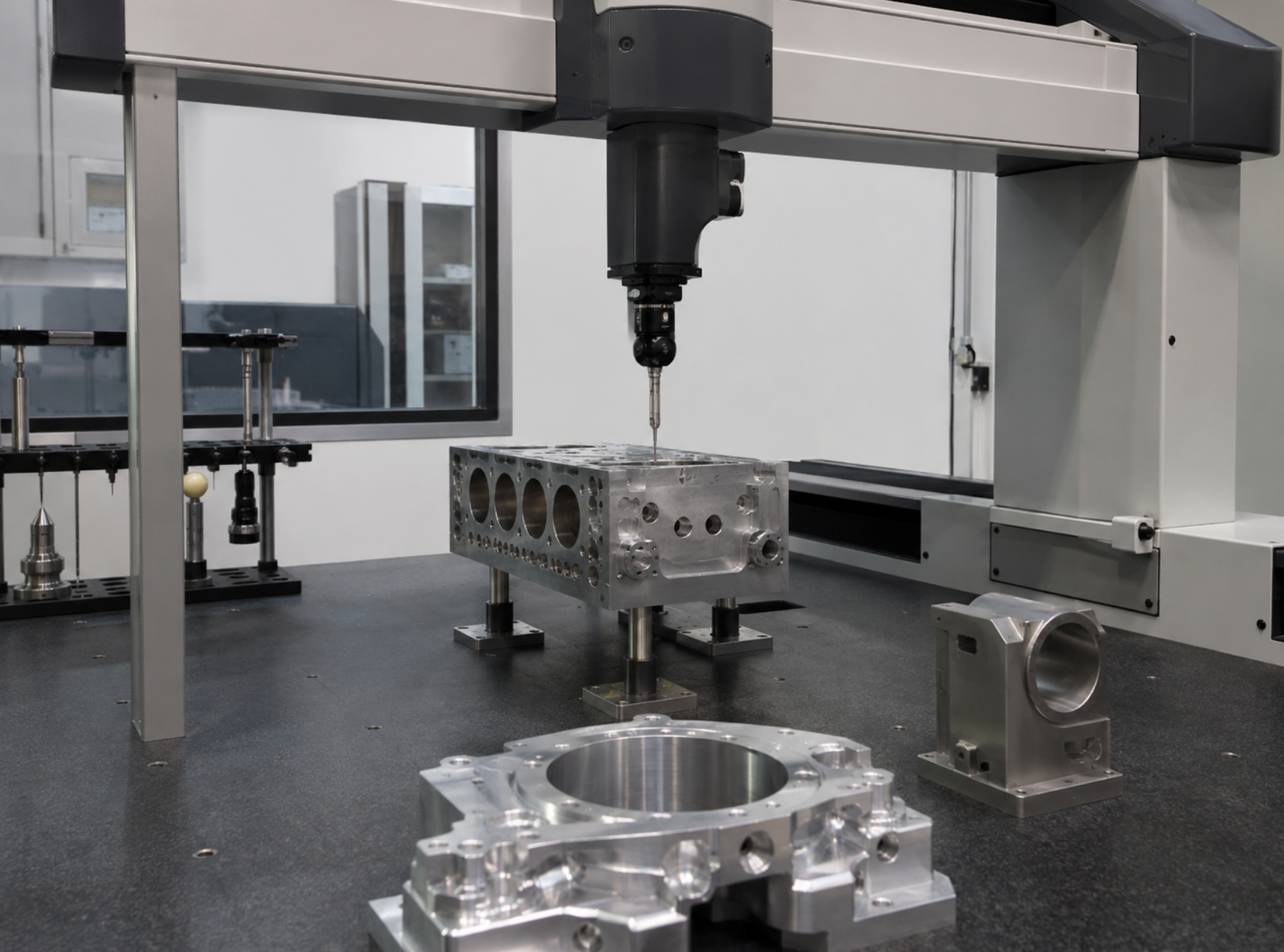
A bridge CMM with a Renishaw probe can be used across many industries. However, different part families require different probe strategies, fixture methods, and software functions. Buyers should define their main application before final machine selection.
| Part Type | Typical Inspection Focus | Probe Concern |
|---|---|---|
| CNC Machined Aluminum Parts | Hole position, bores, flatness, datum surfaces | Touch-trigger probe, stylus access, GD&T reporting |
| Automotive Housings | Bore alignment, sealing faces, mounting holes | Stable stylus setup and repeatable fixture support |
| Aerospace Brackets | Profile, hole patterns, datum relationships | Multi-angle access and high repeatability |
| Mold Inserts And Tooling Parts | Profiles, slots, planes, form features | Scanning capability and fine stylus selection |
| Electronics And Precision Components | Small holes, thin walls, tight tolerances | Small stylus ball, controlled probing force |
3. What Buyers Should Confirm About The Renishaw Probe Package
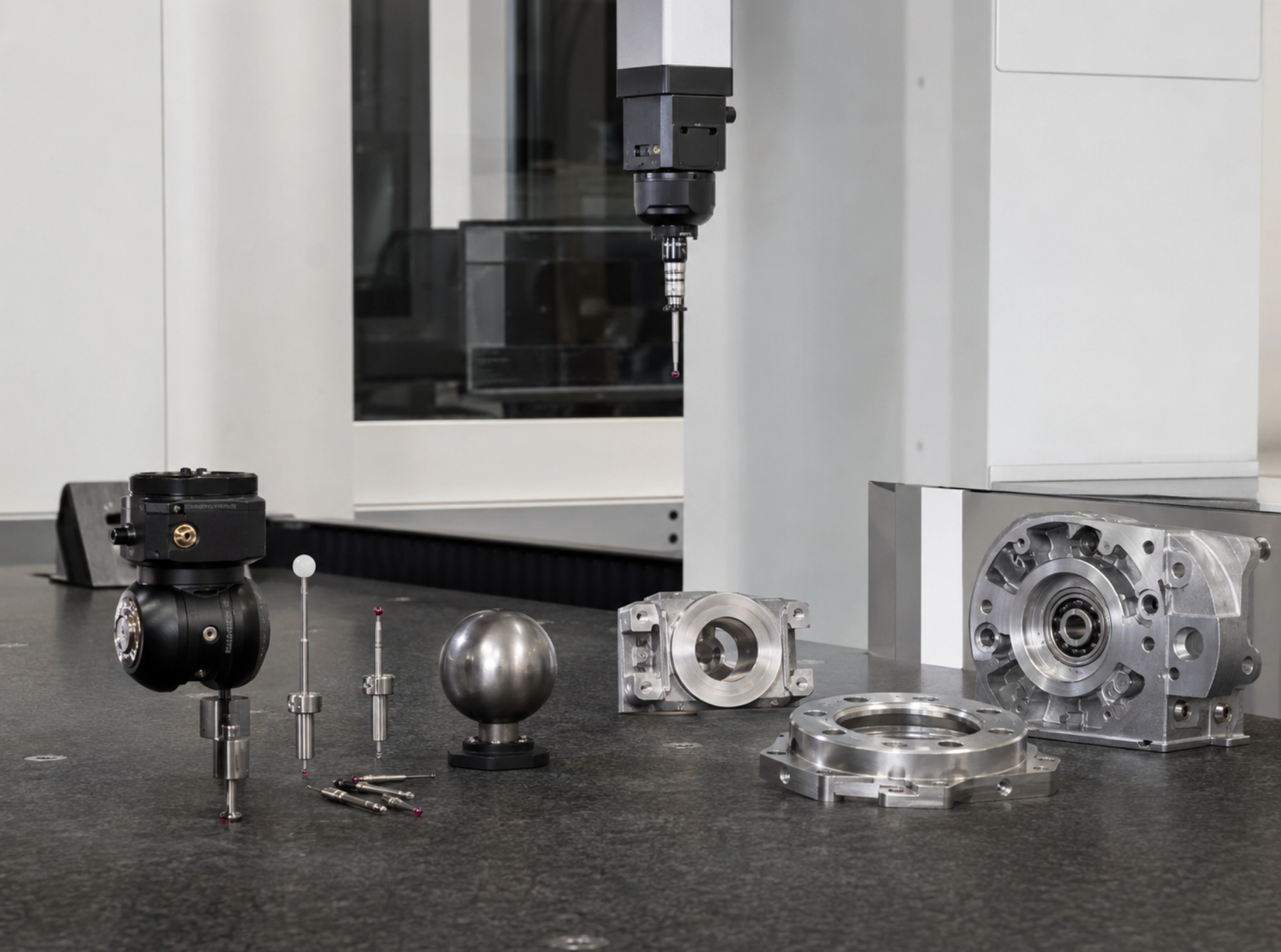
Buyers should ask the supplier to list the complete probe package clearly. A quotation that simply says “with Renishaw probe” may not provide enough information. Different probe heads, probe bodies, stylus kits, probe changers, and scanning options can strongly affect both price and inspection capability.
For many projects, the difference between a workable solution and an incomplete solution is not the machine base, but the probe accessories. A part with side holes or deep bores may require angled styli, star styli, or extension bars. A profile measurement task may require scanning capability rather than simple point-to-point touch measurement.
Probe Package Checklist
Renishaw probe model and probe head type
Touch-trigger probe or scanning probe configuration
Manual or motorized indexing head
Stylus kit, stylus ball sizes, stylus lengths, and extensions
Star stylus or angled stylus for side features
Calibration sphere and probe qualification accessories
Probe changer if automated inspection is required
Compatibility with software and report workflow
4. Match The Probe Strategy With The Measured Features
Buyers should not assume one probe setup can solve every inspection task. The right probe strategy depends on the part geometry, feature access, tolerance level, and report requirements. A good supplier should review drawings, CAD files, and sample photos before recommending the final configuration.
| Measured Feature | Recommended Probe Focus | Buyer Concern |
|---|---|---|
| Hole Position | Touch-trigger probe and GD&T software | Position tolerance and datum relationship |
| Deep Bores | Long stylus or extension bars with stable probing strategy | Probe deflection and access safety |
| Side Features | Indexed head, angled stylus, or star stylus | Avoid repeated part re-positioning |
| Profiles And Curves | Scanning probe or profile comparison software | Measurement density and surface evaluation |
| Small Precision Features | Small stylus ball and controlled probing force | Prevent damage and improve accuracy |
5. Bridge CMM Accuracy, Fixture Support And Repeatability
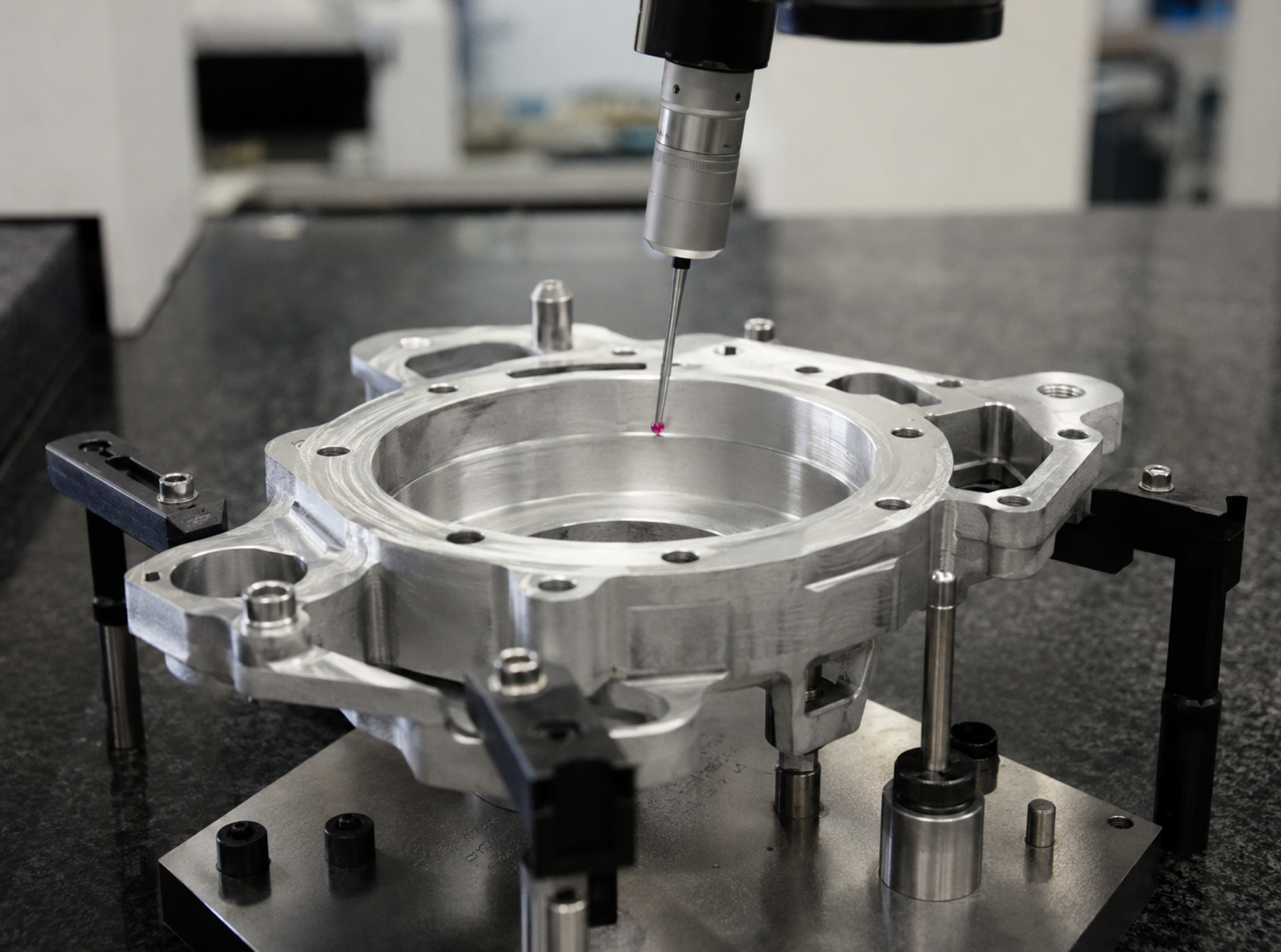
Even when the correct Renishaw probe is selected, the complete inspection result still depends on machine accuracy, environmental stability, and fixture repeatability. Buyers should confirm the smallest tolerance that needs to be inspected, the part size, the fixture height, and whether the measured features require high repeatability in batch production.
Fixture design is especially important when parts have irregular shapes, thin walls, or multiple datums. A poor fixture can cause measurement variation even with a good machine and probe. The part should be supported according to the drawing datum strategy, and the probe should be able to access all important features without unstable stylus angles or repeated manual repositioning.
If the project involves repeated production inspection, buyers should consider not only measurement capability but also loading efficiency, operator consistency, and report repeatability.
6. Software, GD&T And Inspection Reports
A bridge CMM with a Renishaw probe should be paired with suitable software to support CAD-based programming, GD&T evaluation, automatic reports, and traceable inspection data. For many buyers, the software output is what matters most in customer communication, PPAP documentation, first article approval, and internal quality control.
Buyers should confirm whether the quotation includes CAD import, GD&T evaluation, automatic report generation, SPC output, and scanning data processing if scanning measurement is required.

Software Functions Buyers Should Confirm
CAD model import and programming support
GD&T evaluation for position, flatness, profile, runout, and datums
Automatic inspection report generation
Pass/fail output and tolerance deviation display
SPC data export for batch quality control
Scanning data processing if profile or curve measurement is needed
7. What Buyers Should Provide Before Requesting A Quote
To recommend the right bridge CMM with a Renishaw probe, the supplier needs more than a general request for machine price. The more clearly the inspection task is defined, the more practical the final recommendation will be.
Quotation Information Checklist
Part drawings and CAD files
Maximum part length, width, height, and weight
Part material and production process
Critical dimensions and tolerance requirements
GD&T items and datum references
Measured features: holes, bores, slots, profiles, planes, and side features
Inspection purpose: first article, batch inspection, final inspection, or customer approval
Required probe type, stylus configuration, software report, and SPC output
Installation environment, calibration needs, and service expectations
8. Common Mistakes To Avoid
Choosing a bridge CMM only by machine size or lowest price.
Assuming “with Renishaw probe” means the probe package is complete.
Ignoring stylus access for deep bores, side holes, or narrow features.
Using a touch-trigger setup when scanning measurement is actually required.
Forgetting fixture repeatability in batch production.
Ignoring software, GD&T, and report requirements during quotation stage.
Requesting a quote without drawings, CAD files, or real inspection details.
Skipping real part testing before final acceptance.
Conclusion
A bridge CMM with a Renishaw probe can be an effective solution for precision inspection when the machine structure, probe package, stylus configuration, fixture strategy, software capability, and reporting workflow are matched correctly to the part requirements. Buyers should evaluate the complete inspection system rather than only the machine body or probe brand. By providing drawings, CAD files, tolerance data, measured features, and production requirements before quotation, buyers can receive a more suitable CMM recommendation and build a more reliable inspection process.
Need A Bridge CMM With Renishaw Probe For Your Inspection Project?
Related product and article resources
For procurement comparison and technical evaluation, readers can continue with these related product pages and supporting articles.
- Products
- Product catalog
- Contact the sales team
- Contact us
- 100% Inline Automatic Inspection for Automotive Body-in-White: Technology Breakdown
- 5-Axis Machining Centers: Capabilities for Complex Geometry Manufacturing
- 5 Key Features of High-End CMMs
- A Look Inside a Fully Automated Chassis Arc Welding Production Line
Send us your part drawings, CAD files, tolerance requirements, measured features, and inspection workflow. We can help evaluate a suitable bridge CMM configuration with the right probe solution for your precision inspection needs.