



Bridge CMM Manufacturer For Overseas CNC Machining Projects
2026-06-02 13:30Bridge CMM Manufacturer For Overseas CNC Machining Projects
For overseas CNC machining projects, dimensional inspection is a key part of supplier quality control. CNC machined parts often include tight tolerances, hole patterns, bores, datum surfaces, sealing faces, mounting interfaces, and GD&T requirements. A bridge coordinate measuring machine can help manufacturers verify part accuracy, improve first article inspection, support customer approval, and reduce quality disputes in batch production. When choosing a bridge CMM manufacturer, overseas buyers should compare not only machine price, but also measuring range, accuracy, probe system, software capability, fixture support, calibration, export packaging, installation guidance, and after-sales service.
Quick Answer
Overseas CNC machining buyers should choose a bridge CMM manufacturer based on real inspection requirements, including part size, tolerance, measuring range, probe configuration, GD&T software, fixture design, calibration support, export experience, installation guidance, and service response. A reliable bridge CMM should help buyers inspect CNC machined parts accurately, repeatably, and efficiently after delivery.
1. Why CNC Machining Projects Need Bridge CMM Inspection
CNC machining projects often involve precision aluminum parts, steel components, stainless steel parts, aerospace brackets, automotive housings, mold inserts, medical device components, and industrial mechanical parts. These parts may have strict requirements for hole position, bore diameter, flatness, parallelism, perpendicularity, profile, coaxiality, and datum-based relationships.
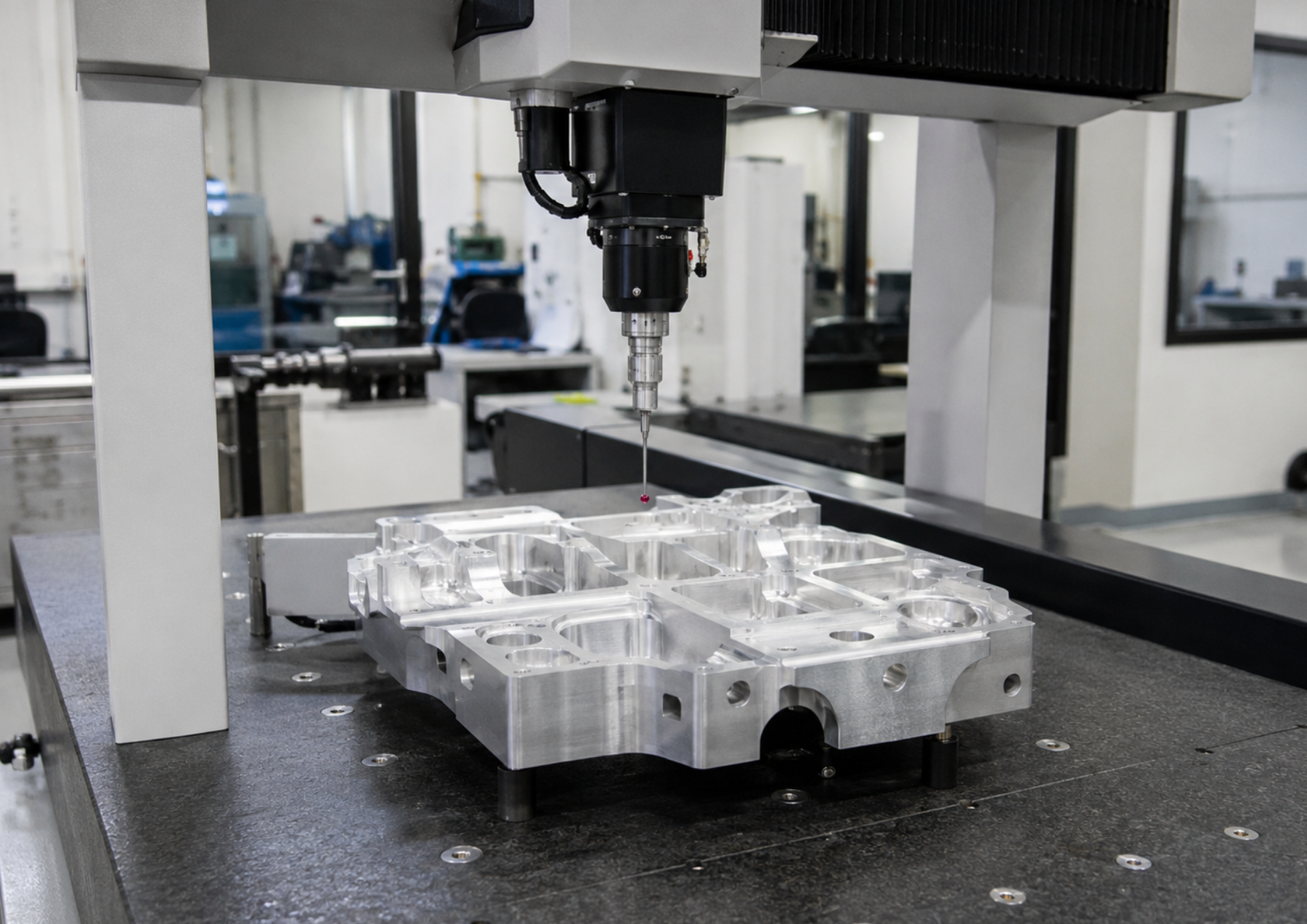
Manual gauges can be useful for simple checks, but they are not enough for complex 3D dimensional inspection. A bridge CMM can measure multiple features on a part, evaluate GD&T requirements, generate inspection reports, and provide traceable data for customer approval. This is especially important for overseas buyers who need reliable inspection results before shipment or during supplier qualification.
For CNC machining factories, a bridge CMM is not only an inspection machine. It is also a quality control tool that helps reduce scrap, improve process stability, and build trust with international customers.
2. What Overseas Buyers Should Compare First
When comparing bridge CMM manufacturers, overseas buyers should avoid looking only at the machine price. A lower quotation may not include the right probe system, software modules, calibration service, installation support, or export packaging. The real value depends on whether the CMM can support the buyer’s actual inspection tasks.
| Comparison Item | What To Check | Why It Matters |
|---|---|---|
| Measuring Range | X, Y, Z travel, fixture space, probe clearance | Ensures the machine can inspect real CNC parts safely |
| Accuracy | Machine accuracy, repeatability, calibration method | Supports reliable tolerance verification |
| Probe System | Touch probe, scanning probe, stylus kit, probe changer | Determines what features can be measured |
| Software | CAD import, GD&T, automatic report, SPC output | Improves reporting and customer approval efficiency |
| Export Support | Packing, documents, delivery, remote installation support | Reduces overseas procurement risk |
3. Match Bridge CMM Size With CNC Part Requirements
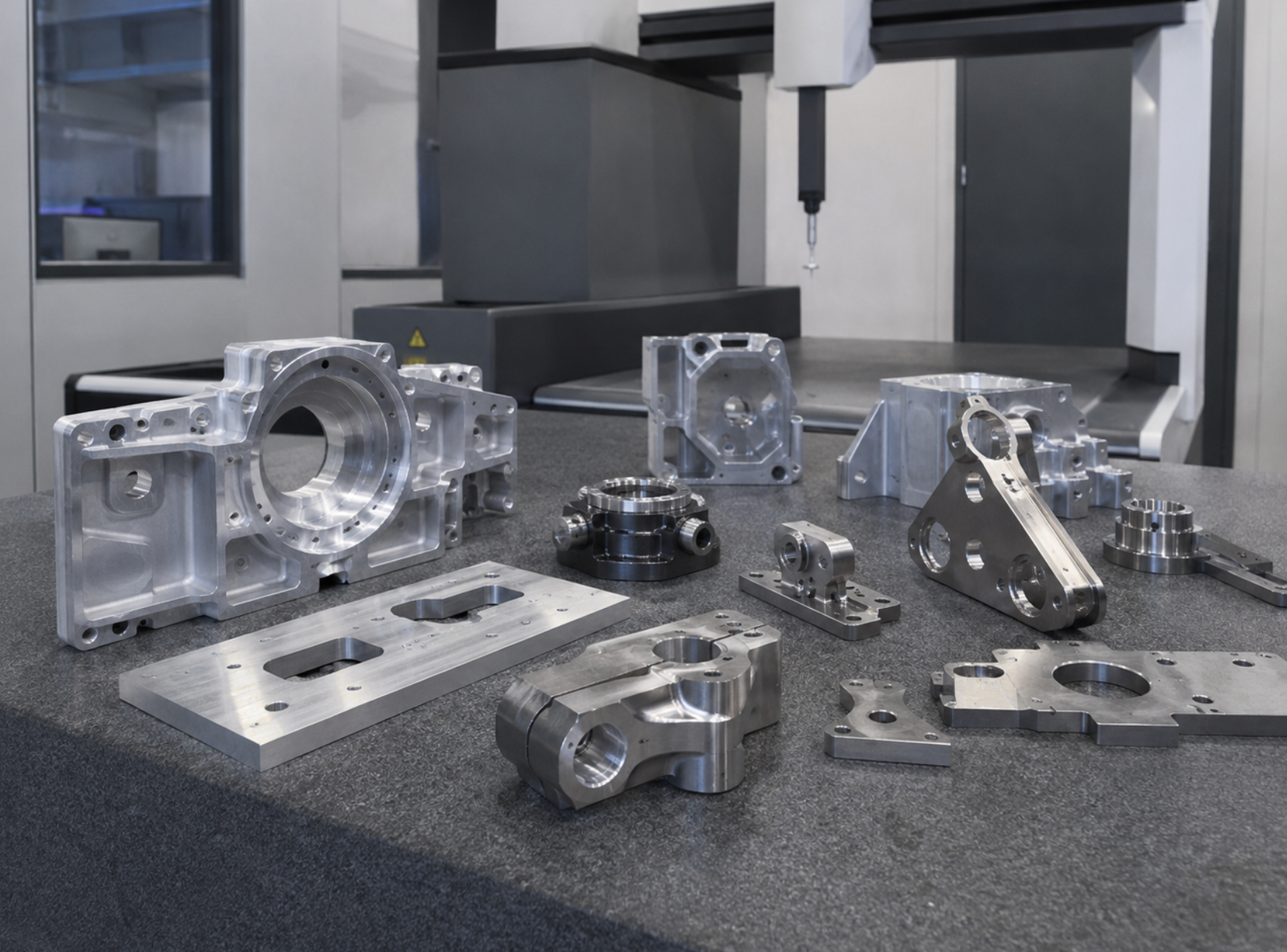
Bridge CMM size should be selected according to the largest part, fixture height, probe head movement, stylus length, and loading method. A common mistake is comparing only the part size with the machine travel. In real inspection, the fixture, clamps, probe approach path, and safe clearance also require space.
Overseas buyers should provide maximum part length, width, height, and weight before requesting a quote. If the factory handles different CNC part families, the CMM should leave reasonable space for future parts without becoming unnecessarily oversized.
Size Selection Checklist
Maximum part length, width, height, and weight
Fixture base size, fixture height, and clamping method
Probe head size, stylus length, and probe clearance
Loading direction and operator access
Future part families and possible size growth
Available installation space in metrology room or factory lab
4. Probe Configuration For CNC Machined Parts
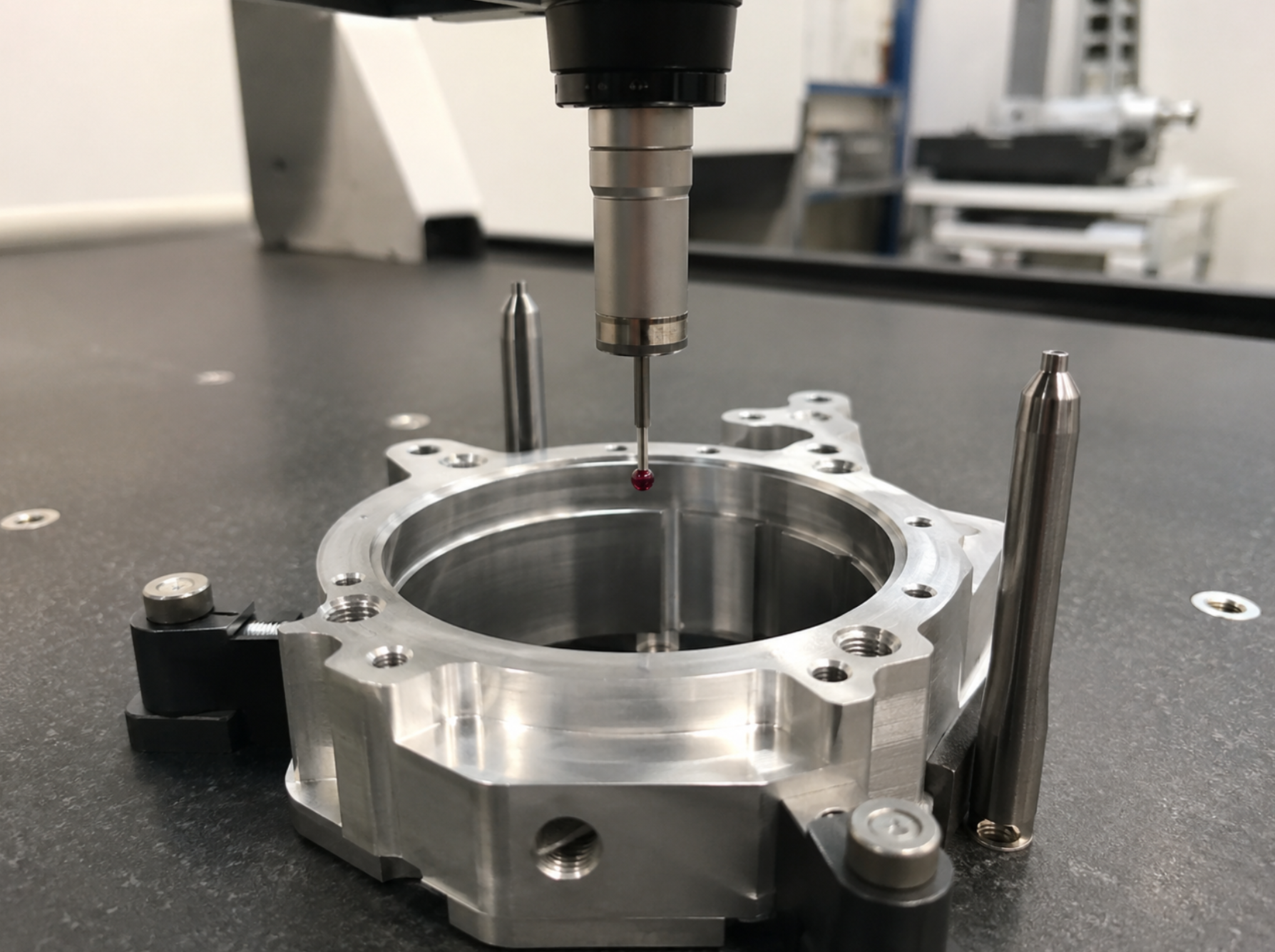
CNC machined parts may include holes, bores, slots, grooves, datum planes, sealing surfaces, side features, and complex profiles. The probe configuration should match the measured features. A basic touch trigger probe can handle many standard features, while a scanning probe may be required for profiles, curved surfaces, or dense data collection.
Buyers should also check stylus length, stylus ball size, extensions, star styli, angled styli, and probe changer requirements. If a part includes deep bores or side holes, probe access should be reviewed before confirming the machine configuration.
| CNC Feature | Recommended Probe Focus | Buyer Concern |
|---|---|---|
| Hole Position | Touch probe and GD&T software | Position tolerance and datum relationship |
| Bores And Cylinders | Stable stylus and bore measurement strategy | Diameter, roundness, coaxiality, alignment |
| Flatness And Datum Planes | Plane measurement and fixture support | Assembly reference and sealing performance |
| Profiles And Curves | Scanning probe or CAD comparison software | Surface deviation and profile tolerance |
| Side Features | Angled stylus, star stylus, or indexing probe head | Feature access without repeated part positioning |
5. GD&T Software And Inspection Reports
Overseas CNC machining projects often require professional inspection reports for customer approval. The CMM software should support CAD import, datum alignment, GD&T evaluation, automatic reports, pass/fail judgment, and data export. For batch production, SPC output can help monitor process drift and improve machining stability.
A useful CMM report should clearly show nominal values, measured values, deviation, tolerance, part ID, drawing number, operator, inspection date, and inspection result. This helps overseas buyers communicate quality data with customers, suppliers, and internal engineering teams.
Software Functions Buyers Should Confirm
CAD model import and measurement programming
GD&T evaluation for position, flatness, profile, runout, and datums
Automatic inspection report generation
Pass/fail result and tolerance deviation output
SPC data export for production quality control
Report format suitable for customer approval and audit records
6. Export Packaging, Installation And Acceptance Support
For overseas projects, export support is as important as machine configuration. A bridge CMM is precision equipment, so packaging should protect the machine body, granite table, controller, computer, probe system, accessories, and documents during long-distance transportation. Buyers should confirm wooden case packaging, moisture protection, shock protection, packing list, shipping size, and pre-shipment photos.
After delivery, installation guidance, leveling instructions, software setup, probe qualification, calibration verification, and acceptance testing should be clearly arranged. If on-site service is not available, the manufacturer should provide remote video support and detailed installation documents.

7. What Buyers Should Provide Before Requesting A Quote
To recommend the right bridge CMM for an overseas CNC machining project, the manufacturer needs complete application information. A general request for “CMM price” is usually not enough for an accurate quotation.
Quotation Information Checklist
Part drawings and CAD files
Maximum part length, width, height, and weight
Part material and machining process
Critical dimensions and tolerance requirements
GD&T items and datum references
Measured features: holes, bores, slots, datum planes, profiles, side features
Inspection purpose: first article, batch inspection, final inspection, or customer approval
Required probe type, stylus configuration, software report, and SPC output
Destination country, installation environment, and service expectations
8. Common Mistakes To Avoid
Choosing a bridge CMM manufacturer only by the lowest quotation.
Ignoring probe, software, fixture, calibration, and service details in the quote.
Selecting measuring range without considering fixture height and probe clearance.
Buying a CMM before confirming actual CNC part tolerance requirements.
Using basic software when GD&T reports are required by customers.
Not checking export packaging and transportation protection.
Requesting a quote without drawings, CAD files, and inspection details.
Skipping real part testing before final acceptance.
Conclusion
Choosing a bridge CMM manufacturer for overseas CNC machining projects requires careful comparison of machine accuracy, measuring range, probe system, software capability, fixture support, calibration, export packaging, installation guidance, and after-sales service. The right supplier should understand the buyer’s parts, tolerances, inspection workflow, destination country, and long-term support needs. By providing drawings, CAD files, tolerance data, measured features, and production requirements before quotation, overseas buyers can receive a more accurate bridge CMM recommendation and reduce project risk.
Need A Bridge CMM For Your CNC Machining Project?
Related product and article resources
For procurement comparison and technical evaluation, readers can continue with these related product pages and supporting articles.
- Products
- Product catalog
- Contact the sales team
- Contact us
- 100% Inline Automatic Inspection for Automotive Body-in-White: Technology Breakdown
- 5-Axis Machining Centers: Capabilities for Complex Geometry Manufacturing
- 5 Key Features of High-End CMMs
- A Look Inside a Fully Automated Chassis Arc Welding Production Line
Send us your CNC part drawings, CAD files, tolerance requirements, measured features, and destination country. We can help evaluate a suitable bridge CMM configuration for your overseas inspection project.