


Bridge CMM For Precision Machined Parts: What Buyers Should Confirm
2026-06-04 13:40Bridge CMM For Precision Machined Parts: What Buyers Should Confirm
Precision machined parts require accurate and repeatable dimensional inspection. These parts are widely used in CNC machining, automotive components, aerospace brackets, medical devices, molds, fixtures, hydraulic parts, robotics, and industrial equipment. A bridge coordinate measuring machine is often selected because it provides stable 3D measurement for holes, bores, planes, slots, profiles, datum surfaces, and GD&T features. However, buyers should not choose a bridge CMM only by machine size or price. Before purchasing, they should confirm measuring range, accuracy, probe configuration, fixture method, software functions, calibration, reporting needs, and real inspection workflow.
Quick Answer
When buying a bridge CMM for precision machined parts, buyers should confirm part size, tolerance requirements, critical features, measuring range, machine accuracy, probe access, stylus configuration, fixture repeatability, GD&T software, report format, calibration support, installation environment, and after-sales service. The right bridge CMM should match real machining inspection needs, not only catalog specifications.
1. Confirm The Real Part Size And Measuring Range
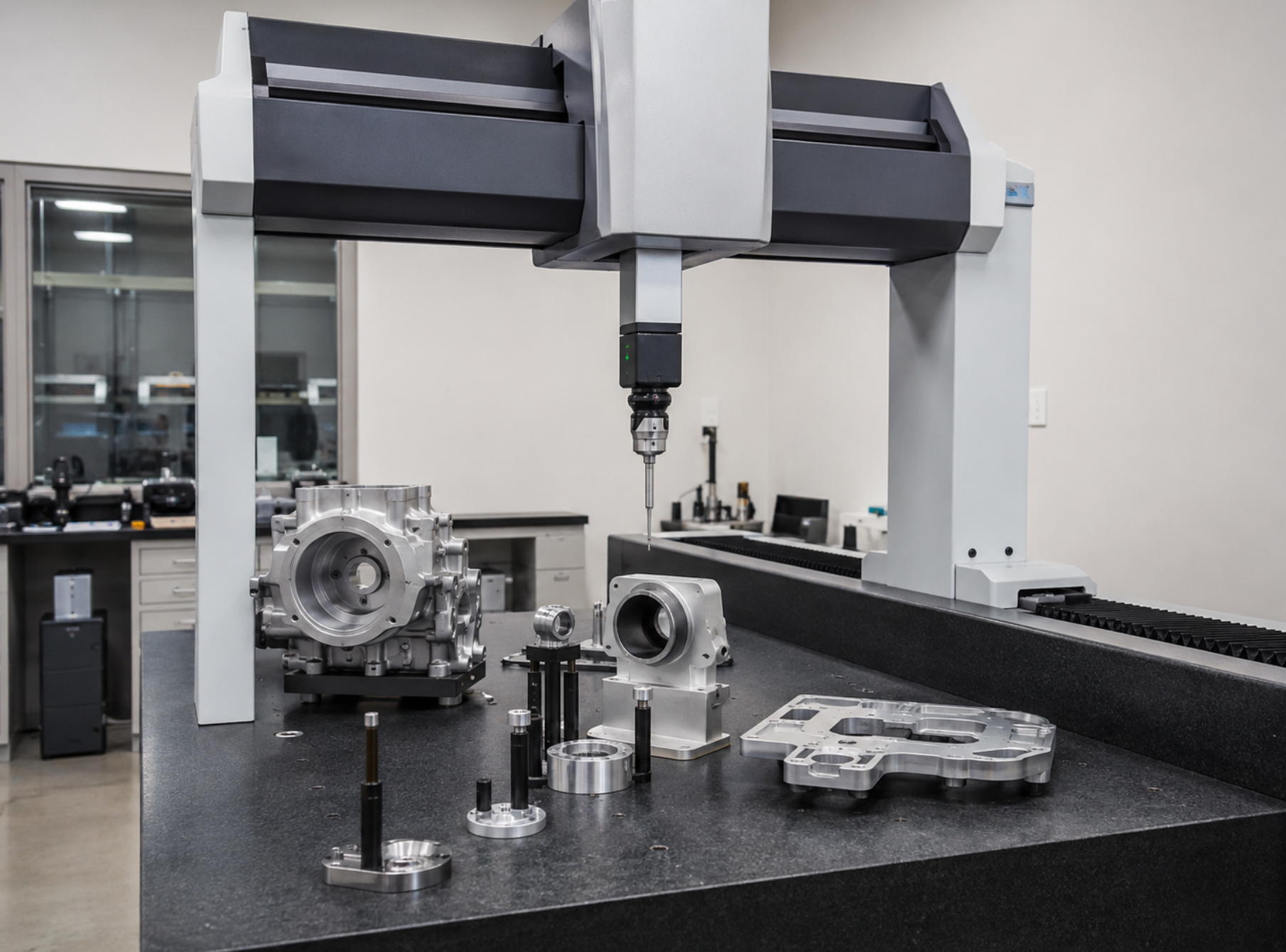
The first thing buyers should confirm is the maximum part size. Precision machined parts may include aluminum housings, stainless steel blocks, steel brackets, plates, mold inserts, bearing seats, hydraulic valve bodies, and complex CNC components. A bridge CMM must provide enough measuring range for the part itself, but that is not enough.
Buyers also need to consider fixture height, clamping space, probe head size, stylus length, Z-axis clearance, and loading direction. A machine that only barely fits the workpiece may create problems during real measurement. The usable measuring volume should allow safe probe movement around the part.
| Item To Confirm | What Buyers Should Provide | Why It Matters |
|---|---|---|
| Part Size | Maximum length, width and height | Determines basic CMM measuring range |
| Part Weight | Maximum workpiece and fixture weight | Affects table load capacity and handling safety |
| Fixture Space | Base plate, clamps, supports and locating pins | Prevents insufficient working volume |
| Probe Clearance | Probe head, stylus length and movement path | Ensures all critical features can be measured |
2. Match CMM Accuracy With Machining Tolerances
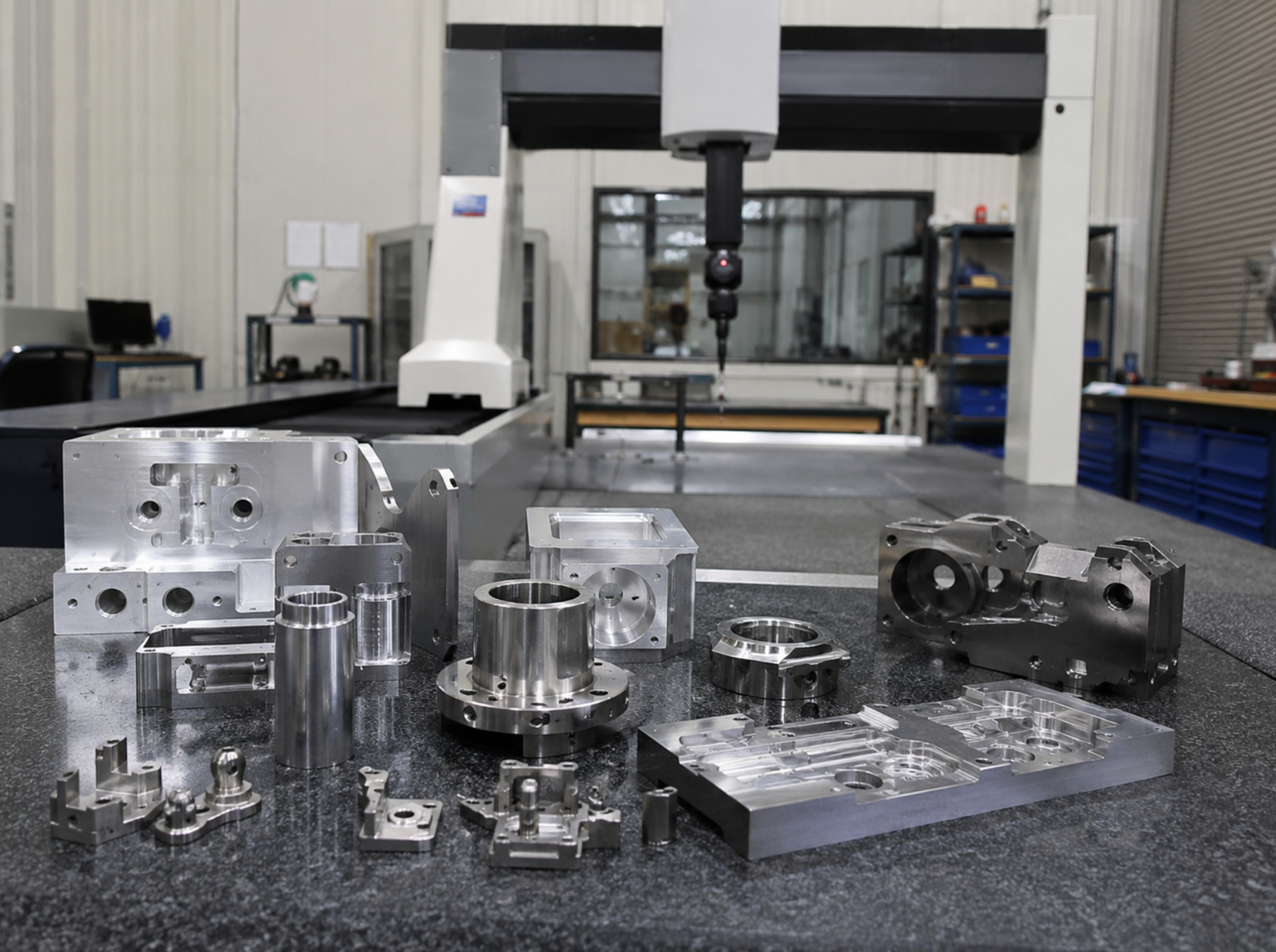
Accuracy is a core factor when selecting a bridge CMM for precision machined parts. Buyers should provide the smallest tolerance that needs to be inspected, the critical dimensions, and the functional features that affect assembly or product performance. A general machined bracket may not need the same accuracy level as an aerospace component, medical device part, or high-precision mold insert.
Choosing a CMM with insufficient accuracy may cause unreliable pass/fail decisions. Choosing a machine with much higher accuracy than necessary may increase cost and require stricter environmental control. The best solution should match the part tolerance and real inspection risk.
Accuracy Information To Confirm
Smallest tolerance to be measured
Critical dimensions and functional surfaces
GD&T requirements such as position, flatness, profile, runout and perpendicularity
Required repeatability for batch inspection
Customer audit or first article inspection requirements
Calibration certificate and acceptance testing needs
3. Confirm Which Features Need To Be Measured
Precision machined parts can include many different features. Some parts mainly require hole position checks. Others require bore alignment, flatness, slot width, profile measurement, datum surface inspection, and multi-side feature access. These requirements directly affect probe selection, stylus design, fixture setup, and software functions.
Buyers should mark the most important features before requesting a quote. If the part has deep holes, narrow slots, side faces, complex profiles, or high-density measurement points, a basic probe package may not be enough.
| Machined Feature | Inspection Focus | CMM Configuration Concern |
|---|---|---|
| Hole Patterns | Position tolerance and datum relationship | Touch probe and GD&T software |
| Bores And Cylinders | Diameter, roundness, coaxiality and alignment | Stable stylus and bore measurement strategy |
| Planes And Datum Surfaces | Flatness, parallelism and perpendicularity | Fixture support and datum alignment |
| Profiles And Curves | Surface deviation and profile tolerance | Scanning probe or CAD comparison software |
| Side Features | Side holes, side grooves and multi-face features | Angled stylus or indexing probe head |
4. Check Probe System And Stylus Configuration
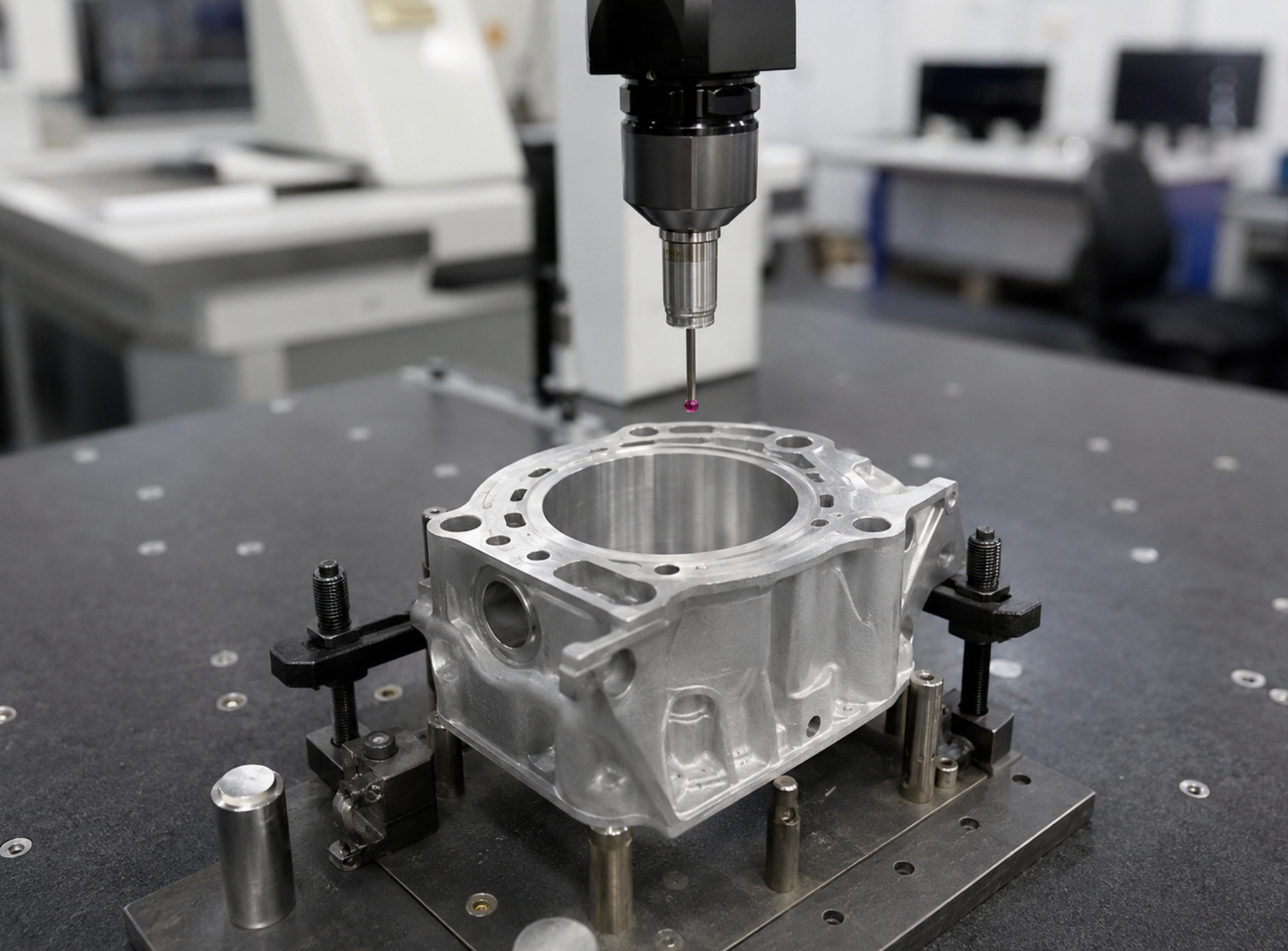
The probe system determines what the bridge CMM can actually measure. A touch trigger probe is suitable for many holes, planes, edges, slots and standard dimensions. A scanning probe may be required for profiles, curved surfaces, form measurement or dense data collection. If a part has features on multiple sides, buyers may need a motorized probe head, star stylus, angled stylus or probe changer.
Buyers should confirm exactly what is included in the quotation. Probe head, probe body, stylus kit, extension bars, calibration sphere and probe changer should be listed clearly. A low price may not include enough probe accessories for real inspection work.
5. Fixture Design For Repeatable Measurement
Fixture design is critical for precision machined parts, especially when repeated measurement is required. A good fixture should locate the part according to the correct datum structure, support the workpiece without deformation, and allow the probe to reach all critical features.
For low-volume inspection, a modular fixture may be enough. For batch production, a custom fixture can reduce loading time and improve repeatability. If parts are thin-walled, small, heavy, or irregularly shaped, the fixture design should be discussed before finalizing the CMM solution.
Fixture Checklist
Does the fixture match the drawing datum structure?
Can operators load the part in the same position every time?
Does the fixture avoid part deformation or over-clamping?
Can the probe access holes, bores, planes, grooves and side features?
Is the fixture suitable for batch inspection speed?
Will future part families require a different fixture strategy?
6. Confirm Software, GD&T And Report Requirements
Software is not just an accessory. For precision machined parts, buyers may need CAD import, datum alignment, GD&T evaluation, automatic reports, SPC data output, offline programming and custom report templates. If the software cannot support required reporting, the inspection workflow may become slow or incomplete.
A professional CMM report should show nominal values, measured values, deviation, tolerance, pass/fail result, datum reference, part ID, drawing number, operator and inspection date. This is important for internal quality control, customer approval and audit records.
| Software Function | Value For Precision Machined Parts |
|---|---|
| CAD Import | Supports model-based inspection and programming |
| GD&T Evaluation | Checks position, flatness, profile, runout and datum relationships |
| Automatic Report | Reduces manual reporting time and improves traceability |
| SPC Data Output | Helps monitor process drift and batch stability |
| Offline Programming | Reduces machine downtime during program creation |

7. What Buyers Should Provide Before Requesting A Quote
To recommend the right bridge CMM for precision machined parts, the supplier needs complete application information. A simple request for “CMM price” is usually not enough for a reliable quotation.
Quotation Information Checklist
Part drawings and CAD files
Maximum part length, width, height and weight
Part material and machining process
Critical dimensions and tolerance requirements
GD&T items and datum references
Measured features: holes, bores, slots, planes, profiles and side features
Inspection purpose: first article, batch inspection, final inspection or customer approval
Required probe type, fixture type, software report and SPC output
Installation environment, calibration needs and service expectations
8. Common Mistakes To Avoid
Choosing a bridge CMM only by the lowest price.
Selecting machine size without considering fixture height and probe clearance.
Ignoring the smallest tolerance and required measurement uncertainty.
Using a basic probe package for complex bores, side features or profiles.
Forgetting fixture repeatability in batch inspection.
Buying software that cannot support required GD&T reports.
Comparing quotations without checking calibration, training and after-sales support.
Requesting a quote without drawings, CAD files and inspection details.
Conclusion
A bridge CMM for precision machined parts should be selected as a complete inspection solution, not just a machine body. Buyers should confirm part size, measuring range, accuracy, probe system, fixture design, software functions, calibration, reporting requirements and service support before placing an order. By providing drawings, CAD files, tolerance data, measured features and production requirements before quotation, buyers can receive a more suitable CMM recommendation and reduce procurement risk.
Need A Bridge CMM For Precision Machined Parts?
Related product and article resources
For procurement comparison and technical evaluation, readers can continue with these related product pages and supporting articles.
- Products
- Product catalog
- Contact the sales team
- Contact us
- 100% Inline Automatic Inspection for Automotive Body-in-White: Technology Breakdown
- 5-Axis Machining Centers: Capabilities for Complex Geometry Manufacturing
- 5 Key Features of High-End CMMs
- A Look Inside a Fully Automated Chassis Arc Welding Production Line
Send us your part drawings, CAD files, tolerance requirements, measured features and inspection workflow. We can help evaluate a suitable bridge CMM configuration for your precision machining inspection project.