


Quick Answer
To choose a CMM probe system for deep bore and side hole measurement, buyers should check bore depth, hole direction, feature diameter, probe approach path, side-wall clearance, stylus length, extension rigidity, ball size, probe head rotation, calibration method, fixture access and software reporting needs. Deep features often require longer styli, extension bars or angled styli, while side holes may need a motorized probe head, star stylus, angled probe setup or special measurement strategy.
1. Why Deep Bore And Side Hole Measurement Is Difficult
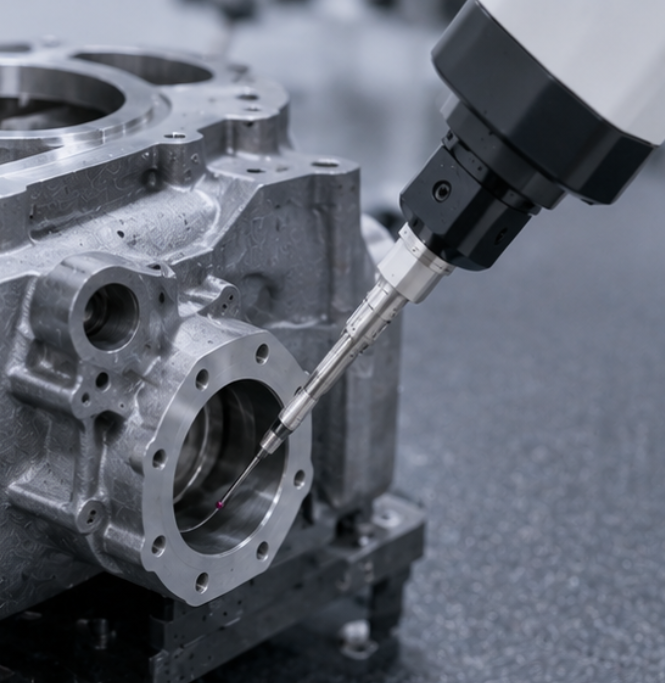
Deep bores and side holes are difficult because the probe must reach into narrow or hidden areas without collision. The probe body, stylus extension, fixture, workpiece wall, clamps and nearby features may all limit access. Even if the stylus ball can reach the hole, the probe setup may still be unstable if the extension is too long or too flexible.
Side holes create another challenge because they are not always aligned with the vertical probe direction. The CMM may need a rotating probe head, angled stylus, star stylus or a special part orientation to measure the feature correctly.
If the probe system is not selected correctly, the inspection program may become slow, unstable or impossible to run without collision risk.
2. Typical Parts That Need Special Probe Access
Many industrial parts include deep internal bores, side holes, ports and hidden features. These parts need more than a standard short vertical stylus.
| Part Type | Feature Challenge | Probe Selection Focus |
|---|---|---|
| Gearbox Housing | Deep bearing bores, side mounting holes, shaft axis features | Long stylus, bore access, coaxiality and center distance measurement |
| Valve Body | Side ports, internal bores, flange hole patterns | Angled stylus, star stylus, probe head rotation |
| Pump Housing | Bearing seats, seal grooves, side openings and flange holes | Extension bars, small ball stylus, side clearance planning |
| Hydraulic Manifold | Multiple cross holes, threaded ports and deep channels | Small stylus ball, angled approach, collision-safe path |
| EV Motor Housing | Deep circular bores, side holes and mounting faces | Motorized probe head, long stylus, rigid extension |
| Mold Components | Deep pockets, narrow slots and side features | Thin stylus, angled stylus, CAD-based path planning |
3. Main Probe System Options Buyers Should Compare
The right probe system depends on feature direction, tolerance, access space and inspection frequency. A basic probe may be enough for simple holes, but deep bores and side holes usually need a more complete accessory package.
| Probe / Accessory Option | Best Used For | What To Watch |
|---|---|---|
| Short Straight Stylus | Open top holes, planes, simple bores and accessible features | Limited reach for deep or hidden features |
| Long Stylus | Deep bores, tall parts, recessed holes and internal surfaces | Longer styli may reduce rigidity and repeatability |
| Extension Bar | Deep bore access and hard-to-reach internal features | Must be rigid enough for tolerance requirements |
| Star Stylus | Side features, multiple directions and hole patterns around a part | Requires proper qualification and enough clearance |
| Angled Stylus | Side holes, angled surfaces, grooves and features blocked from vertical access | Needs careful calibration and collision planning |
| Motorized Probe Head | Multiple probe angles, automated programs and complex part access | Higher cost but improves flexibility and efficiency |
4. How To Select Stylus Length For Deep Bore Measurement
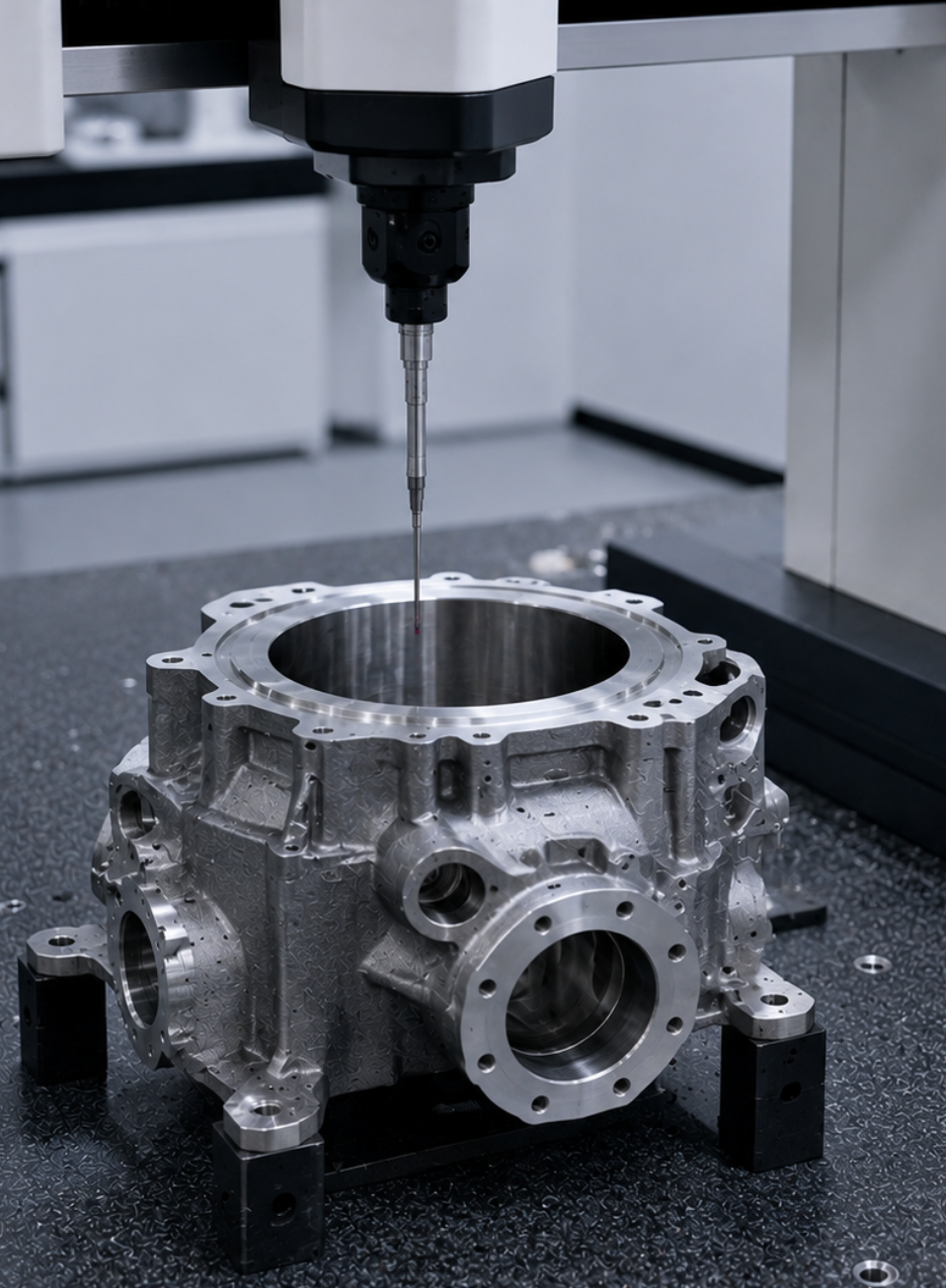
The stylus must be long enough to reach the required measuring depth, but not so long that it becomes unstable. For deep bore inspection, buyers should check the bore depth, bore diameter, entry clearance, probe body clearance and required measurement points along the bore.
If the bore requires diameter, roundness, cylindricity, coaxiality or multi-section measurement, the stylus must reach different depths reliably. The probe setup should also avoid rubbing against the bore wall or fixture.
Deep Bore Stylus Checklist
What is the bore diameter?
What is the bore depth?
How many depth sections need to be measured?
Is there enough entry clearance for the probe head and stylus?
Does the stylus length affect repeatability?
Is the stylus ball size suitable for the bore and tolerance?
Is an extension bar required?
Can the probe retract safely without collision?
5. How To Handle Side Hole Measurement
Side holes may be located on vertical walls, angled faces, flanges, ports or internal structures. They often cannot be measured correctly with a simple vertical stylus. The probe system must approach the hole from the correct direction or measure enough points to define the hole axis accurately.
A star stylus, angled stylus or motorized probe head can improve side hole access. For repeat inspection, a motorized probe head can reduce manual adjustment and improve inspection efficiency.
| Side Hole Situation | Recommended Probe Strategy | Inspection Benefit |
|---|---|---|
| Side holes on open outer wall | Star stylus or angled stylus | Allows measurement without rotating the part |
| Side ports inside valve body | Angled stylus with careful path planning | Improves access to recessed port features |
| Multiple side holes in different directions | Motorized probe head or star stylus setup | Improves efficiency and reduces repositioning |
| Side holes near clamps or ribs | Custom stylus and fixture clearance review | Reduces collision risk |
| Angled holes or non-standard orientation | Probe head rotation and CAD-based approach | Improves hole axis measurement accuracy |
6. Probe Head Selection: Manual Or Motorized?
A manual probe head may be suitable for simple inspection tasks or low-volume parts. However, for complex parts with multiple side holes, deep bores and different feature directions, a motorized probe head can be more efficient and repeatable.
| Probe Head Type | Suitable Use | Limitation |
|---|---|---|
| Fixed Probe Head | Simple vertical measurement and basic parts | Limited flexibility for side holes and angled features |
| Manual Indexing Probe Head | Low-volume parts needing several probe angles | Operator adjustment may reduce efficiency |
| Motorized Probe Head | Automated programs, repeated inspection, multiple side features | Higher initial cost but better flexibility |
| Scanning Probe System | Profiles, surfaces and continuous contour measurement | Not always necessary for simple holes and bores |
7. Calibration And Probe Qualification Are Critical
Every stylus setup must be qualified before accurate measurement. This is especially important for long styli, angled styli, star styli and extension bars. If the probe qualification is not done correctly, the measurement result may be unstable or inaccurate.
Calibration Checklist
Is a calibration sphere included in the quotation?
Can each stylus angle be qualified correctly?
Are long styli and extension bars qualified before use?
Is the star stylus fully qualified in all measurement directions?
Does the software store different stylus configurations clearly?
Is the operator trained to re-qualify the probe after stylus changes?
8. Fixture And Collision Clearance Planning
Deep bore and side hole measurement often fails because the fixture blocks the probe path. A good fixture should locate the part according to datums while leaving enough clearance for the probe to approach, measure and retract safely.
Buyers should review the fixture, clamp position, support blocks and part orientation before confirming the probe package. In some cases, changing the fixture design is more effective than using a very long or complicated stylus.
Access Planning Checklist
Are clamps blocking side holes or deep bore entry?
Can the probe approach the feature from the correct direction?
Is there enough space for probe head rotation?
Can the stylus retract safely after measurement?
Does the part need to be measured in a different orientation?
Would a custom fixture improve access and repeatability?
9. What Buyers Should Provide Before Requesting A Quote
To recommend the right CMM probe system, the supplier needs detailed feature and access information. A simple request for a CMM price does not show whether the probe can actually reach deep bores and side holes.
Quotation Information Checklist
Part drawings and 3D CAD files
Maximum part size and weight
Deep bore diameter, depth and tolerance
Side hole diameter, direction, position and access limitation
GD&T requirements such as coaxiality, position, perpendicularity and runout
Feature photos or marked drawings showing hard-to-reach areas
Fixture height, clamp position and part orientation
Inspection frequency: first article, batch inspection or final inspection
Required report format, software functions and destination country
10. Common Mistakes To Avoid
Choosing a CMM probe package without checking deep bore depth and side hole direction.
Using a very long stylus without considering rigidity and repeatability.
Ignoring probe body clearance inside narrow or recessed features.
Assuming all side holes can be measured with a standard vertical stylus.
Forgetting to qualify every stylus angle and extension setup.
Letting fixture clamps block the probe path.
Buying a basic probe head when multiple side features need automated angle changes.
Requesting a quotation without drawings, CAD files and marked hard-to-reach features.
Conclusion
Deep bore and side hole measurement requires a practical CMM probe system, not just a standard stylus. Buyers should consider bore depth, hole direction, stylus length, extension rigidity, ball size, star stylus needs, angled access, probe head rotation, fixture clearance, calibration method and software reporting.
By providing drawings, CAD files, bore depth, side hole direction, tolerance requirements and fixture information before quotation, buyers can receive a more accurate CMM probe system recommendation for real inspection work.
FAQ
1. Can a CMM measure deep bores?
Yes. A CMM can measure deep bores if the probe system has enough reach, proper stylus length, suitable ball size, stable extension and safe clearance for approach and retraction.
2. What probe is best for side holes?
Side holes may require a star stylus, angled stylus, manual indexing probe head or motorized probe head depending on hole direction, access space and inspection frequency.
3. Does a longer stylus reduce accuracy?
A longer stylus can reduce rigidity and repeatability if not selected carefully. Buyers should balance reach, stiffness, ball size and tolerance requirements.
4. What should buyers send before requesting a probe system quotation?
Buyers should send drawings, CAD files, bore diameter, bore depth, side hole direction, tolerance requirements, fixture method, hard-to-reach feature photos and report needs.
Need Help Choosing A CMM Probe System?
Send us your drawings, CAD files, deep bore dimensions, side hole direction, tolerance requirements, fixture method and inspection workflow. We can help evaluate a suitable CMM probe system for your deep bore and side hole measurement project.
Contact Us Request Quote