


How To Choose CMM Measuring Range For Your Largest Workpiece
2026-06-28 16:50How To Choose CMM Measuring Range For Your Largest Workpiece
Choosing the right CMM measuring range is one of the most important decisions before buying a coordinate measuring machine. Many buyers only compare the workpiece length, width, and height with the nominal CMM size, but this is not enough. The real measuring range must consider fixture height, clamp position, probe head clearance, stylus length, part orientation, loading method, and future workpiece size. For CNC machined parts, aluminum housings, automotive components, gearbox parts, EV motor housings, aerospace brackets, mold inserts, and precision structural parts, selecting the correct CMM measuring range can reduce inspection limitations and avoid costly machine replacement later.
Quick Answer
To choose the right CMM measuring range, buyers should calculate the largest workpiece size plus fixture height, clamp clearance, probe head space, stylus length, safe travel margin, and future part expansion. The selected CMM should not only fit the part, but also allow the probe to measure all critical features safely and repeatably. Before quotation, buyers should provide maximum part size, weight, measured features, fixture method, loading method, tolerance requirements, and future workpiece plans.
1. Why CMM Measuring Range Is Not Just Part Size
Many buyers think that if the workpiece is smaller than the CMM measuring range, the machine is suitable. For example, if a part is 700 mm long, they may assume an 800 mm measuring range is enough. In real inspection, this may not be true.
The CMM must have enough space for the workpiece, fixture, clamps, probe head, stylus, and safe movement. Some features may be located on the side, inside a deep bore, under a flange, or near a wall. If the probe cannot reach these features safely, the nominal machine size becomes less useful.
A good CMM selection should be based on the full inspection setup, not only the outside dimensions of the largest part.
2. Key Factors That Affect Required Measuring Range
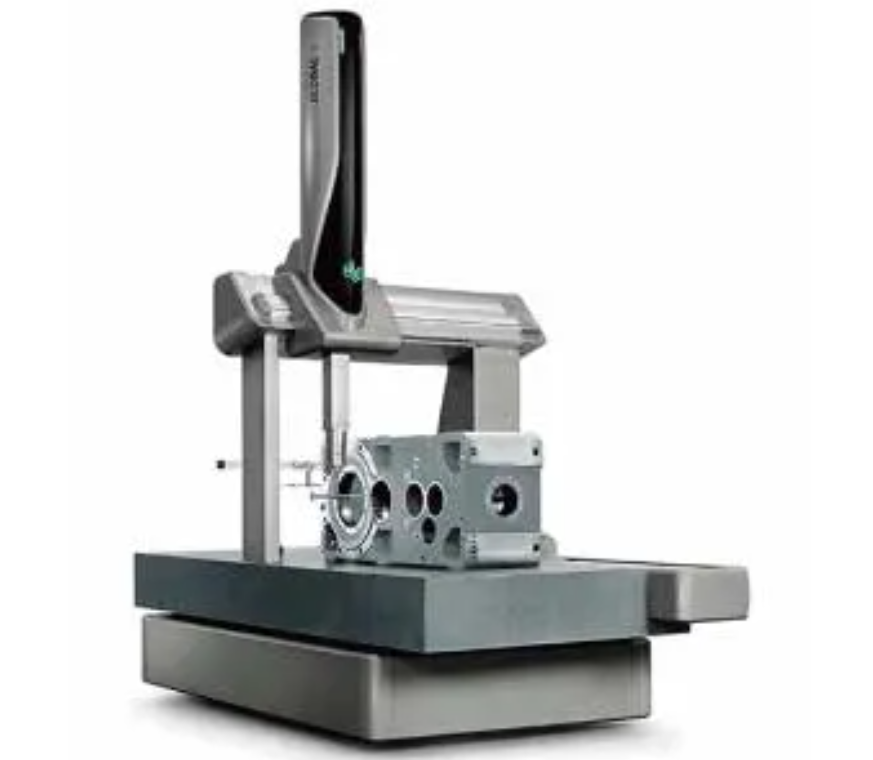
Before choosing the CMM size, buyers should check all factors that may reduce usable measuring space or require additional clearance.
| Factor | What To Check | Why It Matters |
|---|---|---|
| Workpiece Size | Maximum length, width, and height | Basic reference for X/Y/Z measuring range |
| Fixture Height | Base plate, support blocks, locating pins, clamps | May reduce available Z-axis space |
| Probe Clearance | Probe head size, stylus length, extensions, approach angle | Prevents collision and improves feature access |
| Measured Features | Bores, holes, side faces, slots, profiles, deep pockets | Some features require extra travel and special stylus access |
| Loading Method | Manual loading, trolley loading, crane loading | Affects machine layout and safe working space |
| Future Parts | Larger workpieces planned in the next few years | Avoids buying a CMM that becomes too small soon |
3. How To Calculate The Required X, Y And Z Range
The X and Y range should cover the largest workpiece length and width, plus extra clearance for clamps, fixture edges, probe approach, and safe movement. The Z range should cover the part height, fixture height, probe head, stylus length, and vertical safety margin.
Buyers should avoid selecting a machine where the largest workpiece almost fills the entire measuring volume. A small safety margin may look acceptable on paper, but it can create inspection problems when real fixtures and probe paths are added.
Practical Measuring Range Formula
X Range: Workpiece length + fixture/clamp clearance + probe movement margin
Y Range: Workpiece width + fixture/clamp clearance + probe movement margin
Z Range: Workpiece height + fixture height + probe/stylus clearance + safety margin
Future Margin: Add extra capacity if larger parts are expected later
4. Why Z-Axis Range Is Often Underestimated
Many buyers focus mainly on X and Y because they are easy to compare with part length and width. In real CMM inspection, Z-axis height is often the hidden problem. Even when the part height seems small, the fixture base, locating supports, clamps, probe head, stylus extension, and safe approach path can quickly consume Z-axis space.
This is especially important for gearbox housings, EV motor housings, pump bodies, large aluminum castings, aerospace brackets, and structural parts that need datum-based support rather than direct placement on the granite table.
| Z-Axis Item | Common Risk | Buyer Should Confirm |
|---|---|---|
| Fixture Base | Fixture height reduces usable Z-axis space | Actual fixture height and support structure |
| Probe Head | Probe body may collide with tall parts | Probe head size and approach direction |
| Stylus Length | Long styli need clearance and may affect repeatability | Stylus length and extension requirement |
| Deep Features | Deep bores or pockets may need special access | Bore depth, internal feature location, and probe path |
5. Common CMM Size Examples And Suitable Applications
Different factories need different CMM sizes. The examples below are only for selection reference. The final choice should always be based on the real part drawings, fixture method, tolerance, measured features, and future workpiece plan.
| CMM Measuring Range | Suitable Workpieces | Selection Notes |
|---|---|---|
| 500x700x500 | Small precision machined parts, brackets, tooling parts | Good for compact parts but limited for larger fixtures |
| 800x1000x600 | Medium CNC parts, aluminum housings, machined plates, mold inserts | Balanced size for many machining factories |
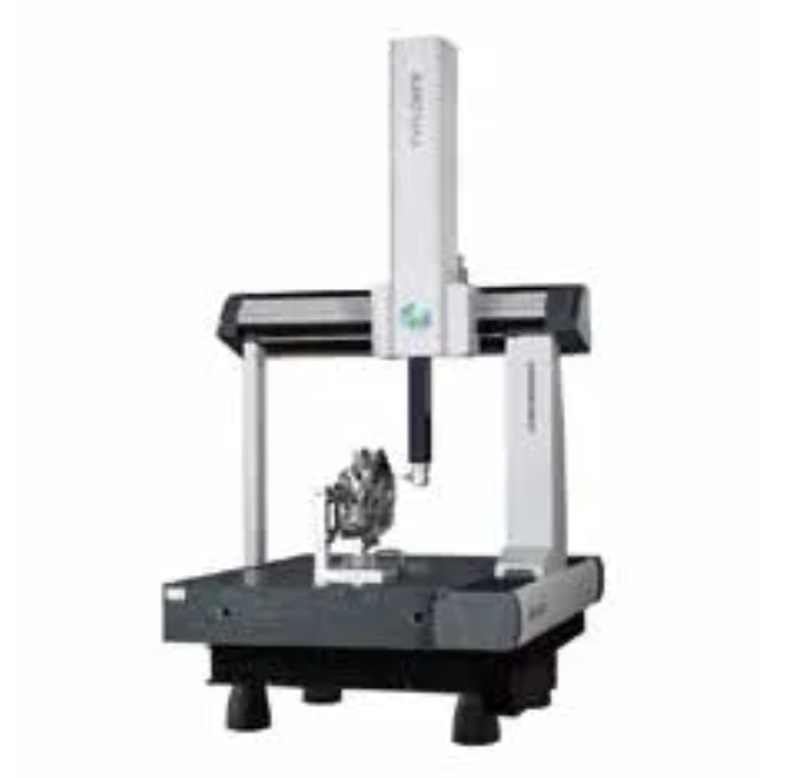
| 1000x1500x800 | Large aluminum housings, gearbox parts, EV motor housings, structural parts | Better for large workpieces and higher fixture setups |
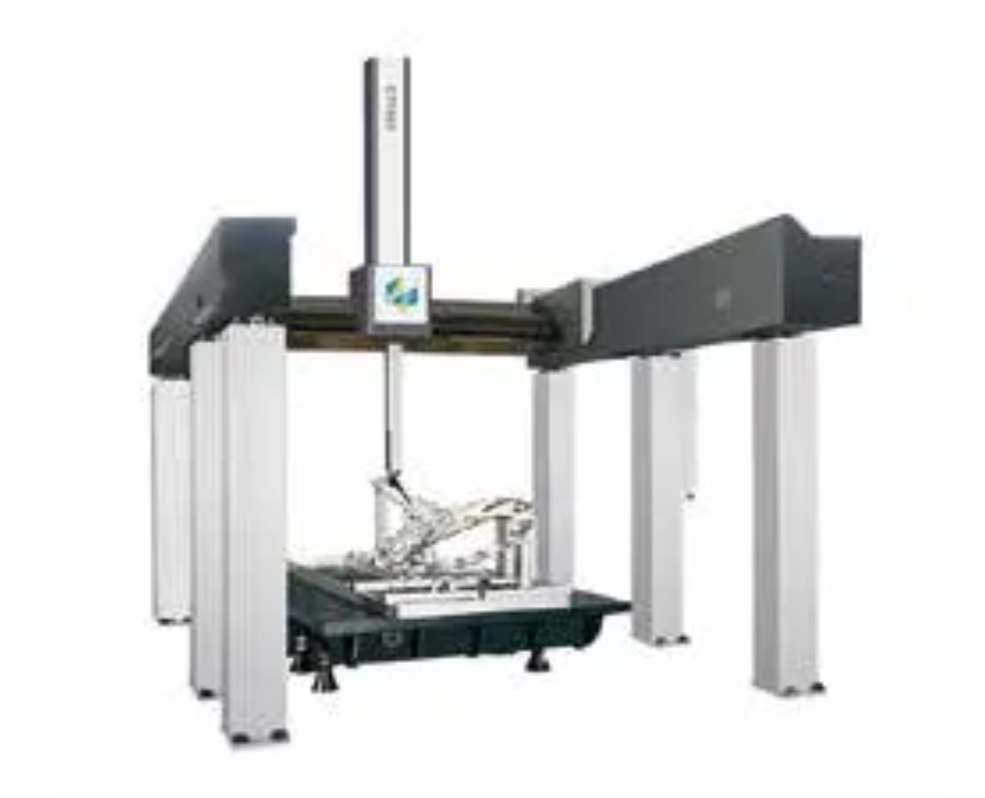
| Larger Custom Range | Oversized castings, large structural parts, long components | Requires careful site, loading, and installation planning |
6. Do Not Forget Workpiece Weight And Loading Method
CMM selection is not only about size. Workpiece weight and loading method are also important. Heavy aluminum housings, gearbox cases, pump bodies, and structural parts may require crane loading, trolley loading, or special handling tools. The CMM table load capacity and room layout should be checked before purchase.
If the loading method is not considered early, the buyer may face safety risks, machine damage risk, or low inspection efficiency after installation.
Loading And Weight Checklist
What is the maximum workpiece weight?
What is the fixture weight?
Will the part be loaded manually, by trolley, or by crane?
Is there enough room around the CMM for loading?
Is the floor suitable for the machine and part weight?
Will heavy parts be inspected frequently or only occasionally?
7. Future Workpiece Size Should Be Considered
Some buyers choose a CMM only for today’s largest workpiece. This can create problems if the factory later receives larger parts, taller fixtures, or more complex products. Buying a slightly larger measuring range may be more practical if the factory has clear future expansion plans.
However, buyers should not choose an oversized machine without reason. Larger CMM models may need more floor space, higher purchase cost, larger packaging, more careful installation, and better environmental control. The best choice should balance current workpieces, future demand, budget, and installation conditions.
8. What Buyers Should Provide Before Requesting A Quote
To recommend the correct CMM measuring range, the supplier needs more than a rough part size. Buyers should provide the full inspection setup and application requirements.
Quotation Information Checklist
Largest workpiece length, width, height, and weight
Fixture height, fixture size, and clamping method
Drawings and CAD files of typical and largest parts
Measured features: bores, holes, planes, profiles, slots, side features, and datum planes
Deep bore, internal feature, or side access requirements
Tolerance level and GD&T requirements
Inspection purpose: FAI, batch inspection, final inspection, export inspection, or customer approval
Loading method: manual, trolley, crane, or special handling
Future workpiece size plan
Installation room size, temperature condition, vibration condition, and destination country
9. Common Mistakes To Avoid
Choosing CMM measuring range only by workpiece outside dimensions.
Ignoring fixture height, clamp space, and locating supports.
Forgetting probe head size, stylus length, and safe travel margin.
Underestimating Z-axis requirement for tall fixtures and deep features.
Not considering workpiece weight and loading method.
Choosing a machine that fits current parts but cannot support future larger parts.
Buying an oversized CMM without checking installation space and budget.
Requesting a quotation without drawings, CAD files, tolerance requirements, and measured feature details.
Conclusion
Choosing the right CMM measuring range requires more than comparing the largest workpiece size with the machine’s nominal X/Y/Z travel. Buyers should consider fixture height, clamp clearance, probe head space, stylus length, measured features, loading method, workpiece weight, safety margin, and future part expansion. By providing detailed part drawings, CAD files, largest workpiece size, fixture method, tolerance requirements, and installation conditions before quotation, buyers can receive a more accurate CMM recommendation and avoid inspection limitations after delivery.
FAQ
1. Should the CMM measuring range be exactly the same as the largest workpiece size?
No. The CMM should have enough additional space for fixtures, clamps, probe movement, stylus clearance, and safe approach paths.
2. Why is Z-axis range important?
Z-axis range must cover part height, fixture height, probe head, stylus length, and safe vertical movement. It is often underestimated during CMM selection.
3. Is a larger CMM always better?
Not always. A larger CMM can support bigger parts, but it may increase cost, space requirement, packaging size, installation difficulty, and environmental control needs.
4. What information is needed before requesting a CMM size recommendation?
Buyers should provide largest part size, part weight, fixture height, drawings, CAD files, measured features, tolerance requirements, loading method, installation room condition, and future workpiece plans.
Need Help Choosing The Right CMM Measuring Range?
Send us your largest workpiece size, drawings, CAD files, fixture method, tolerance requirements, measured features, and destination country. We can help evaluate a suitable CMM measuring range for your inspection project.
Related Innovameld Measurement Pages
For buyers comparing bridge CMM systems, probes, image measuring instruments and factory inspection workflows, these related Innovameld pages help connect the article topic with real product categories and consultation paths on the same website.
- Coordinate Measuring Machine
- Probe
- Measuring Machine
- Products
- Product Page Two
- The CMM Bridge Machine
- Image Measuring Instrument
- Contact Innovameld
Additional Buyer Review Points
Before sending an inquiry, prepare the measuring range, part drawings, tolerance grade, workshop temperature condition, probe requirement, software language, installation space and expected inspection rhythm. This information lets Innovameld recommend a practical coordinate measuring machine configuration instead of a generic quotation.
If the inspected parts include machined housings, molds, precision fixtures, shafts or complex castings, combine machine accuracy, fixture access and operator training in the same review. A clearer inquiry usually leads to a more suitable CMM proposal, faster technical confirmation and better long term inspection stability.