


How To Choose A Coordinate Measuring Machine For Industrial Inspection
2026-05-01 14:20How To Choose A Coordinate Measuring Machine For Industrial Inspection
Choosing the right coordinate measuring machine (CMM) is one of the most important decisions in modern industrial inspection. A well-matched CMM can improve dimensional accuracy, reduce inspection errors, support process control, and help manufacturers meet customer quality requirements more efficiently. However, many buyers focus only on price or nominal accuracy and overlook other key factors such as measuring range, workpiece size, shop-floor environment, software compatibility, probe configuration, and future automation needs. This guide explains the practical points that industrial buyers should evaluate before selecting a CMM for precision inspection.
What A Buyer Should Clarify First
What parts will be measured, and what are their maximum dimensions and weight?
What tolerance level must be verified in production or final inspection?
Will the machine be used in a quality lab or directly on the shop floor?
Do you need manual measurement, CNC inspection, or future automation integration?
What software, probe system, and reporting functions are required?
1. Start With Your Inspection Task, Not Just The Machine Specification
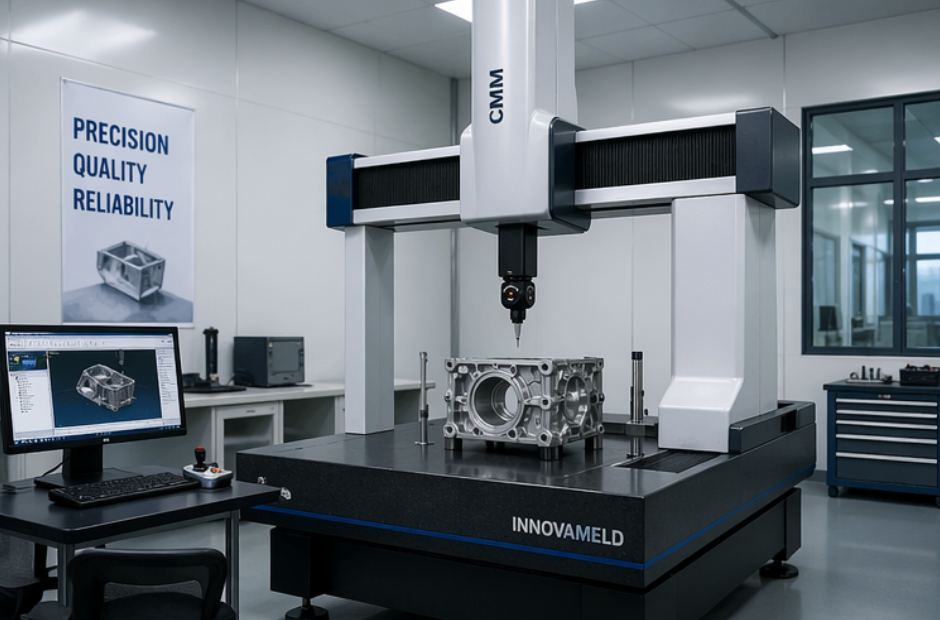
The first step in selecting a coordinate measuring machine is understanding exactly what must be inspected. Buyers should clearly define the part size, material, geometry complexity, production volume, and tolerance requirement. A CMM selected for small precision components will not necessarily be suitable for large automotive castings, structural parts, or machined housings. In many procurement cases, the wrong machine is chosen simply because the decision is made based on catalog data rather than real application needs.
If your products include shafts, housings, molds, stamped parts, aerospace components, or medical parts, the inspection requirements may differ significantly. Some parts need only basic dimensional verification, while others require complex GD&T evaluation, profile measurement, scanning, or batch reporting. This is why the inspection task should drive the machine configuration, software selection, and probe system choice.
In addition, buyers should consider whether the machine will be used mainly for first article inspection, process control, incoming quality inspection, or final outgoing verification. These different use cases affect speed, repeatability, fixturing needs, operator skill requirements, and return on investment.
2. Evaluate The Most Important Technical Selection Factors
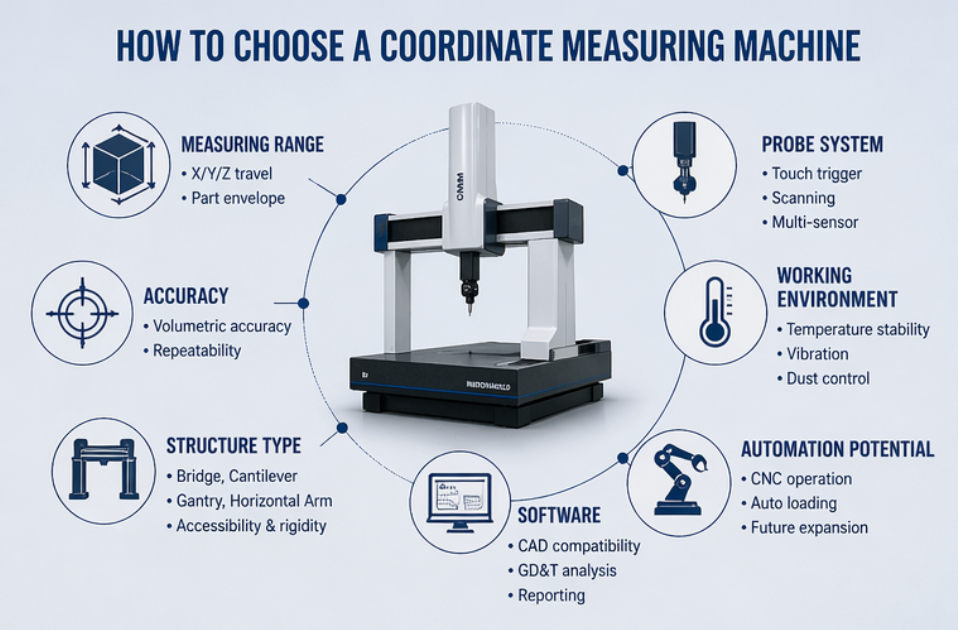
Once the application is clear, the next step is to evaluate the technical factors that determine whether a CMM can deliver stable and useful inspection results. Accuracy is important, but it should never be the only criterion. The best choice is a balanced machine that matches your part range, environment, workflow, and quality objective.
| Selection Factor | What Buyers Should Check | Why It Matters |
|---|---|---|
| Measuring Range | X/Y/Z travel, part envelope, fixture space | Ensures the machine can measure current and future parts |
| Accuracy | Volumetric accuracy, repeatability, relevant tolerance ratio | Supports confidence in dimensional verification |
| Structure Type | Bridge, cantilever, gantry, horizontal arm | Determines accessibility, rigidity, and application suitability |
| Probe System | Touch trigger, scanning, multi-sensor capability | Affects measurement method, speed, and feature coverage |
| Software | Programming, CAD compatibility, GD&T, reporting | Directly impacts usability and inspection efficiency |
| Working Environment | Temperature stability, vibration, dust, shop-floor conditions | Environmental mismatch can reduce real measurement performance |
| Automation Potential | CNC operation, auto loading, robot compatibility | Important for batch inspection and future capacity expansion |
Among these points, measuring range is often underestimated. Buyers sometimes choose a machine that is only slightly larger than the current part size, leaving no room for fixtures, repositioning, or future projects. This can create operational limitations and force reinvestment earlier than expected.
Accuracy should also be judged in relation to part tolerance. A highly accurate machine may not be necessary for all production tasks, while an under-specified machine may fail to meet inspection confidence requirements. A practical rule is to ensure the machine capability is comfortably better than the tolerance level you need to verify.
3. Choose The Right CMM Type For Your Application
Different CMM structures serve different industrial needs. A bridge CMM is widely used for general precision inspection because it offers a good balance of rigidity, accuracy, and versatility. It is often the preferred choice for machined parts, molds, dies, and precision assemblies. A cantilever CMM provides easier access to the work area and can be a strong option for certain production environments or specific part types. Large parts may require a gantry or horizontal arm system, especially when the workpiece is too large or too heavy for a standard table configuration.
Manual CMMs can be suitable for basic inspection or lower inspection volumes, but CNC CMMs are usually preferred for industrial applications where repeatability, speed, and program automation are important. If your factory handles frequent batch measurement or requires stable operator-independent results, CNC operation is often the better long-term choice.
Buyers should also think beyond the machine frame itself. The real inspection capability depends on the full system: machine body, probe, stylus, fixture, software, controller, operator workflow, and reporting output. A well-integrated system usually delivers more value than a machine selected in isolation.
4. Do Not Ignore Software, Probe Systems, And Reporting Needs
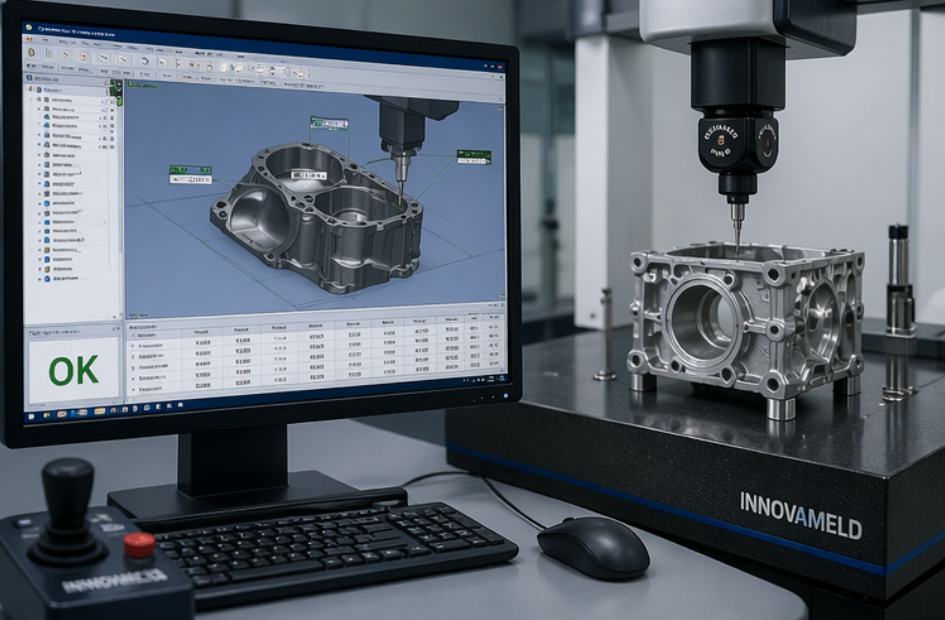
In many projects, software has as much impact on productivity as the machine hardware. Buyers should evaluate whether the software supports CAD import, offline programming, GD&T analysis, SPC output, intuitive reporting, and integration into the existing quality workflow. If multiple operators or sites will use the same inspection process, software usability and consistency become even more important.
Probe choice is another key factor. Touch trigger probes are commonly used for discrete point measurement and routine dimensional checks. Scanning probes are more suitable when profiles, curves, or a larger number of data points are needed. For some advanced tasks, buyers may also need multi-sensor capability, such as optical or non-contact options. The probe configuration should match actual feature requirements instead of being chosen only on brand preference.
Reporting should also be considered from the beginning. An inspection system that produces clear, customer-friendly, and traceable reports can improve internal communication, customer approval speed, and audit readiness. For automotive, aerospace, medical, and export-oriented production, reporting capability is often a hidden but highly valuable requirement.
5. Consider The Working Environment And Future Production Plans
A CMM that performs well in a controlled laboratory may not deliver the same results on a busy production floor. Temperature fluctuation, vibration, dust, and operator traffic can all affect machine performance and measurement stability. This is why buyers must confirm where the machine will be installed and whether the selected model is suitable for that environment.
Future planning is equally important. If your production volume is expected to increase, or if you may later add more part families, automation, or digital reporting requirements, it is wise to choose a CMM platform that can scale with your business. Investing in a machine with reasonable expansion potential can reduce future upgrade cost and extend service life.
Buyers should ask whether the system supports future upgrades such as automatic probe changing, rotary tables, additional software modules, fixture systems, or connection with automatic loading equipment. These features can significantly improve productivity when inspection demand increases.
6. What Information Should Be Prepared Before Requesting A Quote
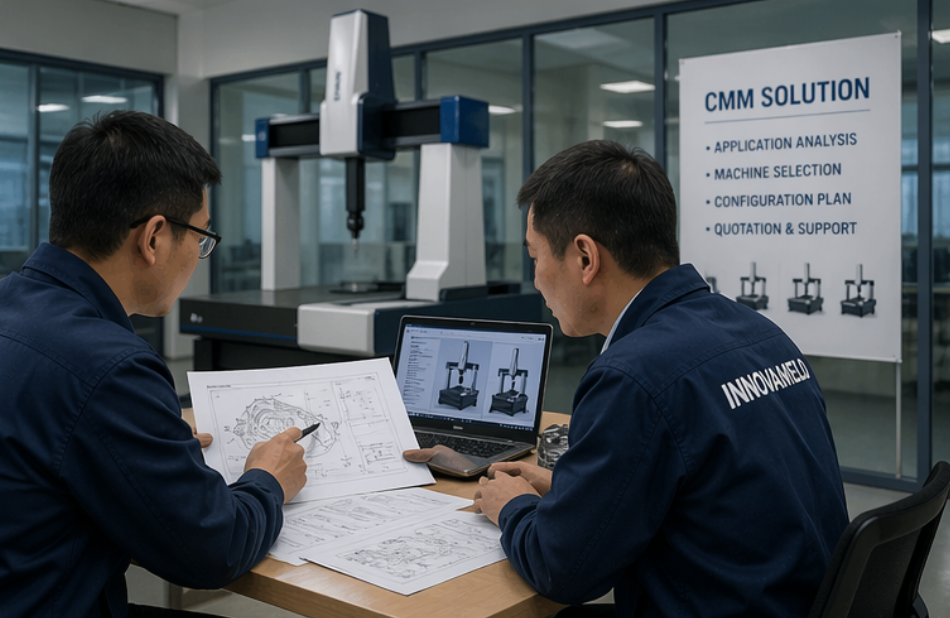
A precise quotation depends on accurate application information. If buyers provide only a general request such as “we need a CMM,” the proposed configuration may not fully match the real use case. To speed up evaluation and receive a more useful recommendation, it is better to prepare key application details before sending an inquiry.
Recommended Quotation Checklist
Part drawings, CAD files, or sample dimensions
Maximum part size and weight
Main features to be measured
Tolerance requirements and inspection standard
Expected measurement frequency or production volume
Installation environment: lab or shop floor
Required software functions and report format
Need for CNC operation, automation, or future expansion
The more complete this information is, the easier it becomes to recommend a suitable machine, probe package, software combination, and inspection workflow. This also helps avoid under-specification, over-specification, and unnecessary procurement delay.
7. Common Mistakes Buyers Should Avoid
Choosing a machine only by price without checking actual application fit
Focusing only on accuracy while ignoring measuring range and accessibility
Underestimating the importance of software, reporting, and operator usability
Ignoring environmental conditions that may affect measurement performance
Not considering future product changes, production growth, or automation needs
Requesting a quotation without clear drawings, tolerances, or inspection requirements
Avoiding these mistakes can significantly improve project success. The right CMM is not simply the most expensive or the most precise model on paper. It is the one that best fits your part family, tolerance level, workflow, environment, and long-term production plan.
Conclusion
Choosing a coordinate measuring machine for industrial inspection requires a practical and application-driven approach. Buyers should begin with the actual part and inspection objective, then evaluate measuring range, accuracy, machine structure, software, probe system, environment, and future automation potential. A well-selected CMM can improve inspection reliability, reduce production risk, and support long-term quality control across different industrial applications. If you are planning a new inspection project or upgrading your current measurement capability, preparing the right technical information in advance will help you choose a more suitable and cost-effective solution.
Need Help Choosing The Right CMM Solution?
Contact us to discuss your parts, tolerances, inspection goals, and production environment. We can help you evaluate a suitable coordinate measuring machine solution for your industrial inspection needs.