

How to Achieve Stable Production of Ultra-Lightweight Parts Weighing Just 0.05g
2025-12-30 17:12How to Achieve Stable Production of Ultra-Lightweight Parts Weighing Just 0.05g
The Synergy of Precision Molds and Material Science
The journey to mass-producing parts as light as 0.05 grams begins not on the production floor, but in the design and tooling phase. The cornerstone of stability in micro-injection molding is the mold itself. These are not standard molds simply scaled down; they are masterpieces of precision engineering, typically machined on advanced Japanese or Taiwanese CNC equipment to achieve micron-level tolerances. The design must account for the unique flow dynamics of plastic resin at an infinitesimal scale. A key feature is the use of high-cavity molds, capable of configurations from 16 to 32 cavities. This allows for high-volume output, but more importantly for stability, it ensures a balanced fill across all cavities. If one cavity fills faster or slower than its neighbors, it creates inconsistencies in part weight, density, and quality. Furthermore, the selection of specialized engineering-grade materials is paramount. These materials must have excellent flow characteristics to fill these minute features without degrading, and their shrinkage rates must be perfectly predictable to maintain dimensional accuracy part after part. The synergy between a perfectly balanced, high-precision mold and a meticulously selected material is the non-negotiable foundation for stable micro-molding.
Precision Machinery and Real-Time Monitoring
With the perfect mold and material in place, achieving stability shifts to the execution phase, governed by an orchestra of precise process controls. Standard injection molding machines are too powerful and imprecise for such delicate work. Micro-injection molding requires specialized machines equipped with sophisticated screw and plunger systems that can accurately meter and inject shot sizes measured in milligrams. The background material highlights the capability for "micro-injection molding technology" to produce parts with "0.25mm thickness." This extreme thinness is only possible with exacting control over injection speed, pressure, and temperature. Any minor fluctuation can result in short shots (incomplete filling), flash (excess material), or internal stresses that compromise the part's integrity. To ensure stability, these processes are often integrated with IoT-enabled production monitoring systems. These systems collect real-time data on every aspect of the cycle, allowing for immediate intervention if a parameter drifts outside its strict tolerance window. This data-driven approach transforms production from a reactive to a predictive process, identifying trends that could lead to instability long before defective parts are produced. It is this relentless focus on controlling every variable in the process that makes stable, high-volume production of ultra-lightweight components possible.
100% Automated Inspection for Zero Defects
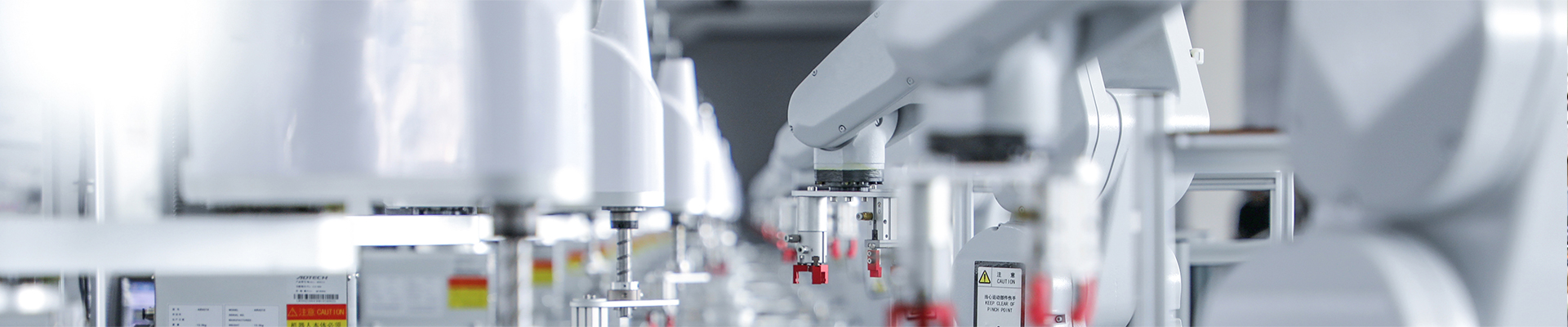
The ultimate guardian of stable production is an uncompromising quality assurance system. For parts weighing 0.05g, human inspection is impractical, slow, and inherently unreliable. The only way to guarantee consistency is through 100% automated inspection, a capability explicitly mentioned in the background material with "100% CCD inspection systems, achieving zero PPM defect rates." High-resolution CCD (Charge-Coupled Device) cameras are integrated directly into the production line. As parts are ejected from the mold, they are automatically presented to these vision systems. The cameras, guided by sophisticated software, perform instantaneous checks on critical dimensions, surface defects, and completeness of the microscopic features. They can detect flaws invisible to the naked eye, such as a tiny speck of dust or a micro-fracture. Any part that does not meet the exacting standards is automatically rejected. This closed-loop system of production and inspection is critical. It not only catches defects but also provides a continuous stream of data back to the process control system, enabling fine-tuning and preventing the production of out-of-spec parts. This relentless pursuit of perfection, where every single part is verified, is what allows a manufacturer to confidently claim stable production and deliver on the promise of zero PPM defects.