


Bridge CMM For Precision Parts Export Inspection Before Shipment
2026-06-15 17:28Bridge CMM For Precision Parts Export Inspection Before Shipment
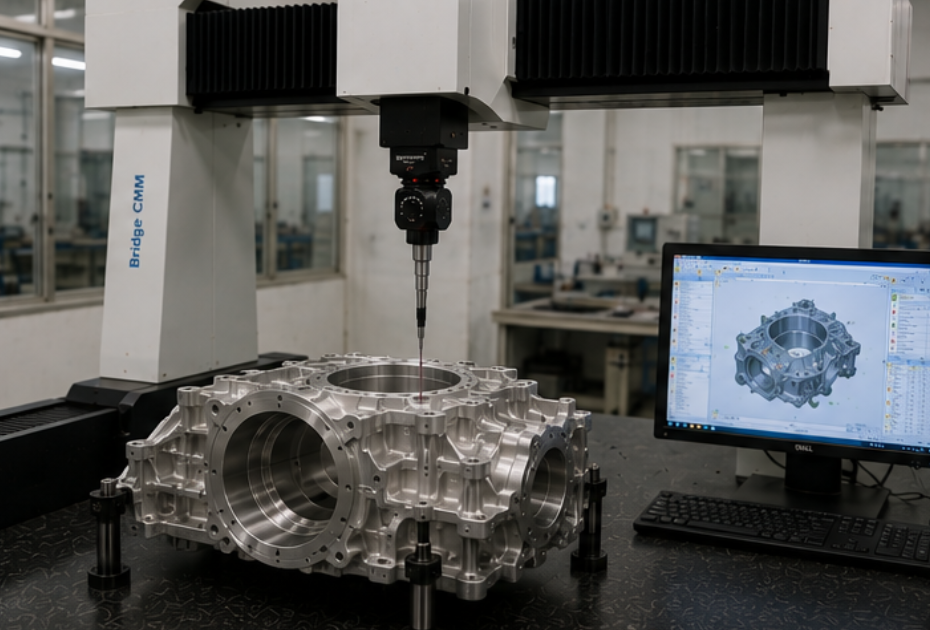
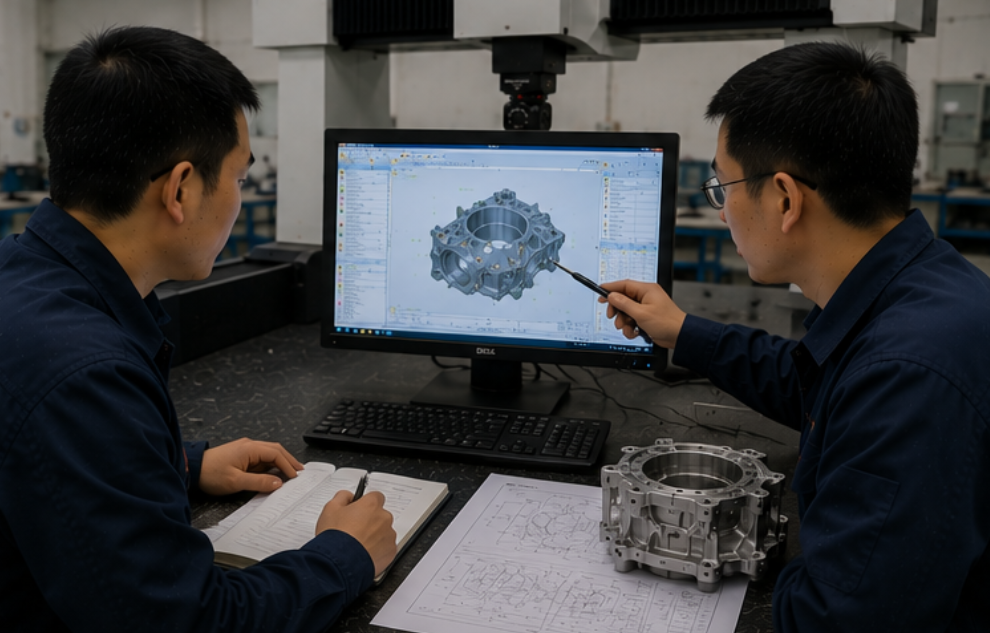
For precision parts export projects, dimensional inspection before shipment is one of the most important steps to reduce customer complaints, delivery disputes, rework costs, and return risks. CNC machined parts, aluminum die casting components, automotive housings, aerospace brackets, EV components, mold inserts, and industrial mechanical parts often have strict tolerance and GD&T requirements. A bridge coordinate measuring machine helps suppliers verify critical dimensions, generate traceable inspection reports, and confirm that export parts meet customer drawings before packing and delivery.
Quick Answer
A bridge CMM is suitable for pre-shipment inspection of precision export parts when buyers need reliable dimensional reports, GD&T verification, bore measurement, hole position checks, flatness inspection, profile comparison, and traceable quality data. Before shipment, factories should use CMM inspection to confirm critical features, avoid batch quality risk, and provide inspection records that overseas customers can review before delivery.
1. Why Export Parts Need CMM Inspection Before Shipment
For export orders, once precision parts leave the factory, quality problems become much more expensive to solve. If overseas customers find dimensional defects after receiving the goods, the supplier may face replacement cost, air freight cost, delayed project schedules, customer complaints, or even future order loss.
Many precision parts cannot be fully checked by simple manual tools. A part may pass basic size checks, but still fail because of hole position deviation, bore misalignment, flatness error, profile deviation, datum relationship problems, or GD&T nonconformity. A bridge CMM can inspect these three-dimensional relationships more reliably before shipment.
For suppliers serving automotive, aerospace, EV, machinery, medical device, mold, and industrial equipment customers, CMM inspection before shipment is not only a quality step. It is also a trust-building tool that proves the factory has a controlled inspection process.
2. Which Precision Export Parts Should Be Checked By Bridge CMM
Not every export part requires full CMM inspection, but parts with strict tolerance, high assembly risk, functional interfaces, or customer audit requirements should be inspected carefully before shipment.
| Part Type | Pre-Shipment Inspection Focus | Why CMM Is Useful |
|---|---|---|
| CNC Machined Parts | Hole position, bores, planes, slots, datum surfaces | Verifies machining accuracy and GD&T requirements |
| Aluminum Die Casting Parts | Casting deformation, machined bores, sealing faces, mounting holes | Checks both cast geometry and machined features |
| Automotive Components | Bore alignment, flatness, hole pattern, assembly datum | Supports PPAP, customer approval, and batch inspection records |
| EV Motor Housings | Bearing seat bore, coaxiality, end face flatness, mounting holes | Helps reduce assembly, vibration, and alignment risk |
| Mold Inserts And Tooling Parts | Profile, step height, slots, form features, small tolerances | Provides precise data before export delivery |
3. Key Features To Confirm Before Export Packing
Before shipment, inspection should focus on features that may affect assembly, function, sealing, mounting, movement, or customer acceptance. The CMM inspection plan should follow the customer drawing and datum structure instead of only checking easy-to-measure dimensions.
| Inspection Feature | Export Risk If Not Checked | CMM Inspection Focus |
|---|---|---|
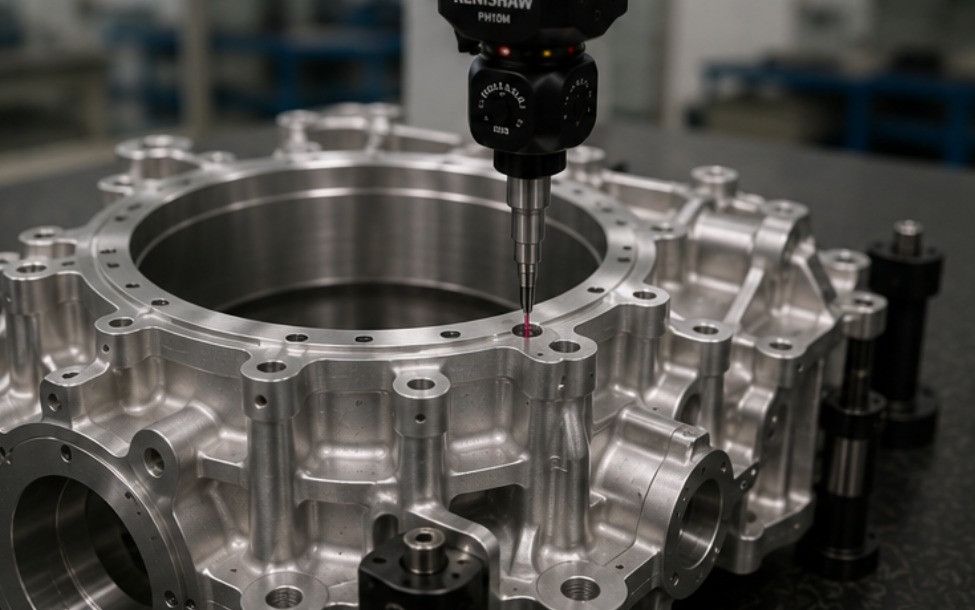
| Hole Position | Customer assembly holes may not align | Position tolerance, datum reference, bolt pattern accuracy |
| Bore Diameter And Alignment | Bearing, shaft, or fitting parts may fail assembly | Diameter, roundness, coaxiality, cylindricity |
| Flatness And Sealing Face | Leakage, poor contact, or assembly stress may occur | Plane measurement, flatness, profile, datum relationship |
| Profile And Surface Form | Part may not match mating component or CAD requirement | Profile tolerance, CAD comparison, scanning if required |
| Datum Relationship | Part may pass single dimensions but fail functional assembly | Datum setup, alignment strategy, GD&T evaluation |
4. How Bridge CMM Helps Reduce Export Quality Disputes
Export quality disputes often happen when the buyer and supplier do not have enough traceable inspection data. If the customer finds a problem after receiving goods, both sides may need to compare drawings, measurement methods, inspection reports, and batch records. Without CMM data, it can be difficult to prove whether the issue comes from machining, handling, transportation, or customer-side assembly.
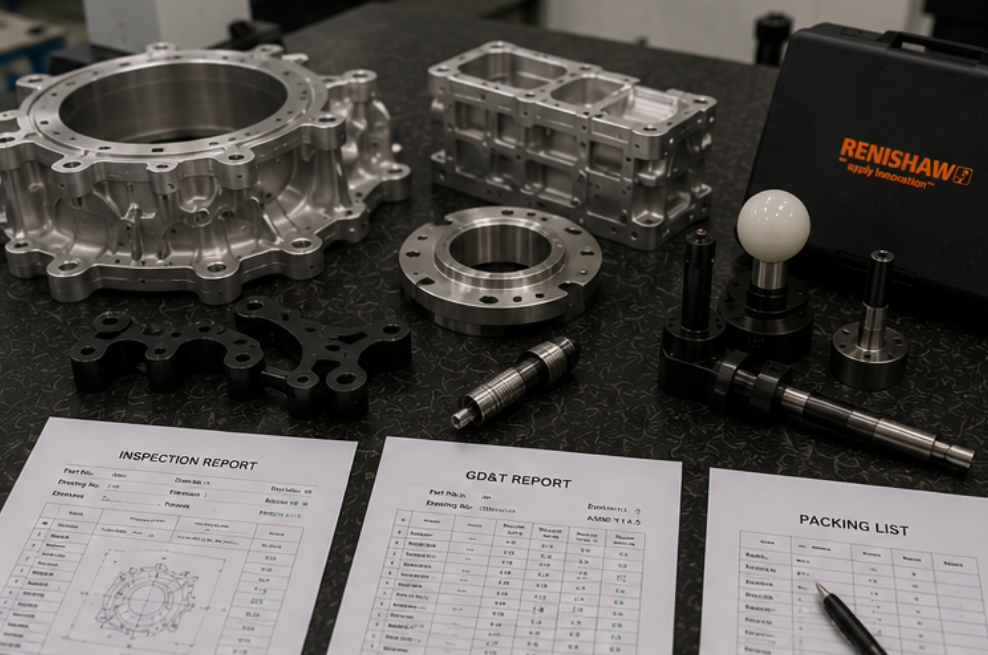
A bridge CMM can generate structured inspection reports before shipment. These reports help suppliers confirm the parts before packing and help overseas buyers review quality status before delivery. For repeat orders, CMM data can also help compare production batches and monitor dimensional trends.
Pre-Shipment CMM Report Should Include
Part name, part number, drawing number, and revision version
Inspection date, operator, machine information, and program version
Nominal value, measured value, deviation, and tolerance
Pass / fail result for critical dimensions and GD&T items
Datum references and inspection alignment method
Batch number, sample quantity, and customer order reference
Photos or notes for critical inspection areas if required
5. Recommended Bridge CMM Configuration For Export Inspection
A bridge CMM for precision parts export inspection should be selected according to the factory’s part range, tolerance level, inspection frequency, and customer reporting requirements. The machine should not only fit today’s parts, but also support similar future export projects.
Recommended Configuration
Machine Type: Bridge CMM for stable 3D dimensional inspection in a quality lab.
Measuring Range: Selected by maximum export part size, fixture height, probe clearance, and future part families.
Probe System: Touch-trigger probe for holes, bores, planes, and standard features; scanning probe if profile data is required.
Stylus Package: Suitable stylus length, ball size, extensions, and angled styli for real part access.
Fixture: Modular or custom fixture for repeatable measurement before shipment.
Software: CAD import, GD&T evaluation, automatic reports, SPC output, and exportable report format.
Service: Calibration support, training, and after-sales service for long-term quality control.
6. Combine CMM Inspection With Packing And Shipment Control
Pre-shipment inspection should be connected with packing control. After CMM inspection confirms critical dimensions, the factory should label qualified parts, separate nonconforming parts, record inspection batches, and make sure the packing list matches the inspected shipment quantity.
For high-value precision parts, inspection reports, photos, packing records, and shipment documents can be prepared together. This helps overseas buyers review the shipment more clearly and reduces misunderstanding after goods arrive.
Before Shipment, Factories Should Confirm
Critical dimensions have been inspected according to customer drawings.
CMM report matches the correct drawing revision and batch number.
Qualified parts are clearly separated from pending or rejected parts.
Packing list matches inspected quantity and customer order information.
Inspection reports and shipment photos are ready for customer review.
Protective packaging is suitable for precision machined or cast components.
7. What Buyers Should Provide Before Requesting A Quote
To recommend a bridge CMM for precision parts export inspection, the supplier needs to understand the buyer’s parts, tolerances, inspection reports, and shipment quality control requirements. A general request for machine price may lead to an incomplete recommendation.
Quotation Information Checklist
Part drawings, CAD files, and drawing revision information
Maximum part length, width, height, and weight
Part material, machining process, casting process, or surface treatment
Critical dimensions, tolerance requirements, and GD&T items
Measured features: holes, bores, flatness, profiles, sealing faces, and datum planes
Inspection purpose: FAI, batch inspection, pre-shipment inspection, or customer approval
Required report format, SPC output, and customer documentation needs
Fixture requirements and inspection frequency
Installation environment, calibration needs, training, and service expectations
8. Common Mistakes To Avoid
Only checking simple dimensions before export shipment.
Ignoring GD&T, datum relationship, and functional assembly features.
Using manual tools when CMM reports are required by overseas customers.
Not linking inspection reports with batch number, drawing revision, and packing list.
Skipping CMM inspection for high-value precision parts before delivery.
Choosing a CMM without considering report format and customer approval requirements.
Not preparing fixture support for repeatable pre-shipment inspection.
Requesting a quotation without drawings, CAD files, tolerance data, or export inspection needs.
Conclusion
Bridge CMM inspection before shipment helps precision parts suppliers reduce export quality risk, confirm drawing compliance, generate traceable reports, and build stronger trust with overseas customers. The right CMM solution should support accurate measurement of holes, bores, planes, profiles, datum relationships, and GD&T requirements. By combining CMM inspection with batch records, packing control, and export documentation, factories can deliver precision parts with greater confidence and fewer quality disputes.
Need A Bridge CMM For Export Inspection Before Shipment?
Send us your precision part drawings, CAD files, tolerance requirements, inspection report needs, and export quality control workflow. We can help evaluate a suitable bridge CMM configuration for your pre-shipment inspection process.