


The Vital Role of Cantilever CMMs in Advancing Medical Device Precision and Innovation
2025-12-07 00:56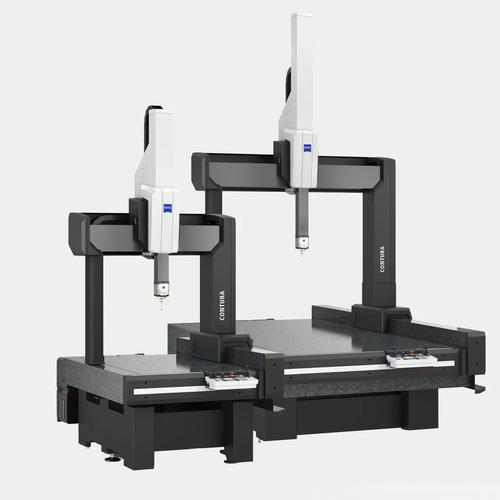
In the world of modern healthcare, precision is not just a preference—it's a necessity. From life-saving surgical tools to custom-fitted prosthetic limbs, the medical industry relies on equipment manufactured to exacting tolerances. At the heart of this precision-driven manufacturing revolution lies an often-unsung hero: the cantilever coordinate measuring machine (CMM). This sophisticated metrology instrument has become indispensable for quality assurance across medical manufacturing, combining unparalleled accuracy with unique flexibility to verify the complex geometries of medical components.
Cantilever CMMs feature a distinctive design with a fixed bridge on one side and a movable measuring arm extending horizontally, providing three-sided access to workpieces. This configuration makes them particularly suited for measuring medical components that often feature complex geometries and require multi-angle accessibility. Unlike traditional bridge-type CMMs, cantilever models allow operators easier access to parts, simplifying the measurement process for intricate medical instruments and implants. As medical technology advances toward miniaturization and personalization, the role of cantilever CMMs in ensuring manufacturing quality has never been more critical
.
1 Precision Manufacturing of Medical Components
The manufacturing of medical components demands exceptional accuracy and rigorous quality control, as minute deviations can significantly impact device performance and patient safety. Cantilever CMMs excel in this environment by providing the precise measurement capabilities needed to verify that medical components meet strict design specifications. These machines offer high-precision metrology for a wide range of medical manufacturing applications, from surgical instruments to implantable devices
.
One of the most significant contributions of cantilever CMMs in medical manufacturing is in the production of specialized surgical tools. These instruments often feature complex geometries and must adhere to stringent dimensional requirements. The cantilever design allows for comprehensive measurement of these tools, including hard-to-reach areas that might challenge traditional CMM configurations. For example, the measurement of small holes in surgical instruments—such as those found in laparoscopic tools or specialized drills—requires the advanced capabilities that cantilever CMMs provide. These machines can accurately measure holes as small as 100 microns in diameter with an expanded uncertainty of just 0.07 microns, ensuring perfect compliance with design specifications
.
The application of cantilever CMMs extends to the production of implantable medical devices, where precision is paramount. Orthopedic implants, such as knee and hip replacements, must feature exacting dimensional accuracy to ensure proper fit and function within the human body. Cantilever CMMs verify the critical dimensions of these implants, confirming that complex curved surfaces and interaction points meet design requirements. The high accuracy and repeatability of these measurement systems help manufacturers maintain consistent quality across production batches, reducing the risk of device failure and improving patient outcomes
.
2 Measurement of Complex Medical Devices
Medical devices increasingly incorporate complex geometries and miniature components that present significant measurement challenges. Cantilever CMMs address these challenges through advanced probing systems and flexible configurations capable of measuring intricate features with high precision. The ability to accurately measure these complex devices directly impacts their performance, reliability, and safety in medical applications
.
2.1 Small Hole Metrology for Medical Applications
The measurement of small holes is particularly critical in medical device manufacturing. Components such as drug delivery nozzles, micro-surgical instruments, and implantable ports feature tiny apertures that must meet strict dimensional tolerances. Traditional measurement techniques often struggle with these features, especially those with high aspect ratios (depth-to-diameter). Cantilever CMMs equipped with specialized fiber deflection probes can measure holes as small as 100 microns in diameter while maintaining accuracies within sub-micron ranges. This capability ensures that critical fluid pathways in devices like insulin pumps or chemotherapy delivery systems function as designed, with precise flow characteristics
.
The fiber deflection probing (FDP) technology used with cantilever CMMs offers particular advantages for medical device measurement. This system employs a thin glass fiber with a microscopic ball mounted on the end, which is delicately guided into small holes. When the probe contacts a surface, it deflects minimally, and this deflection is precisely measured using optical imaging. The technique exerts exceptionally low forces (ranging from micronewtons to nanonewtons), preventing damage to delicate medical components during measurement. This non-destructive approach is essential for measuring fragile medical devices that might be deformed or damaged by conventional probing systems
.
2.2 Dimensional Validation of Complex Components
Beyond small holes, cantilever CMMs perform comprehensive dimensional validation of complex medical components. This includes form measurement, position verification, and geometric characteristic analysis. For instance, the progressive miniaturization of robotic surgical instruments requires measurement capabilities that can verify intricate mechanisms with tight tolerances. Cantilever CMMs provide the necessary precision to ensure that these advanced tools function flawlessly during delicate surgical procedures
.
The flexibility of cantilever CMMs allows for the measurement of diverse medical components, from guide components for fiber optics used in medical imaging to specialized connectors for medical electronic systems. The ability to measure these components accurately helps ensure that electronic medical devices function reliably in critical healthcare settings. This comprehensive measurement capability supports the trend toward more integrated and connected medical devices in modern healthcare systems
.
3 Dental and Orthopedic Applications
The dental and orthopedic fields have particularly benefited from the precision measurement capabilities of cantilever CMMs. These specialties rely on custom-fitted components that must match patient anatomy with remarkable accuracy. Cantilever CMMs play a crucial role in verifying that these medical devices meet their design specifications before clinical use
.
In dentistry, cantilever CMMs contribute to the development and quality assurance of dental implants and prosthetic frameworks. Research has demonstrated the use of CMMs as a gold standard for verifying the spatial orientation of implant replicas in studies comparing different impression techniques. In one study, a coordinate measuring machine achieved a precision of 3.9 micrometers (95% confidence interval 2.7 to 7.1 micrometers) and an average error of 4.6 micrometers when measuring the position of dental implant replicas—significantly more accurate than conventional impression methods
.
This exceptional accuracy is critical in dental applications because implant-supported prostheses require precise fit to prevent biomechanical complications. Poorly fitting frameworks can lead to screw loosening, bone loss, or even implant failure. By using cantilever CMMs to verify component dimensions and relationships, dental labs can ensure passive fit of implant-supported restorations, improving long-term clinical outcomes. The cantilever design provides particular advantages for measuring multi-implant frameworks, where access to various angles is necessary for comprehensive measurement
.
The orthopedic industry relies similarly on cantilever CMMs for verifying the dimensions of joint replacements, spinal implants, and trauma devices. These implants often feature complex geometries that must be measured from multiple angles—a task well-suited to the cantilever configuration. The high accuracy of these measurement systems helps ensure that orthopedic implants will function as intended once implanted, with proper articulation surfaces and fixation elements. This precision contributes to more successful surgical outcomes and improved patient mobility
.
4 Research, Development, and Quality Assurance
Beyond production applications, cantilever CMMs serve vital functions in medical research and quality assurance processes. These machines provide the precise measurement data necessary for developing new medical technologies, improving existing devices, and maintaining rigorous quality standards across the healthcare industry
.
In research settings, cantilever CMMs contribute to the development of novel medical devices by providing researchers with accurate dimensional data during prototyping and testing phases. This data helps optimize device designs before they enter clinical trials, potentially reducing development time and costs. For example, researchers developing new minimally invasive surgical tools might use cantilever CMMs to verify that prototype mechanisms function as intended with the required precision. The detailed measurement data from these systems provides insights that drive innovation in medical device design
.
The quality assurance applications of cantilever CMMs in the medical field extend to process validation and regulatory compliance. Medical device manufacturers must provide comprehensive documentation of their quality control processes to regulatory bodies like the FDA. Cantilever CMMs generate the precise measurement data needed to demonstrate that manufacturing processes remain in control and that finished devices consistently meet specifications. This objective evidence is crucial for maintaining regulatory approvals and ensuring that only safe, effective medical devices reach the market
.
Additionally, cantilever CMMs play a role in failure analysis and device improvement. When a medical device fails to perform as expected, precise measurement of the device can reveal dimensional deviations that may have contributed to the failure. This information helps manufacturers identify root causes and implement corrective actions to prevent future issues. The continuous feedback provided by CMM measurement data supports ongoing improvement in medical device design and manufacturing, ultimately leading to better, more reliable healthcare technologies
.
5 Future Trends and Innovations
As medical technology continues to advance, cantilever CMMs are evolving to meet new measurement challenges. Several emerging trends are shaping the future application of these precision instruments in healthcare-related manufacturing
.
The push toward miniaturization in medical devices drives development of even more precise measurement capabilities. As devices like minimally invasive surgical instruments and implantable sensors become smaller, cantilever CMMs are incorporating advanced probing technologies capable of measuring microscopic features. Innovations in fiber optic probing and non-contact measurement techniques expand the range of measurable features while maintaining the low measurement forces essential for delicate medical components. These advances ensure that CMM technology keeps pace with medical device innovation
.
Integration with other technologies represents another significant trend. Cantilever CMMs are increasingly being combined with computed tomography (CT) scanning, optical scanning, and laser measurement systems to provide comprehensive digital representation of medical components. This multi-technology approach captures both internal and external geometries, providing a more complete quality assessment. For medical devices with complex internal structures, such as drug-eluting implants or components with internal channels, this combined approach offers verification capabilities beyond what any single measurement technology can provide
.
The future will likely see cantilever CMMs playing an expanded role in personalized medicine applications. As medical devices become more customized to individual patients, perhaps through 3D printing or other additive manufacturing processes, verification of these one-off devices becomes increasingly important. Cantilever CMMs offer the flexibility needed to measure custom implants and patient-specific instruments without the need for specialized tooling or fixtures. This adaptability makes them well-suited for the evolving landscape of personalized healthcare solutions
.
Conclusion
From ensuring the precision of life-saving surgical tools to verifying the dimensional accuracy of custom dental implants, cantilever coordinate measuring machines have become indispensable assets in medical manufacturing and quality assurance. Their unique combination of high precision, measurement flexibility, and three-sided accessibility makes them particularly suited to the challenges of medical device verification. As healthcare technology continues to advance toward greater complexity, miniaturization, and personalization, the role of cantilever CMMs in maintaining the highest standards of quality and precision will only grow in importance.
The ongoing innovation in cantilever CMM technology—including improved probing systems, integration with other measurement technologies, and enhanced data analysis capabilities—ensures that these machines will continue to meet the evolving needs of the medical industry. By providing the critical verification data necessary to ensure medical devices function as intended, cantilever CMMs contribute significantly to patient safety, treatment efficacy, and overall healthcare advancement. Their precise measurements, though taking place far from patient care settings, ultimately support the delivery of better health outcomes for people worldwide.